Celebrity
Who Is Harlene Rosen? A Look at Her Life and Background

Harlene Rosen is a name that occasionally appears in searches about the early life of filmmaker, comedian, writer, and actor Woody Allen. She is best known as Allen’s first wife, but unlike many people connected to famous entertainers, Rosen did not build a public career of her own. Much of her adult life has remained outside the media, which means that reliable information about her is considerably more limited than the amount of material available about her former husband.
Rosen became part of Allen’s story when both were very young. Their marriage took place in the 1950s, before Allen became internationally known for films such as Annie Hall and Manhattan. Their relationship later ended, and the former couple became connected to a public dispute over comments Allen made about Rosen in his comedy.
For decades afterward, Rosen largely stayed away from public attention. A rare later contribution to David Evanier’s 2015 biography of Allen provided some insight into how she remembered their younger years. That account is particularly useful because it offered a perspective from Rosen herself rather than relying entirely on Allen’s recollections or later biographies.
Who Was Harlene Rosen?
Harlene Rosen is primarily known as Woody Allen’s first wife. She married Allen when she was a teenager and he was 20, at a time when his entertainment career was still developing. Sources consistently place their marriage in 1956. A detailed chronology of Allen’s life records their marriage on March 15, 1956, when Allen was beginning his professional work in television comedy.
The timing is important when looking at Rosen’s story. She did not marry a world-famous filmmaker. Allen had not yet made the movies that would later define his career. He was still establishing himself as a comedy writer and performer.
That distinction helps explain why the marriage is so often mentioned in biographies of Allen. It represents a period from before his major fame, when his professional direction was still taking shape.
Unlike Allen, Rosen did not become a recognizable entertainment personality. There is no well-established record of a major acting, filmmaking, or television career under her name. Consequently, most of the information available about her comes from accounts of Allen’s early personal life rather than from a substantial independent public biography.
Harlene Rosen’s Early Background
Reliable public information about Harlene Rosen’s childhood, parents, siblings, and exact birth details is limited. Several modern websites provide specific claims about her birth year, birthplace, family, and other personal details, but those claims are not consistently supported by strong primary or established biographical sources.
For that reason, those details should be treated carefully.
One established biographical reference describes Rosen as a seventeen-year-old philosophy major at Hunter College at the time she married Allen. This provides a more useful piece of information about her early adult life than many of the unsupported personal details repeated online.
Her education is also mentioned in later accounts connected with Evanier’s biography. Rosen reportedly told the biographer that while Allen established his career, she completed four years of college. That detail comes from the rare perspective she later provided about their relationship.

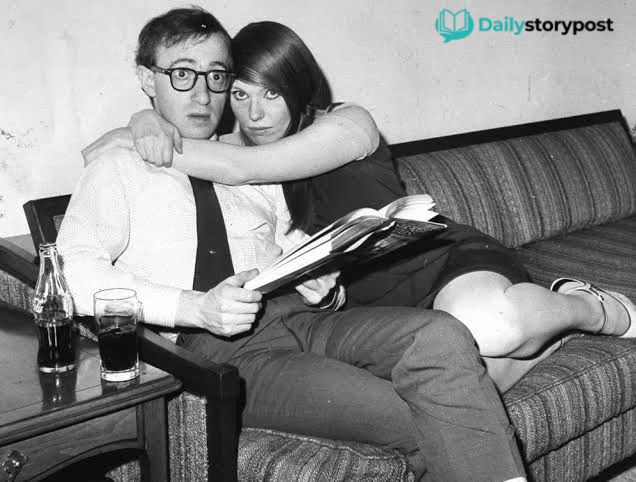
This gives a slightly broader picture of Rosen than the simple description of her as Allen’s first wife. She was a young woman pursuing her education while her husband was beginning to build a career in comedy.
Marriage to Woody Allen
Harlene Rosen and Woody Allen married in 1956. At the time, Allen was only 20 and Rosen was 17. Their marriage began before Allen’s major television and film success, making it very different from the highly publicized relationships that became part of his later life.
A chronology of Allen’s career records that he moved to Los Angeles for work on The Colgate Variety Show and invited Rosen to join him. After the show ended, they returned to New York. During this period, Allen continued developing his career as a comedy writer and performer.
Their marriage did not last.
There is some variation among published sources concerning the exact timeline of their separation and divorce. Some biographical references give 1962 as the year of divorce, while other sources place the end of the marriage or separation earlier. Established reference material commonly lists the marriage as beginning in 1956 and ending in 1962, so that is the clearest date to use when discussing the legal end of the relationship.
The difference between separation and legal divorce may explain some of the conflicting dates found online. Rather than presenting every date as equally certain, it is more accurate to say that the couple married in 1956 and that their relationship ended years before Allen became one of the most prominent filmmakers of his generation.
The End of the Marriage
The breakdown of the marriage became more significant in Allen’s public story because he later incorporated aspects of his relationship with Rosen into his comedy.
Allen’s early stand-up material frequently drew on his personal life. Rosen became one of the subjects of those jokes, and Allen used the nickname “the Dread Mrs. Allen” when referring to her in his comedy.
What had been a private marriage therefore became part of Allen’s public persona.
That development was particularly important because Rosen herself was not pursuing a career in entertainment. While Allen was increasingly visible on stage and television, her personal life became publicly discussed through someone else’s comedy.
This eventually resulted in a defamation dispute. Biographical accounts report that Rosen sued Allen over comments he made publicly about her, with some accounts also identifying NBC as a defendant. The dispute is frequently discussed in biographies of Allen, although many surviving accounts focus heavily on Allen’s own retelling of the episode.
That imbalance is worth remembering when researching Harlene Rosen. The public record is much richer for Allen than it is for Rosen, so not every story repeated about her should automatically be treated as an independently verified account.
Harlene Rosen and the Public Dispute
The legal conflict is one of the few episodes that brought Rosen directly into the public record.
According to biographical accounts, Allen made jokes about Rosen after their relationship had ended. One of the incidents discussed in later biographies involved comments he made concerning an assault Rosen had experienced. Allen later referred to the resulting lawsuit in his comedy and interviews.
The dispute illustrates an important difference between a celebrity’s public narrative and another person’s private experience. Allen had a professional reason to turn personal experiences into comedy, while Rosen did not choose the same public path.
Because much of the surviving material comes through accounts of Allen’s career, readers should be cautious about assuming that those accounts provide a complete picture of Rosen’s perspective.
The lawsuit is therefore best understood as a documented part of the history surrounding the former couple, rather than as a complete description of Rosen’s life.
Life Away From the Spotlight
After her marriage to Allen ended, Harlene Rosen largely disappeared from public attention.
There is no substantial, reliable public biography documenting her later career, daily life, relationships, finances, or other private matters. This lack of information has encouraged numerous websites to fill the gaps with claims about her later life, but many of those claims cannot be independently confirmed.
That distinction matters.
A person can have a long and meaningful life without leaving behind a large public record. Rosen’s limited media presence does not mean that nothing happened in her life after her divorce. It means that she chose, or was able, to keep much of that life private.
For a biography about Harlene Rosen, the most responsible approach is therefore to focus on the parts that can be established rather than inventing details to make the story appear more complete.
A Rare Message in 2015
One of the most interesting documented developments in Rosen’s later life came in 2015, when author David Evanier was researching his book Woody: The Biography.
Evanier said that he spent more than a year trying to locate Rosen. Eventually, he found her, and she provided a birthday message for Allen ahead of his 80th birthday. Evanier described Rosen’s contribution as one of the notable discoveries of his research.
The significance of the message was not simply that Rosen had been located. It was that readers were finally given a rare glimpse of her own perspective on the relationship.
Her recollection was not limited to anger or the difficult ending of the marriage. She remembered Allen’s energy, creativity, and charisma, while also acknowledging that their marriage had been difficult. She described the period as one in which they supported each other, learned about life, and grew into adulthood.
That later reflection adds an important layer to the story.
It shows that the relationship could not easily be reduced to either a romantic beginning or a bitter ending. Rosen’s own recollection allowed for sadness, laughter, affection, difficulty, and personal growth at the same time.
What Is Known About Her Career?
There is no widely documented public entertainment career for Harlene Rosen.
This is another area where online biographies sometimes go beyond what can be established. Some websites describe her as a musician or pianist, while others provide detailed claims about her professional life. However, the strongest sources available do not provide enough evidence to construct a detailed career history.
What can be stated with greater confidence is that Rosen studied philosophy and completed college, according to accounts connected with the later biography of Allen.
Her lack of a public career is actually an important part of understanding her story. She became known because of her relationship with someone who later became famous, not because she spent decades seeking media attention herself.
Did Harlene Rosen and Woody Allen Have Children?
There is no established public record identifying children from Harlene Rosen’s marriage to Woody Allen.
Major biographical accounts of Allen’s family generally discuss his later children and relationships separately from his marriage to Rosen. Modern sources that specifically examine Rosen likewise do not identify children from this marriage.
At the same time, information about Rosen’s life after the divorce is extremely limited. It would therefore be inappropriate to make confident claims about her later family life without reliable evidence.
This is a good example of why a biography of a private person should avoid turning an absence of public information into speculation.
Why Is Harlene Rosen Still Discussed?
The continued interest in Harlene Rosen is closely connected to Woody Allen’s long career.
Allen became one of the most recognizable American filmmakers and comedians of his generation. As biographies revisited his early years, his first marriage naturally became part of that history.
Rosen’s story is particularly interesting because it belongs to a period before Allen became famous. She knew him when he was still a young comedy writer and performer rather than the internationally recognized filmmaker associated with numerous films and awards.
Her name therefore provides a window into an earlier stage of Allen’s life.
At the same time, Rosen’s story raises a broader question about how history remembers people connected to celebrities. A person can become historically visible because of another individual’s fame while remaining personally unknown to the public.
That is essentially what happened with Rosen.
Facts and Uncertainty
When researching Harlene Rosen, it is useful to separate established information from details that are frequently repeated online.
The strongest documented facts are that Rosen married Woody Allen in 1956, that she was 17 at the time, that she studied philosophy at Hunter College, and that the marriage eventually ended. The marriage is commonly recorded as ending in divorce in 1962, although some historical sources give different dates for the separation or divorce process.
It is also well documented in biographies that Rosen later became involved in a defamation dispute after Allen publicly joked about their relationship.
Finally, her contribution to David Evanier’s 2015 biography provides direct evidence that she was willing, at least on that occasion, to reflect on her past with Allen.
Other details, particularly precise information about her later career, finances, family, current location, and personal relationships, are much less certain.
A good biography should leave those questions open rather than present speculation as fact.
Where Is Harlene Rosen Today?
The most accurate answer is that Harlene Rosen has maintained a highly private life, and reliable public information about her present circumstances is scarce.
The 2015 contribution to Evanier’s biography is one of the clearest later indications that she remained alive and was reachable at that time. Since then, there has not been a substantial, well-established public record documenting her activities.
Claims about her current occupation, location, financial situation, or family should therefore be treated cautiously unless supported by a credible source.
Her privacy is an important part of the story. Unlike many people associated with entertainment celebrities, Rosen did not spend decades building a public identity. Her name remains familiar largely because of a relationship that occurred when both she and Allen were very young.
The Lasting Story of Harlene Rosen
Harlene Rosen’s story is relatively unusual in celebrity history.
She entered the public record through marriage rather than through a career in entertainment. She was married to Woody Allen before he became a major filmmaker, experienced the difficult end of that relationship, and later became part of a public dispute involving his comedy.
Then she stepped away.
For decades, the public knew very little about her. The 2015 message to Allen offered a rare opportunity to hear her own voice and showed that her memory of the relationship was more complicated than the jokes and controversies that had survived in popular accounts.
Harlene Rosen is therefore best understood not simply as Woody Allen’s first wife, but as a private individual whose early life briefly intersected with a major figure in American entertainment. Much of her later story remains unknown, and that uncertainty should be respected rather than filled with unsupported claims.
The available evidence tells us about a young marriage, an evolving comedy career, a difficult separation, a public dispute, and a later reflection on shared memories. Beyond those documented points, Rosen’s life largely belongs to her own private world.
That may be the most important thing to remember when looking at her biography: not every life connected to fame needs to become a public life.
Frequently Asked Questions
Who is Harlene Rosen?
Harlene Rosen is best known as Woody Allen’s first wife. The couple married in 1956, when Rosen was 17 and Allen was 20.
When did Harlene Rosen marry Woody Allen?
Harlene Rosen married Woody Allen in 1956. Their marriage took place before Allen became widely known as a filmmaker and comedian.
What did Harlene Rosen study?
Available biographical accounts state that Rosen studied philosophy at Hunter College. She was still a young college student when she married Allen.
Why is Harlene Rosen known?
Rosen is mainly known because of her early marriage to Woody Allen and the public dispute that followed comments Allen made about their relationship after their divorce.
Where is Harlene Rosen today?
Reliable public information about Rosen’s current life is limited. She has largely remained out of the public spotlight, so claims about her present circumstances should be treated cautiously.