Lifestyle & Work
How to Use Cheese Puns in Captions, Cards, and Jokes

Cheese has a way of making ordinary moments feel a little more enjoyable. Put it on a sandwich, serve it at a party, add it to a food photo, or mention it in a joke, and it often brings a smile. That is one reason cheese puns have become such a popular form of lighthearted wordplay.
A good cheese pun does not need to be complicated. In many cases, the funniest line comes from taking a familiar cheese name such as brie, gouda, cheddar, feta, or Swiss and connecting it with an everyday phrase. The result can be short enough for a social media caption, warm enough for a greeting card, or playful enough to become part of a joke.
The Cambridge Dictionary describes a pun as a humorous use of a word or phrase that has several meanings or sounds like another word. That simple idea explains why cheese names work so well for wordplay: many of them can be connected naturally to familiar words and expressions.
Whether you are writing an Instagram caption, a birthday message, a text to a friend, or a quick joke for a gathering, the key is knowing how to use the pun without making it feel forced.
What Makes a Good Cheese Pun?
A good cheese pun usually starts with something the reader already understands. The cheese reference should be recognizable, while the second meaning or sound creates the humorous twist.
For example, cheese names such as gouda can be used because the word sounds similar to “good.” Likewise, “brie” can be played with because it sounds like the beginning of words such as “be” or “brief” in certain phrases.
The humor often comes from the small surprise. The reader begins a sentence expecting an ordinary expression and then notices that the wording has been changed into a cheese reference.

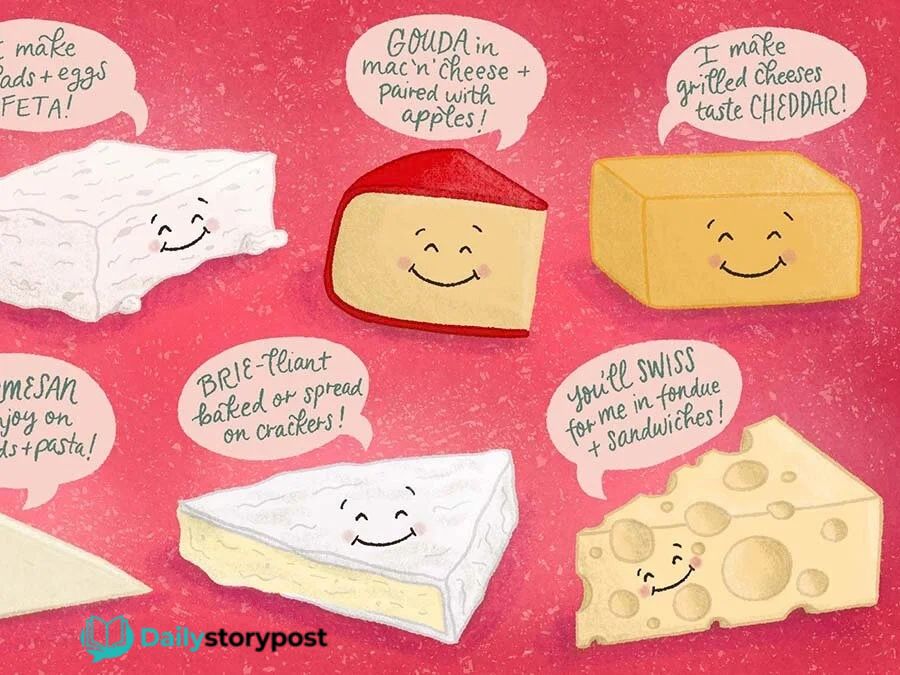
Research and commentary on humor frequently point to incongruity, or a mismatch between what people expect and what actually happens, as an important part of humor. The American Psychological Association has discussed this idea in its coverage of humor research, including how unexpected connections can contribute to amusement.
That is why a cheese pun is usually stronger when the setup feels natural. If the cheese reference is inserted only because the writer wants to mention cheese, the joke may sound awkward.
The best approach is simple: start with the message you want to communicate, then find a cheese-related word that fits it.
How to Use Cheese Puns in Social Media Captions
Social media captions are one of the easiest places to use cheese wordplay. A caption has limited space, so a short pun can add personality without requiring a long explanation.
If you are posting a photograph of a cheese board, for example, you can use a playful line that connects the food with your mood. If the photo shows friends sharing snacks, the pun can focus on friendship instead of the food itself.
This makes the caption feel more personal.
Short Cheese Puns for Instagram
Instagram captions work particularly well with short phrases. A reader may scroll quickly through a feed, so the joke should be understandable at a glance.
Instead of writing a long explanation, try building the caption around one central word. Gouda, brie, cheddar, feta, and Swiss are useful starting points because they are familiar cheese names.
A caption might have a playful tone such as:
- “Feeling gouda about today.”
- “You’re one of my favorite people to brie around.”
- “Life is cheddar with good company.”
- “This moment is worth savoring.”
- “Just here for the grate company.”
The goal is not to use every possible cheese reference. One well-placed pun is usually more effective than several crowded together.
Cheese Puns for Funny Posts
Funny posts can give you more room to develop the joke. You can create a setup, add a short cheese reference, and let the final phrase deliver the humor.
For example, imagine a photo of an enormous cheese board at a party. Instead of simply saying that the food looks delicious, you could build the caption around how difficult it is to choose one cheese.
That small change turns a basic food description into something more conversational.
You can also use cheese puns when posting about cooking, restaurant visits, picnics, family gatherings, or movie nights with snacks. The cheese does not have to be the main subject. Sometimes it works better as a small detail.
Cheese Puns for Food Lovers
Food-related captions are especially suitable for cheese wordplay because the pun and the subject naturally belong together.
A cheese enthusiast might post a photograph of a grilled cheese sandwich, pasta, pizza, cheese board, or baked dish. Rather than describing the dish in a standard way, a pun can give the post a distinctive voice.
The American Cheese Society recognizes a wide range of cheese styles and terminology, including cheddar, Gouda, Brie, mozzarella, Parmesan, feta, and Swiss-style cheeses. That variety gives writers plenty of familiar names to experiment with.
How to Use Cheese Puns in Cards
Greeting cards are another natural home for cheese humor. A card gives you more freedom than a social media caption because the message can be personal and sentimental while still having a playful ending.
The most important thing is to match the pun to the relationship.
A joke for your best friend can be more silly than a message for a colleague. A romantic card can use softer wordplay, while a birthday card can be much more playful.
Birthday Cards
Birthdays are perfect for light cheese puns because the message is already supposed to feel cheerful.
You can build the card around age, celebration, friendship, food, or simply having a good time. A cheese pun can work as the final sentence after a sincere birthday message.
For example, you might write something warm first and then finish with a playful cheese reference. That combination keeps the card from sounding like a collection of random jokes.
A little sincerity followed by a simple pun often feels more personal than a card filled entirely with wordplay.
Valentine’s Day Cards
Romantic cheese puns can be sweet without becoming overly serious.
Cheese names such as “brie” can be incorporated into affectionate sentences, while familiar expressions can be adjusted to create a food-themed joke.
The best romantic cheese puns are usually short. If the reader has to study the sentence to understand the joke, the emotional moment can disappear.
A simple line that makes your partner smile is often enough.
Thank-You Cards
A thank-you card does not have to be formal. If you are thanking a close friend, family member, host, or someone who appreciates food humor, a cheese pun can make the message more memorable.
Start with a genuine thank-you. Then use the pun as a small finishing touch.
For example, instead of replacing the entire message with jokes, you could write a sincere note about appreciating someone’s help and add a light cheese reference at the end.
The message should remain a thank-you first and a pun second.
How to Use Cheese Puns in Jokes
Cheese puns can also become the central idea of a joke. This requires slightly more structure than a caption.
A joke generally needs a setup and a payoff. The setup gives the audience enough information to understand the situation, while the final line changes their expectation or adds a surprising connection.
With a cheese pun, the final connection often comes from a cheese name or a word that sounds similar to another expression.
The important thing is timing.
If you reveal the pun too early, the audience may understand where the joke is going. If you make the setup too long, the humor can lose its energy.
A short setup followed by a clear wordplay-based ending usually works better.
Popular Cheese Words for Making Puns
Knowing the names of familiar cheeses can help you create original wordplay instead of repeating the same jokes.
Gouda is particularly useful because it resembles the sound of “good.” This makes it suitable for positive messages.
Brie is another flexible option. Its sound can be connected with several everyday expressions depending on the sentence.
Cheddar can be useful when playing with phrases involving “better” or “cheddar” itself, especially in deliberately silly jokes.
Swiss is useful for jokes involving holes, because Swiss-style cheeses are commonly associated with eye formation. The American Cheese Society specifically identifies Swiss and other Emmental types with eye formation.
Feta can be used for sound-based wordplay, particularly when creating short, casual lines.
Mozzarella is longer and less flexible, but its recognizable sound makes it useful in food-related jokes.
Parmesan can work well when the subject involves pasta, pizza, or Italian-style food.
The trick is not to force every cheese name into a pun. Some names naturally offer more wordplay opportunities than others.
Cheese Puns for Different Occasions
The same cheese pun will not work equally well in every situation. A joke that sounds funny between close friends may feel inappropriate in a professional message.
Funny Cheese Puns for Friends
Friends are usually the easiest audience because you can use sillier and more exaggerated wordplay.
A casual text can include a one-line pun, especially when you are discussing food or making plans for a meal.
The less formal the conversation, the more freedom you have to experiment.
Cute Cheese Puns for Couples
For couples, cheese puns can be affectionate rather than purely funny.
A short line about being together, missing someone, or enjoying a special meal can be combined with cheese wordplay.
Keep the emotion genuine and let the pun provide the smile.
Cheese Puns for Parties
Party invitations and signs can use cheese puns to create a relaxed atmosphere.
A cheese-and-wine evening, birthday gathering, picnic, or casual dinner can all provide opportunities for food-based wordplay.
A short phrase on an invitation or menu can be more effective than a long joke because guests can understand it immediately.
Cheese Puns for Food Posts
Food posts give you the most obvious opportunity to use cheese wordplay.
Look at the dish first. Is it pizza? Pasta? A sandwich? A cheese board? Then choose a cheese-related word that fits the photograph.
The visual and the caption should support each other.
Cheese Puns for Everyday Messages
You do not need a special occasion to use a pun.
A simple message to a friend can become more playful with one unexpected cheese reference. This works particularly well when the other person already enjoys dad jokes, food humor, or silly wordplay.
How to Create Your Own Cheese Puns
Creating your own cheese puns is easier when you use a simple process.
First, choose the message. Decide what you actually want to say. It could be congratulations, affection, thanks, excitement, or a joke about food.
Second, choose a cheese. Think about familiar names such as Gouda, Brie, Cheddar, Feta, Swiss, or Parmesan.
Third, listen for similar sounds. Say the cheese name aloud and think about ordinary words or phrases that sound similar.
Fourth, connect the meanings. Build a sentence where the cheese reference makes sense in the context.
Fifth, remove unnecessary words. A pun usually becomes stronger when the sentence is short.
Finally, read it aloud.
If you naturally smile or immediately understand the connection, the pun probably works. If you need to explain why it is funny, try simplifying it.
Common Mistakes to Avoid
One of the biggest mistakes is overloading the sentence with puns.
Using one cheese pun can be charming. Using five or six in every sentence can make the writing feel predictable.
Another mistake is choosing a cheese that the audience may not recognize. While obscure cheese names can be fun for enthusiasts, a general audience may not understand the reference.
It is also important to avoid explaining the joke immediately. If the pun needs an explanation, consider rewriting it rather than adding a paragraph that tells readers why they should laugh.
Timing and simplicity matter more than cleverness.
You should also avoid using the same cheese reference repeatedly. Variety keeps the humor fresh.
Examples of Cheese Pun Styles
There are several ways to structure cheese wordplay.
One-liners are short and easy to use in captions or texts.
Question-and-answer jokes create a small setup before revealing the pun.
Caption-style puns work best when they relate directly to a photograph.
Compliment puns can be used in cards and messages.
Romantic puns work well for couples and Valentine’s Day.
Food-related jokes are useful for restaurants, cooking posts, parties, and recipe content.
Each style serves a different purpose. A one-liner may be ideal for Instagram, while a question-and-answer format may work better when telling a joke aloud.
Tips for Making Cheese Puns More Effective
The first rule is to keep the audience in mind.
A cheese enthusiast may appreciate a reference to a specific cheese style, while someone who rarely eats cheese may prefer a familiar name and straightforward wordplay.
The second rule is to keep the language natural. Do not change an entire sentence simply to fit a pun.
The third rule is to connect the joke with the situation. A cheese pun about friendship makes sense in a message to a friend. A cheese pun about celebration fits a birthday post. A cheese pun about food belongs naturally in a restaurant or recipe caption.
The fourth rule is to use moderation.
Humor research discussed by the American Psychological Association suggests that incongruity can play an important role in humor, but context, audience, mood, and social situation also matter. A line that seems funny in one setting may not work in another.
That is useful advice for cheese puns too. The joke is not only about the words; it is also about when, where, and how you use them.
FAQs About Cheese Puns
What makes a cheese pun funny?
A cheese pun is usually funny because it connects a familiar cheese name with another word, phrase, or meaning. The humor comes from recognizing the unexpected connection.
What are good cheese puns for Instagram captions?
Short cheese puns work particularly well on Instagram. Choose a familiar cheese name and connect it directly to the photograph or mood of the post.
How can I make my own cheese puns?
Start with a sentence you want to write, choose a familiar cheese name, look for similar sounds, and then create a natural connection. Keep the final sentence short.
Are cheese puns suitable for birthday cards?
Yes. Cheese puns can add a playful touch to birthday cards, especially when the recipient enjoys food humor or simple jokes. Pairing the pun with a sincere birthday message usually makes it feel more personal.
Which cheese names are easiest to use in puns?
Gouda, Brie, Cheddar, Feta, and Swiss are useful starting points because they are familiar and offer opportunities for sound-based or association-based wordplay. The American Cheese Society lists these among established cheese styles and types discussed in its educational resources.
Conclusion
Cheese puns are simple, flexible, and easy to adapt when you know how to use them. They can turn an ordinary Instagram caption into something memorable, add personality to a birthday card, or give a simple joke an unexpected ending.
The secret is not to make every sentence a pun. Instead, start with the message, understand your audience, and look for one cheese-related word that naturally fits the situation.
Familiar names such as Gouda, Brie, Cheddar, Feta, Swiss, mozzarella, and Parmesan give you plenty of material to experiment with. Cheese itself also has a wide vocabulary and range of styles, which means there is no shortage of ideas for food lovers and writers.
So the next time you need a funny caption, a friendly card message, or a quick joke, do not overthink it. Pick a cheese, find the wordplay, keep it natural, and let the humor do the rest.
After all, when the right words come together, the result can be pretty grate
FAQs About Cheese Puns
What are cheese puns?
Cheese puns are playful jokes or phrases that use cheese names, sounds, or meanings to create humor. They work well in captions, cards, texts, and casual jokes.
Why are cheese puns popular?
Cheese puns are easy to understand and can make ordinary messages more playful. Their simple wordplay makes them suitable for many audiences and occasions.
What are some common cheese names used in puns?
Gouda, Brie, Cheddar, Feta, and Swiss are popular choices. Their familiar names make it easier to create simple wordplay.
How can I use cheese puns in captions?
Choose a cheese-related phrase that matches your photo or mood. Keep the caption short so the joke is easy to understand at a glance.
Can cheese puns be used in greeting cards?
Yes. They can add a fun touch to birthday, Valentine’s Day, thank-you, and friendship cards. Pairing a pun with a sincere message keeps the card personal.