Food & Drink
How to Follow a Free Carnivore Diet Meal Plan for 7 Days

A free carnivore diet meal plan can help you organize your meals, plan grocery shopping, and understand what a week of animal-based eating might look like. Instead of buying expensive meal plans or specialty products, you can start by learning about ordinary foods, simple cooking methods, and affordable grocery choices.
The carnivore diet has attracted attention from people interested in low-carbohydrate eating. However, it is also highly restrictive, and its long-term health effects are not well established. Before making major dietary changes, it is important to understand both the potential concerns and the practical challenges.
BIO
| Label | Information |
|---|---|
| Article Title | How to Follow a Free Carnivore Diet Meal Plan for 7 Days |
| Main Keyword | Free Carnivore Diet Meal Plan |
| Diet Type | Animal-based, highly restrictive diet |
| Meal Plan Duration | 7 Days |
| Main Foods | Beef, chicken, fish, eggs |
| Optional Foods | Butter, cheese, plain yogurt |
| Breakfast Ideas | Scrambled eggs, boiled eggs, beef |
| Lunch Ideas | Beef patties, chicken, canned fish |
| Dinner Ideas | Roasted chicken, beef, baked fish |
| Shopping Tips | Compare prices and buy affordable cuts |
| Meal Preparation | Batch cooking and safe food storage |
| Potential Concerns | Low fiber intake and possible nutrient deficiencies |
| Health Advice | Consult a qualified healthcare professional before starting |
This seven-day guide provides simple meal ideas, a basic shopping list, and budget-friendly preparation tips. It also explains important safety considerations so you can make an informed decision about whether this eating pattern is appropriate for you.
What Is a Carnivore Diet?

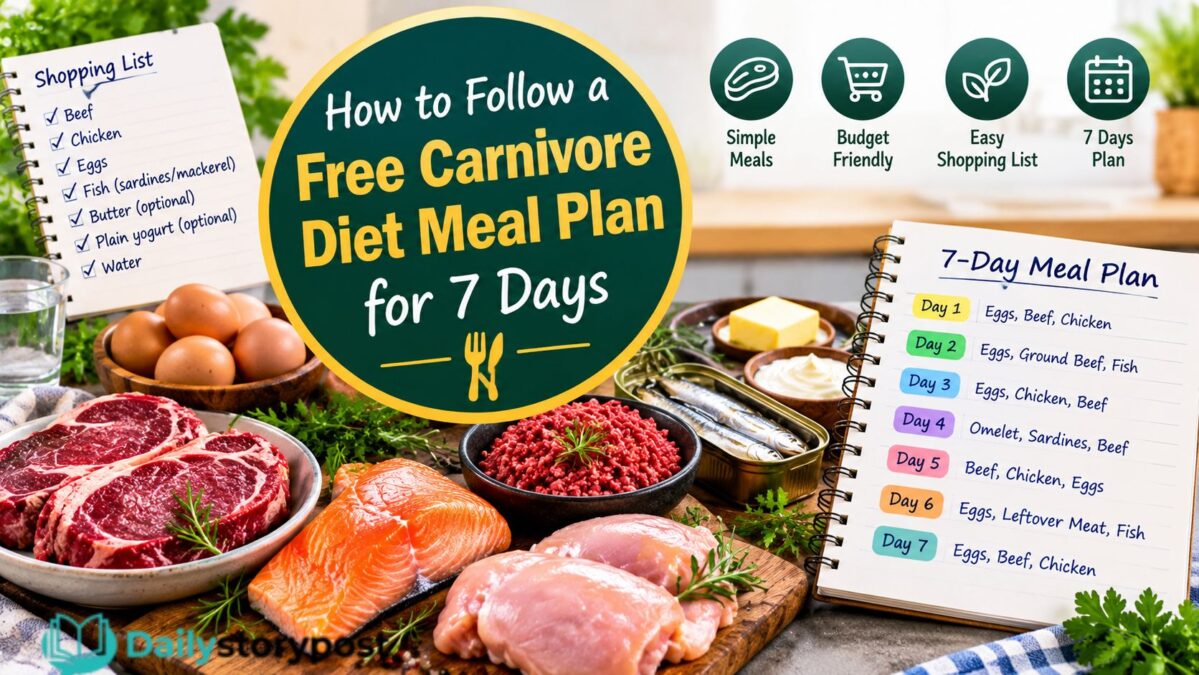
The carnivore diet is an eating pattern centered on foods derived from animals. Depending on the version followed, people may eat beef, chicken, fish, eggs, and certain dairy products while excluding vegetables, fruits, grains, beans, nuts, and seeds.
Strict versions focus almost entirely on meat, fish, eggs, and water. Other versions include foods such as butter, cheese, or plain dairy products. There is no single standardized carnivore diet that everyone follows.
Unlike a balanced eating pattern that includes a wide variety of plant and animal foods, the carnivore diet removes entire food groups. This makes meal planning relatively simple, but it also creates nutritional challenges.
For example, excluding fruits, vegetables, legumes, and whole grains removes many common sources of dietary fiber, vitamin C, folate, potassium, and other nutrients. Meat and eggs provide valuable nutrients, but they do not automatically replace everything found in plant foods.
Understanding these limitations is an important first step before following a free carnivore diet meal plan.
What to Know Before Starting


Before beginning a restrictive eating plan, consider your health, food budget, lifestyle, and nutritional needs. A diet that seems convenient for one person may be unsuitable for another.
Some people report feeling fuller after eating protein-rich meals. However, personal experiences do not establish that the carnivore diet is superior to other dietary approaches. Strong clinical evidence supporting its long-term safety and effectiveness remains limited.
A diet containing large amounts of red meat, butter, and other high-saturated-fat foods may increase LDL cholesterol in some individuals. Removing fiber-rich foods may also affect bowel habits and digestive health.
If you have diabetes, kidney disease, high cholesterol, a digestive condition, or another ongoing health concern, discuss the plan with a qualified healthcare professional before making major changes. Pregnant people, children, and anyone with a history of disordered eating should avoid starting a highly restrictive diet without appropriate professional guidance.
Free Carnivore Diet Meal Plan for 7 Days
The following meal plan offers examples of simple animal-based meals. It is intended as an educational planning guide, not a complete nutritional prescription.
Portion sizes are not specified because individual energy and protein needs differ. Your age, activity level, body size, health conditions, and other factors influence how much food you need. These meals are not guaranteed to provide all essential nutrients.
Day 1: Keep Meals Simple
Breakfast: Scrambled eggs with ground beef.
Lunch: Homemade beef patties cooked thoroughly in a pan.
Dinner: Roasted chicken thighs with the skin, if preferred.
The first day focuses on familiar foods that are often easy to prepare. Ground beef can be divided into several portions, while chicken thighs may be economical compared with some other cuts of meat.
Cook the meat thoroughly and avoid relying on raw or undercooked animal products. If you prepare extra food, refrigerate it promptly and use it within a safe storage period.
Day 2: Choose Affordable Protein
Breakfast: Hard-boiled eggs.
Lunch: Ground beef cooked in a skillet.
Dinner: Baked sardines or another affordable fish.
Fish can add variety to a meal plan and provide important nutrients. Sardines, for example, can supply protein, vitamin B12, and omega-3 fatty acids. Some canned varieties also provide calcium when their edible bones are included.
Check the label when buying canned fish because sodium levels vary. Fresh, frozen, and canned options can all be considered according to price, availability, and personal preferences.
Day 3: Add Variety
Breakfast: Eggs served with leftover cooked beef.
Lunch: Roasted or pan-cooked chicken thighs.
Dinner: Beef cooked slowly in water or suitable stock, without vegetables if following a strict version.
Eating the same food repeatedly can become monotonous. Changing the cooking method can make ordinary ingredients feel different without requiring expensive seasonings or specialty products.
If you cook beef in advance, divide it into clean containers and refrigerate or freeze portions appropriately. Do not leave cooked meat sitting at room temperature for extended periods.
Day 4: Prepare Meals Ahead
Breakfast: An omelet, if eggs are part of your chosen version of the diet.
Lunch: Canned sardines or mackerel.
Dinner: Pan-cooked beef.
Preparing meals ahead of time can reduce the temptation to purchase expensive convenience foods. It can also make busy weekdays easier because some of the cooking has already been completed.
People who include dairy may choose plain yogurt or cheese, depending on their dietary preferences and tolerance. However, dairy is not included in every strict carnivore approach, and it should not be treated as essential to the plan.
Day 5: Make the Most of Your Budget
Breakfast: Beef patties.
Lunch: Leftover roasted chicken.
Dinner: Eggs with cooked beef.
A budget-conscious meal plan should use ingredients efficiently. If you purchase a larger package of ground beef, divide it into meal-sized portions before freezing. This makes it easier to use only what you need.
Compare prices by weight rather than looking only at the package price. A cheaper cut may require a longer cooking time, but it could still be a useful option if you have the time and equipment.
Avoid buying expensive products simply because they are marketed specifically for the carnivore diet. Ordinary grocery-store foods are generally enough to prepare basic meals.
Day 6: Keep Cooking Convenient
Breakfast: Boiled eggs and leftover meat.
Lunch: Homemade beef patties.
Dinner: Baked or pan-cooked fish.
This day emphasizes convenience. Eggs can be prepared in advance, and frozen fish can be useful when fresh options are expensive or difficult to find.
Pay attention to how you feel while following a restrictive eating pattern. Persistent constipation, unusual weakness, dizziness, or other concerning symptoms should not be ignored. Stop the restrictive plan and seek medical advice if symptoms are significant or persistent.
Do not assume that discomfort is a necessary part of adapting to the diet.
Day 7: Review the Week
Breakfast: Scrambled eggs with cooked beef.
Lunch: Chicken thighs or leftover beef.
Dinner: A simple fish or meat meal.
At the end of the week, review more than just the cost of your groceries. Consider whether the meals were satisfying, whether preparation took too much time, and whether you experienced any digestive or other symptoms.
Also consider the foods excluded from the plan. A week of simple meals may be easy to organize, but following the same restrictive pattern over a longer period raises additional nutritional questions.
Completing seven days does not prove that the diet is healthy for you or that it will produce a particular result. If your goal is weight management or better overall health, a sustainable, balanced eating pattern may offer a more practical long-term approach.
Free Carnivore Diet Grocery List
A useful grocery list helps you avoid unnecessary purchases and makes meal preparation easier. The quantities you need depend on your household size, appetite, and how frequently you plan to cook.
Basic protein choices
- Ground beef
- Beef suitable for roasting or slow cooking
- Chicken thighs or drumsticks
- Eggs
- Sardines, mackerel, or another suitable fish
- Canned fish for convenient meals
Optional foods, depending on your chosen version
- Butter
- Plain yogurt
- Cheese
- Other tolerated dairy products
Dairy products are optional rather than a requirement. If you have a dairy allergy or intolerance, choose alternatives appropriate to your needs and discuss nutritional concerns with a qualified professional.
You should also have suitable food-storage containers and access to safe drinking water. Check labels for added ingredients, especially when purchasing seasoned meat or canned products.
How to Keep Your Meal Plan Affordable
The cost of a carnivore diet depends on local prices, food choices, portion sizes, and the number of people being fed. There is no reliable single weekly price that applies to everyone.
One practical strategy is to build meals around foods that are affordable where you live. Ground beef, chicken portions, eggs, and canned fish may cost less than premium steaks or specialty meat products, although prices vary by location and season.
Compare the price per kilogram when shopping. Consider frozen options when they offer better value, and buy larger packages only when you can store them safely and use them before they spoil.
Plan several meals around the same ingredient. For example, cooked chicken can be used for lunch one day and another meal later, provided leftovers are handled and stored safely.
Avoid wasting money on products promoted as necessary for the carnivore diet. Special drinks, packaged snacks, and expensive cuts are not required to prepare basic meals.
It is also worth comparing this plan with a balanced diet that includes affordable lentils, beans, vegetables, whole grains, and other nutrient-rich foods. Those foods can provide fiber and important nutrients at a relatively low cost. A meat-only approach is not automatically the cheapest or most nutritionally complete way to eat.
Simple Meal Preparation Tips
Planning ahead is useful when most meals require cooking. Before shopping, decide which meals you intend to prepare and identify ingredients that can be used more than once.
Cook appropriate portions in batches when it saves time. Divide cooked food into shallow containers and refrigerate it promptly. Refrigerate perishable foods within two hours, or within one hour when the surrounding temperature is above 90°F (32°C).
For most cooked leftovers, use them within three to four days when refrigerated at 40°F (4°C) or below, or freeze them for longer storage. Follow local food-safety guidance and discard food that has been stored unsafely.
Use a food thermometer when needed. Ground beef should reach an internal temperature of 160°F (71°C), while poultry should reach 165°F (74°C). Fish should generally reach 145°F (63°C), or be cooked until the flesh is opaque and separates easily with a fork.
Keep raw meat and its juices away from cooked food, clean utensils, and other ready-to-eat items. Wash your hands and kitchen surfaces after handling raw animal products.
These steps help reduce the risk of foodborne illness, which is especially important when preparing several meals in advance.
Is the Carnivore Diet Safe?
The carnivore diet is highly restrictive, and its long-term effects have not been adequately studied in large, high-quality clinical trials. Evidence about balanced dietary patterns cannot automatically be applied to an eating plan that removes nearly all plant foods.
One concern is the lack of dietary fiber. Fiber supports normal bowel function and is found in foods such as vegetables, fruits, legumes, and whole grains. Removing these foods can reduce fiber intake substantially and may cause constipation or other digestive changes.
Another concern is nutritional adequacy. Animal foods provide protein, vitamin B12, iron, zinc, and other nutrients, but a narrow selection of foods may not supply every nutrient in appropriate amounts. The exact risk depends on food choices and individual circumstances.
The amount and type of fat consumed also matter. Diets high in saturated fat can raise LDL cholesterol in some people, which is an established risk factor for cardiovascular disease. If you are considering this eating pattern, discuss cholesterol testing and other relevant monitoring with your healthcare professional.
There is also a difference between short-term personal reports and strong evidence of long-term health outcomes. Claims that a carnivore diet cures disease, guarantees weight loss, or works better than all other diets should be treated cautiously.
For many people, a varied eating pattern that includes vegetables, fruits, legumes, whole grains, healthy fats, and suitable protein sources offers a better-established foundation for meeting nutritional needs.
Common Mistakes to Avoid
Assuming weight loss is guaranteed: Body weight changes depend on overall energy intake, activity, health, and many other factors. No meal plan can guarantee a specific result.
Ignoring digestive problems: A major reduction in fiber can affect bowel habits. Persistent or severe symptoms deserve professional attention rather than being dismissed as normal adjustment.
Choosing too few foods: Repeating only one or two foods can make nutritional gaps more likely. Greater variety within animal foods may help provide different nutrients, but it does not guarantee that a restrictive diet is complete.
Forgetting food safety: Meat and fish must be handled, cooked, refrigerated, and frozen appropriately to reduce the risk of foodborne illness.
Treating online advice as medical guidance: A general meal plan cannot account for allergies, medical conditions, medication use, or individual nutritional requirements.
Continuing despite health concerns: If the plan causes significant symptoms or conflicts with medical advice, do not force yourself to continue. Seek qualified guidance and consider a less restrictive alternative.
Frequently Asked Questions
Can I follow a carnivore diet on a tight budget?
It may be possible to reduce grocery costs by choosing economical cuts of meat, eggs, frozen chicken, and canned fish. Compare local prices and plan meals carefully. However, the total cost depends on appetite, location, and individual needs, and a balanced diet containing plant-based protein may be less expensive.
What can I eat on a 7-day carnivore diet meal plan?
Common choices include beef, chicken, fish, and eggs. Some versions also include dairy products such as cheese or plain yogurt. Strict versions exclude plant foods. These options are examples rather than a guarantee of complete nutrition.
Can beginners follow a carnivore diet meal plan?
Beginners can use a meal plan to organize grocery shopping and cooking, but simplicity does not make the diet suitable for everyone. Because it excludes many nutrient-rich foods, it is sensible to discuss the plan with a qualified healthcare professional before starting.
Do I need supplements on the carnivore diet?
Supplement needs depend on your overall intake, health, and individual nutritional status. Supplements cannot automatically correct every dietary gap, and taking unnecessary amounts may cause harm. A qualified healthcare professional or registered dietitian can help assess whether supplementation is appropriate.
Is the carnivore diet suitable for long-term use?
There is insufficient strong evidence to establish the long-term safety of a strict carnivore diet. Potential concerns include low fiber intake, nutritional deficiencies, and elevated LDL cholesterol in some people. A more varied eating pattern has a stronger evidence base for meeting long-term nutritional needs.
Conclusion
A free carnivore diet meal plan can provide a simple way to organize seven days of animal-based meals, create a grocery list, and prepare food at home without purchasing an expensive program. Ground beef, chicken, eggs, and affordable fish can form the basis of straightforward meal ideas.
However, convenience and low preparation costs do not guarantee nutritional adequacy. The carnivore diet removes many foods that provide fiber, vitamins, minerals, and other beneficial compounds, and its long-term health effects remain uncertain.
Before adopting this restrictive approach, consider your personal health, food budget, and nutritional needs. If you are pursuing weight management or better overall health, discuss sustainable options with a qualified healthcare professional who can help you choose an eating pattern that is both practical and nutritionally balanced.
Frequently Asked Questions
1. What is a free carnivore diet meal plan?
A free carnivore diet meal plan is a meal guide that focuses on animal-based foods such as beef, chicken, fish, and eggs without requiring a paid meal-planning service.
2. Can beginners follow a free carnivore diet meal plan for 7 days?
Beginners can use a seven-day plan to organize meals and grocery shopping. However, the diet is restrictive, so it is important to understand its nutritional risks before starting.
3. What foods can I eat on a 7-day carnivore diet?
Common choices include beef, chicken, fish, and eggs. Some versions allow dairy products, while strict versions exclude them and all plant foods.
4. How can I follow a carnivore diet on a budget?
Choose affordable meat cuts, eggs, frozen chicken, and canned fish. Compare local prices, prepare meals at home, and store leftovers safely to reduce food waste.
5. Is a carnivore diet safe for long-term use?
Long-term safety is not well established. The diet may lack fiber and certain nutrients, and high saturated fat intake can raise LDL cholesterol in some people. Consult a qualified healthcare professional before starting.