Fitness
Thick vs Fat vs Chubby: The Complete Guide to Understanding the Differences

chubby vs fat Understanding thick vs fat vs chubby can be useful for English learners because these words may all relate to body size, but they do not communicate exactly the same idea. The difference is not only about physical description. Tone, context, culture, and the relationship between speakers can also affect how each word is understood.
Thick is often used informally to describe a fuller or curvier body shape. Fat is a direct word referring to having a larger amount of flesh or body fat and can be sensitive when used about a person. Chubby generally suggests a soft, rounded appearance and is especially common when describing children or features such as cheeks. Cambridge defines “chubby” as a pleasant or attractive form of being fat, particularly for children.
Because these words carry different associations, choosing the right one matters. A word that sounds positive in one conversation may feel uncomfortable or insulting in another.
Thick vs Fat vs Chubby: Quick Difference
Although thick, fat, and chubby can overlap, their usual meanings are different.
| Word | Main idea | Typical tone | Common use |
|---|---|---|---|
| Thick | Fuller or curvier body shape | Often positive or informal | Mostly adults |
| Fat | Larger amount of flesh or body fat | Direct and potentially sensitive | General description |
| Chubby | Soft, rounded, or plump appearance | Often gentle or affectionate | Children, cheeks, and casual descriptions |
The main distinction is that thick often emphasizes shape, while fat directly describes body size or flesh, and chubby emphasizes softness or roundness.
The word “fat” itself has a straightforward dictionary meaning. Cambridge defines the adjective as having a lot of flesh on the body, while “fat” as a noun can refer to the substance under the skin that stores energy and helps keep the body warm.
What Does Thick Mean?

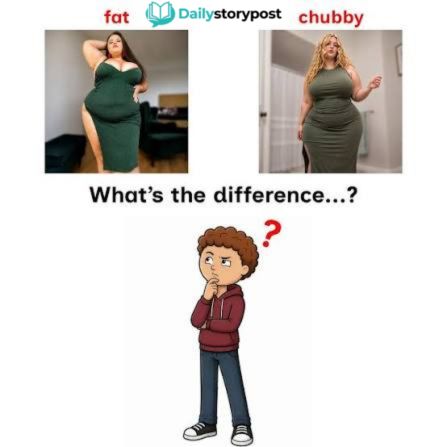
The word thick has many meanings in English. It can describe something with a large distance between two sides, dense hair, a thick liquid, or heavy fog. Cambridge lists these general meanings, while informal usage has also developed a body-related meaning.
When used to describe a person’s body, thick often refers to a fuller, curvier, or more substantial shape. In informal modern English, it can suggest noticeable hips, thighs, or other rounded proportions.
The related slang spelling “thicc” became widely associated with a full-figured, curvy body shape. Dictionary.com describes it as an informal slang term and notes that its usage developed through Black slang and later spread more widely through popular and online culture.
What Can Thick Suggest?
Depending on context, someone described as thick may be imagined as having:
- Fuller thighs
- Wider hips
- A curvier shape
- A fuller figure
- A strong or substantial build
For example:
“She has a thick figure and an athletic build.”
The sentence focuses more on body shape than on a specific measurement of body fat.
Is Thick a Compliment?
In many informal conversations, thick can be intended positively, particularly when the speaker is talking about curves or a fuller figure. However, that does not mean everyone will interpret it as a compliment.
Dictionary.com notes that some people use “thick” as a body-positive term, while others may experience it as objectifying or overly focused on appearance.
That is why context matters. A close friend may use the word casually, while a stranger using the same word toward someone could make the conversation uncomfortable.
What Does Fat Mean?
Fat is the most direct of the three words when describing body size.
As an adjective, Cambridge defines it as having a lot of flesh on the body. As a noun, it can refer to body fat, the substance beneath the skin that stores energy and helps with insulation.
For example:
- “Body fat stores energy.”
- “The doctor discussed body-fat levels.”
- “The animal has a layer of fat.”
These examples show that fat can be a neutral scientific or descriptive term when the context is appropriate.
The difficulty comes when the word is directed at another person as a personal description.
Is Fat Always an Insult?
No. The word itself is not automatically an insult. However, calling someone “fat” can sound blunt or judgmental, depending on the situation.
Oxford Learner’s Dictionaries specifically notes that “fat” is a common and direct word for describing a person but that it is generally not considered polite to tell someone directly that they are fat. It also identifies alternatives such as “overweight” or “large” as less direct choices in some contexts.
The meaning and emotional effect can depend on:
- Who is speaking
- Who is being described
- The relationship between them
- The speaker’s intention
- The tone
- The surrounding conversation
For example, discussing body fat in a medical or scientific context is very different from using “fat” as an insult during an argument.
Fat in Medical and Scientific Language
In health, biology, and nutrition, fat has an established technical meaning. Body fat is a normal part of human biology and performs important functions, including energy storage and insulation.
Therefore, the word should not automatically be treated as offensive in every context. The important difference is between discussing a physical or biological concept and using the word as a judgment about another person.
What Does Chubby Mean?
Chubby generally describes someone or something that is pleasantly round, soft, or plump.
Cambridge particularly associates the word with children and examples such as chubby cheeks and chubby legs.
For example:
“The baby has chubby cheeks.”
This normally sounds affectionate rather than harsh.
The word can also describe animals or particular body features. However, when used for adults, reactions can vary because some adults may not appreciate being described in terms of their body size.
Why Does Chubby Sound Different From Fat?
The difference between chubby and fat is partly about tone.
“Chubby” tends to create an image of softness and roundness. “Fat” is more direct and focuses more clearly on body size or flesh.
Compare these examples:
- “The baby has chubby cheeks.” — affectionate
- “The puppy has chubby legs.” — gentle
- “He is fat.” — direct and potentially sensitive
- “The doctor measured body fat.” — technical or medical
Cambridge lists “chubby” alongside words such as “fat,” “overweight,” “obese,” and “plump,” showing that these terms can overlap in meaning while carrying different levels of tone and usage.
Thick vs Fat vs Chubby: Detailed Comparison
A side-by-side comparison makes the differences easier to understand.
| Feature | Thick | Fat | Chubby |
|---|---|---|---|
| Main focus | Body shape | Body size or flesh | Soft roundness |
| Typical context | Informal | General or technical | Casual and affectionate |
| Common for adults | Yes | Yes | Sometimes |
| Common for children | Less common | Possible but sensitive | Very common |
| Can be positive? | Often, depending on context | Depends heavily on context | Often, especially for children |
| Emotional sensitivity | Moderate | High in personal descriptions | Moderate |
| Related idea | Curvy/full-figured | Larger amount of flesh/body fat | Plump/rounded |
The table shows why these words should not be treated as perfect synonyms.
Thick vs Chubby: Are They the Same?
Thick and chubby are related, but they are not identical.
Someone described as thick is often being described in terms of body shape or proportions. The word may suggest curves or a fuller figure.
Someone described as chubby is more likely to be imagined as soft, rounded, or slightly plump.
For example, a person with prominent curves and a strong build might be called thick in informal speech. A small child with round cheeks might naturally be described as chubby.
There can be overlap, but the mental image created by each word is different.
Thick vs Fat: What Is the Main Difference?
The simplest distinction is:
Thick usually emphasizes shape.
Fat more directly emphasizes body size or flesh.
Two people can have similar body weights but completely different body shapes because body composition and the distribution of muscle and fat can vary.
This is one reason why “thick” and “fat” are not interchangeable in everyday conversation.
The informal body-related use of “thick” also has a cultural history. Dictionary.com notes that the term developed as slang associated with a fuller, curvier body type and later became more widely used online and in popular culture.
How Context Changes the Meaning
Words rarely work in isolation. The surrounding situation can completely change how a description sounds.
Consider these examples:
| Sentence | Likely context |
|---|---|
| “The baby has chubby cheeks.” | Affectionate |
| “She has a thick figure.” | Informal appearance description |
| “The doctor measured body fat.” | Medical or scientific |
| “He called someone fat during an argument.” | Potentially insulting |
| “She describes herself as fat.” | Personal identity or self-description |
The speaker’s intention is important, but it is not the only factor. The listener’s preferences and experiences also matter.
Common Mistakes When Using Thick, Fat, and Chubby
English learners sometimes choose these words based only on dictionary definitions. That can create awkward or unintended meanings.
Mistake 1: Assuming All Three Words Mean Exactly the Same Thing
They overlap, but their emphasis differs.
- Thick often focuses on shape.
- Fat directly describes body size or flesh.
- Chubby emphasizes a soft or rounded appearance.
Mistake 2: Using Body Descriptions Without Considering the Person
Not everyone wants their appearance discussed.
Even a word intended as a compliment may feel uncomfortable if the person does not want attention focused on their body.
Mistake 3: Assuming Everyone Likes the Word Thick
Some people use thick proudly, while others may dislike it or consider it too focused on their appearance.
Dictionary.com specifically notes that reactions to the term can differ, including interpretations involving objectification.
Mistake 4: Using Fat Too Casually
“Fat” has a legitimate descriptive and scientific meaning, but directly telling someone that they are fat can sound blunt.
When the purpose is respectful communication, it is often better to choose a more precise term.
Better Alternatives for Describing Body Types
Sometimes the best option is not to use any of these three words.
The appropriate alternative depends on what you are actually trying to communicate.
| Purpose | Possible wording |
|---|---|
| Describing curves | Curvy |
| Describing fitness | Athletic, strong, muscular |
| Describing general size | Larger, fuller |
| Medical discussion | Body fat, body composition |
| Discussing weight neutrally | Higher body weight |
| Describing a broad build | Broad, solidly built |
“Curvy,” for example, specifically refers to a body with rounded parts, particularly around the hips and breasts.
The key is to describe the feature that actually matters rather than using a broad label.
How Native Speakers Understand These Words
Native speakers usually interpret body-related words through context.
They may consider:
- Who is speaking
- Who is being described
- Why the word is being used
- Whether the conversation is formal or casual
- Whether the speaker and listener know each other
- The tone of voice
- The culture or community involved
For example, a friend saying “You look thick” may be interpreted differently from a stranger making the same comment.
Written communication can be even more complicated because there is no facial expression or tone of voice to clarify the intention.
Cultural Influence on Body-Related Words
Body terminology changes over time and across communities.
The modern use of thick is a good example. Dictionary.com describes its connection with Black slang, hip-hop culture, and later internet usage. The term has also become associated with changing ideas about fuller and curvier body types.
At the same time, different communities may interpret the same word differently.
A word that feels empowering to one person may feel objectifying to another. This is one reason there is no universal rule that says a particular body-related word is always positive or always negative.
Which Word Should English Learners Use?
If English is not your first language, a cautious approach can help.
Use “chubby” carefully
It is particularly common for children, babies, cheeks, hands, and similar features. Cambridge specifically highlights its use with children.
Use “thick” according to context
It is an informal term whose body-related meaning can suggest a fuller or curvier shape. It is not appropriate in every formal situation.
Be careful with “fat”
The word has a legitimate biological and descriptive meaning, but directly calling another person fat can sound insensitive.
Choose neutral language when unsure
Words such as fuller, curvy, athletic, larger, or broad may communicate the intended idea more precisely, depending on the situation.
The Importance of Respectful Language
Body descriptions are personal. Even when a word is technically accurate, it may not be the best choice for a particular conversation.
A useful principle is to think about purpose before vocabulary.
Ask yourself:
- What exactly am I trying to describe?
- Do I need to mention the person’s body at all?
- Is the conversation medical, educational, casual, or personal?
- Does the word fit the relationship and situation?
- Could a more precise and neutral word communicate the same idea?
This approach helps avoid unnecessary misunderstandings.
Frequently Asked Questions
What is the difference between thick, fat, and chubby?
Thick commonly describes a fuller or curvier body shape. Fat is a more direct description related to having more flesh or body fat. Chubby generally suggests a soft or rounded appearance and is especially common for children or features such as cheeks.
Is thick a positive word?
It can be. In informal modern usage, thick is often used positively to describe a fuller or curvier figure. However, not everyone likes the term, so context and personal preference matter.
Is calling someone chubby rude?
Not necessarily. “Chubby” is often used affectionately for children or features such as cheeks. However, an adult may not appreciate being described this way, so the situation and the person’s preference are important.
Can fat be used in a neutral way?
Yes. Fat is a normal biological term when discussing body fat, nutrition, or other scientific subjects. When directly describing another person, however, the word can sound blunt or judgmental.
What word should I use instead of thick, fat, or chubby?
It depends on what you mean. Curvy can describe body shape, athletic or muscular can describe physique, and body fat or body composition can be appropriate in a scientific or medical context. If you are unsure, a neutral and specific description is usually the safest choice.
Conclusion
Understanding thick vs fat vs chubby is about more than memorizing three definitions. Each word has its own emphasis, tone, and cultural associations.
Thick is often an informal description of a fuller or curvier body shape. Fat is a direct term for having more flesh or body fat and has both neutral scientific uses and potentially sensitive interpersonal uses. Chubby usually suggests a soft, rounded appearance and is particularly common for children and features such as cheeks.
The most important lesson is that context matters. A word can be neutral in one setting and uncomfortable in another. Choosing language carefully allows you to communicate more clearly while respecting the person you are describing.
FAQs
What is the difference between thick, fat, and chubby?
Thick usually describes a fuller or curvier body shape, fat directly refers to body size or body fat, while chubby suggests a soft and rounded appearance.
Is “thick” a positive word?
In many informal contexts, thick can be used positively to describe a fuller or curvier figure. However, how it is received depends on the person and the situation.
Is “chubby” rude?
Not necessarily. Chubby often sounds affectionate when describing children or features such as cheeks, but some adults may find the term uncomfortable.
Can “fat” be used in a neutral way?
Yes. Fat has neutral uses in medical, scientific, and nutritional contexts. When directly describing a person, however, it can sound blunt or judgmental.
Which word is safest to use?
If you are unsure, use a more specific and neutral term such as curvy, fuller, athletic, muscular, or larger, depending on what you actually want to describe.