Uncategorized
Sundar Pichai and Carl Icahn: A Look at Their Careers

The business world has produced many influential figures, but Sundar Pichai and Carl Icahn represent two very different paths to professional success. Pichai built his reputation through technology, product development, and corporate leadership, while Icahn became widely known for investing, shareholder activism, and his involvement in major corporate transactions.
Their careers developed in different industries and across different generations. Pichai rose through the technology sector and eventually became CEO of both Google and Alphabet. Icahn began his career on Wall Street in the 1960s and built a reputation for taking significant positions in companies and pushing for changes that he believed could increase shareholder value.
Looking at their careers side by side provides an interesting picture of how leadership can take different forms. One career is closely associated with products, engineering, and artificial intelligence, while the other is strongly connected with finance, corporate governance, and investment strategy.
Who Is Sundar Pichai?
Sundar Pichai is an Indian-born technology executive who became one of the most recognizable leaders in the global technology industry. He joined Google in 2004 and gradually moved into increasingly important product and management positions.
Before joining Google, Pichai developed a strong academic background. He earned a Bachelor of Technology degree from the Indian Institute of Technology Kharagpur and later studied at Stanford University and the Wharton School of the University of Pennsylvania.
His early professional experience included work at McKinsey & Company and an engineering and product role at Applied Materials. These experiences gave him exposure to both technology and business strategy before he joined Google.
Pichai’s career at Google is notable because he did not begin as the company’s chief executive. Instead, he advanced through product-focused positions and became closely associated with some of Google’s most important consumer products.
Pichai’s Rise at Google
When Pichai joined Google, the company was already an important force in internet search and online advertising. His career developed during a period when Google was expanding beyond search into browsers, mobile software, cloud services, and other products.
One of the products closely associated with Pichai’s early leadership was Google Chrome. Chrome became an important part of Google’s broader product ecosystem and helped establish Google’s presence in the web-browser market.
Pichai later took on responsibilities covering Android, Chrome, and Apps. His work placed him at the center of Google’s efforts to connect its software products across computers and mobile devices.
According to Alphabet’s corporate information, Pichai served as Google’s Senior Vice President of Android, Chrome and Apps from 2013 to 2014 and then became Senior Vice President of Products from 2014 to 2015.
This progression is important because it shows how his career developed through responsibility for major products rather than through a traditional finance or sales route.
Becoming CEO of Google

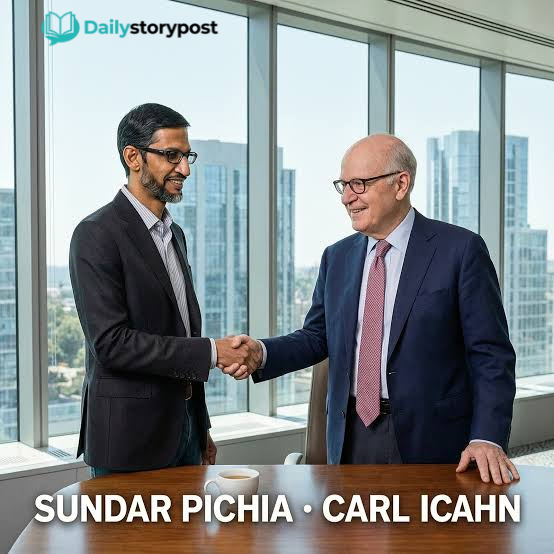
In 2015, Pichai became CEO of Google. The appointment represented a major step in his career and placed him in charge of one of the world’s most influential technology companies.
His responsibilities eventually expanded even further. In 2019, Pichai became CEO of Alphabet, Google’s parent company, while continuing as CEO of Google.
The change reflected Google’s corporate structure and the growing importance of Alphabet’s collection of businesses and technology projects.
As CEO, Pichai has overseen a company involved in search, advertising, YouTube, Android, Chrome, Google Cloud, hardware, artificial intelligence, and other areas of technology.
Pichai and the Rise of Artificial Intelligence
Artificial intelligence has become one of the defining issues of Pichai’s leadership.
Google had invested in machine learning and AI for years, but the rapid development of generative AI changed the competitive environment across the technology industry. Under Pichai’s leadership, Google has increasingly placed AI at the center of its products and long-term strategy.
Google’s AI efforts include products and research connected with Gemini, Google Search, Cloud, Android, Chrome, and Google DeepMind.
Pichai has described AI as a major technological shift, and Google’s recent product strategy reflects that focus. AI is being integrated into search, productivity tools, mobile software, browsers, and other services.
This part of Pichai’s career shows how the role of a modern technology CEO extends beyond managing existing products. Leaders also have to decide how a company should respond when an entirely new technology changes customer expectations and competitive pressures.
Who Is Carl Icahn?
Carl Icahn followed a very different professional path.
Born in New York in 1936, Icahn studied philosophy at Princeton University and later began his career on Wall Street. He entered the securities business in the early 1960s and eventually established his own investment firm, Icahn & Co., in 1968.
His career became particularly notable because of his willingness to acquire substantial positions in individual companies and push management to make changes.
Rather than building a career around developing technology products or managing a large workforce, Icahn built his reputation around capital allocation, corporate control, shareholder activism, and investment decisions.
Harvard Business School’s profile of Icahn describes his work with complex financial transactions and highlights his involvement in major corporate battles involving companies such as Tappan, Texaco, Phillips Petroleum, TWA, and US Steel.
Icahn’s Investment Approach
Icahn became one of the best-known figures associated with activist investing.
In simple terms, activist investors typically acquire significant stakes in companies and then seek changes they believe can improve the value of their investment. Those changes can involve management, company structure, asset sales, strategy, or other corporate decisions.
Icahn’s career included numerous campaigns and investments involving large American companies.
His public profile grew substantially during the corporate battles of the 1980s, when large companies and investors were increasingly involved in takeover activity and restructuring.
Over the decades, his investment interests expanded across many industries. His own biography lists involvement with companies in sectors including telecommunications, transportation, energy, manufacturing, pharmaceuticals, technology, entertainment, and consumer businesses.
That variety is one of the clearest differences between Icahn and Pichai. Pichai’s career has remained closely tied to technology and product leadership, whereas Icahn has operated across multiple industries through investments and corporate campaigns.
Icahn Enterprises
A major part of Icahn’s later career has been Icahn Enterprises, a diversified holding company through which Icahn and affiliated entities have held interests in various businesses and investments.
The company has had exposure to areas including energy, automotive, food packaging, real estate, and other industries.
Icahn has served as chairman of the board of the general partner of Icahn Enterprises and has maintained significant control over the company.
His involvement with Icahn Enterprises also illustrates the difference between being a corporate executive and being an investor with substantial ownership interests. Pichai’s primary role is to lead Google’s and Alphabet’s operations, while Icahn’s role has historically involved deploying capital and influencing corporate decisions.
Sundar Pichai and Carl Icahn: Different Career Paths
Although Sundar Pichai and Carl Icahn are both prominent business figures, their careers developed around very different professional skills.
Pichai’s career emphasizes technology, engineering, product management, and organizational leadership. He advanced by taking responsibility for important products and eventually managing an enormous global technology organization.
Icahn’s career emphasizes investment analysis, corporate strategy, negotiation, ownership, and shareholder influence. His professional activities have often centered on identifying companies where he believed changes could affect value.
Their educational backgrounds also reflect different interests. Pichai studied engineering and later business, while Icahn studied philosophy before entering finance.
Neither path follows a single formula for professional advancement. Their careers show how different combinations of knowledge, experience, timing, and opportunity can lead to major positions in business.
Their Leadership Styles
Pichai’s public leadership style has generally been associated with product development, engineering, long-term technology investment, and organizational management.
Running Google and Alphabet requires coordinating thousands of employees, multiple business units, large research operations, and products used by billions of people.
That means decisions often involve balancing technical development with business priorities, regulation, competition, and changing user behavior.
Icahn’s professional style has been more closely associated with direct engagement with companies in which he holds significant investments.
His approach has frequently involved arguing publicly or privately for corporate changes. Historically, his campaigns have sometimes resulted in negotiations with company boards and management teams.
The two therefore demonstrate different forms of business influence. Pichai exercises influence through executive authority inside a large technology organization, while Icahn has historically exercised influence through ownership and investment positions.
Major Achievements in Pichai’s Career
Pichai’s career includes several milestones that helped establish his position in the technology industry.
His involvement with Chrome came during Google’s expansion into the browser market. His later responsibilities for Android placed him close to one of the world’s most widely used mobile operating systems.
Becoming Google CEO in 2015 was another major milestone. Four years later, he also became CEO of Alphabet.
During his leadership, Google has continued investing heavily in AI, cloud computing, hardware, and other technology areas.
The company has also faced major changes in the technology industry during this period, including the rise of generative AI and growing competition among major technology companies.
Pichai’s career therefore reflects the transition from an internet company primarily associated with search and advertising toward a much broader technology organization with AI at its center.
Major Achievements in Icahn’s Career
Icahn’s career is notable for the number and scale of companies in which he has taken substantial positions.
His investment history includes well-known names such as RJR Nabisco, Texaco, Western Union, Viacom, Marvel, Motorola, Apple, eBay, Netflix, and Dell, among many others.
His reputation grew through situations in which he sought to influence companies after acquiring meaningful stakes.
For decades, this approach made Icahn an important figure in discussions about shareholder rights, corporate governance, mergers, acquisitions, restructuring, and management accountability.
His influence also extended beyond individual investments. Activist investing became a recognized part of modern corporate finance, and Icahn became one of its most prominent public representatives.
Challenges and Controversies
Major business careers rarely develop without controversy, and both figures have faced difficult periods.
For Pichai, leading Google and Alphabet has meant dealing with intense competition, regulatory scrutiny, employee concerns, changing technology, and the enormous challenge of managing AI development.
For Icahn, the nature of activist investing has often produced disagreements with company executives and boards. His strategies have attracted both supporters and critics, particularly when large corporate changes were proposed.
There is also a significant regulatory matter involving Icahn that should be understood carefully.
In August 2024, the U.S. Securities and Exchange Commission announced settlements involving Icahn and Icahn Enterprises. The SEC order found disclosure violations related to pledges of Icahn Enterprises securities as collateral for personal margin loans. Icahn consented to a $500,000 civil penalty, while Icahn Enterprises agreed to a $1.5 million civil penalty.
The SEC described the findings as non-scienter based, meaning the proceeding did not make a finding that the violations involved fraudulent intent. Icahn and Icahn Enterprises entered the settlements without admitting or denying the SEC’s allegations, apart from the SEC’s jurisdiction.
This example is useful because it demonstrates why a balanced career profile should distinguish between documented regulatory findings and broader opinions about an individual’s investment style.
What Their Careers Can Teach Us
The careers of Sundar Pichai and Carl Icahn offer different lessons for people interested in business.
One lesson is the importance of developing specialized knowledge. Pichai’s engineering and technology background became a foundation for his work in product development and corporate leadership.
Icahn’s career, meanwhile, shows the importance of understanding financial markets, corporate structures, ownership, and valuation.
Another lesson is that professional growth often happens gradually. Pichai spent years moving through increasingly senior product roles before becoming CEO. Icahn also spent years developing his investment business before becoming one of the most recognizable activist investors in the United States.
Their careers also demonstrate the importance of adapting to change. Technology companies must respond to new technical developments, while investors must respond to changing markets, regulations, and economic conditions.
A Broader Look at Their Influence
The influence of Pichai and Icahn extends beyond their individual job titles.
Pichai represents the modern technology executive whose decisions can affect products and services used globally. His leadership is closely connected with the development of AI, online services, mobile technology, cloud computing, and digital products.
Icahn represents a different kind of corporate influence. His career helped make activist investing a familiar part of discussions about public companies and shareholder interests.
Their careers also show how business influence can come from different positions within the corporate world.
A CEO can shape a company through strategy, product decisions, hiring, investment, and organizational priorities. An activist investor can seek change through ownership, negotiations, shareholder campaigns, and pressure on corporate management.
Why Their Careers Are Interesting to Compare
At first glance, Sundar Pichai and Carl Icahn may appear to have little in common.
One is a technology executive who rose through product management and engineering. The other is a veteran investor known for corporate campaigns and major financial transactions.
Yet both careers involve decision-making at a very high level.
Pichai has had to make decisions about where a major technology company should invest its resources and how it should respond to rapidly changing technology.
Icahn has spent decades making decisions about where capital should be invested and how companies could potentially change their strategies or structures.
The similarities therefore appear less in their industries and more in the scale of their responsibilities.
Conclusion
The careers of Sundar Pichai and Carl Icahn demonstrate two very different routes to becoming influential figures in business.
Pichai built his career through engineering, product development, technology management, and executive leadership. His journey from joining Google in 2004 to becoming CEO of Google and later Alphabet reflects a long progression through increasingly important responsibilities.
Icahn built his reputation through finance and investment. From beginning his Wall Street career in the 1960s to establishing Icahn & Co. and becoming a prominent activist investor, his professional journey has centered on ownership, financial strategy, and corporate influence.
Their stories are different, but both demonstrate the importance of expertise, persistence, strategic thinking, and the ability to operate in changing environments.
For readers interested in business careers, the comparison is valuable not because the two followed the same path, but because they show how technology leadership and investment leadership can create influence in completely different ways.