
Lifestyle & Work
How Muichiro Became One of Demon Slayer’s Hashira


Muichiro Tokito is one of the most memorable young characters in Demon Slayer: Kimetsu no Yaiba. Known as the Mist Hashira, he stands out not only because of his calm personality and distinctive fighting style, but also because of how quickly he reached one of the highest positions in the Demon Slayer Corps.
Muichiro’s journey to becoming a Hashira was anything but ordinary. He was still a teenager when he achieved a position that many experienced Demon Slayers could spend years trying to reach. According to the official Demon Slayer character information, Muichiro rose to the rank of Hashira within just two months of beginning his training.
That remarkable achievement was not simply the result of luck. Muichiro possessed extraordinary natural talent, impressive physical ability, strong instincts, and an unusual capacity to learn. However, his path was also shaped by tragedy, especially the loss of his twin brother, Yuichiro.
Understanding how Muichiro became a Hashira means looking beyond his battles. His story is about talent, grief, memory, determination, and the discovery of a reason to keep fighting.
Muichiro’s Early Life
Before becoming a member of the Demon Slayer Corps, Muichiro lived a quiet life with his twin brother, Yuichiro Tokito.
The twins lived with their parents in a remote mountain area. Their father worked as a woodcutter, while their mother became seriously ill. After losing both parents, Muichiro and Yuichiro were left to depend on each other.
Although they were twins, the brothers developed very different personalities.
Muichiro was naturally more optimistic and compassionate, while Yuichiro became more cautious and harsh after experiencing the loss of their parents. Yuichiro often tried to convince his brother that kindness would not change the difficult reality surrounding them.
Their relationship became one of the most important parts of Muichiro’s character.
For a time, Muichiro accepted his brother’s attitude. However, the events that followed would completely change his life.
The Tragedy That Changed Him

One day, a demon attacked the twins’ home.
Yuichiro was seriously injured while trying to protect Muichiro. Muichiro was also badly wounded, but his anger eventually overwhelmed his fear.
Despite having no formal Demon Slayer training at that point, Muichiro fought back using whatever was available to him. His desperate resistance showed that there was already an extraordinary level of physical ability and fighting instinct inside him.
By sunrise, the demon had been defeated, but the victory came at an enormous cost.
Yuichiro was dying.
Muichiro stayed beside his brother during his final moments. The experience left a deep emotional wound that would influence everything he did afterward.
Amane Ubuyashiki and her daughters later found Muichiro and helped him recover. After this tragedy, Muichiro’s memories became severely affected, and he eventually entered the Demon Slayer Corps.
The loss of Yuichiro became one of the hidden forces behind his determination.
Discovering His Talent

Muichiro’s greatest advantage was his natural ability.
Most Demon Slayers need years of intense training before they can reach the level required to become a Hashira. Muichiro was different. Once he began training with a sword, his progress was extraordinarily fast.
The official character profile describes him as a genius who rose to the ranks of Hashira within two months of beginning training.
That detail is important because becoming a Hashira is not simply a matter of receiving a title. The Hashira represent the highest-ranking swordsmen within the Demon Slayer Corps. They are expected to possess exceptional combat ability and to confront some of the strongest demons.
Muichiro’s rapid progress therefore says a great deal about his abilities.
His speed, reflexes, swordsmanship, concentration, and ability to understand combat situations allowed him to progress at a level far beyond most ordinary Demon Slayers.
The Two-Month Achievement
One of the most remarkable facts about Muichiro is the speed at which he became a Hashira.
He achieved the rank only two months after picking up a sword. Manga-reference material also records that this was considered an extraordinary accomplishment compared with the amount of training normally associated with reaching such a rank.
This is why other characters recognize Muichiro as an exceptional talent.
Tengen Uzui, the former Sound Hashira, also recognizes Muichiro’s extraordinary natural ability. The contrast is important: Muichiro was not simply a hardworking young swordsman who slowly climbed the ranks. His growth happened at an almost unbelievable pace.
However, talent alone does not explain everything.
Muichiro had already experienced the kind of loss that could either break a person or become a source of determination. His memories were damaged, but his anger toward demons remained deeply connected to him.
Even when he could not consciously remember everything about his past, part of him continued moving forward.
Becoming the Mist Hashira
After rising through the Demon Slayer Corps, Muichiro became known as the Mist Hashira.
The title comes from his use of Mist Breathing, a swordsmanship style derived from Wind Breathing. The style focuses on confusing an opponent through movements that resemble the obscuring nature of mist.
Muichiro’s fighting style perfectly matches the idea behind the technique.
He can change the rhythm and speed of his movements, making it difficult for an opponent to understand where he is going. Instead of simply overpowering an enemy, he can manipulate what the enemy sees and expects.
His oversized clothing also complements this approach by making his movements harder to read.
Mist Breathing became one of the defining parts of Muichiro’s identity as a Hashira. Over time, he became highly proficient with the style and even developed his own technique.
A Different Kind of Hashira
When Muichiro first appears in the story, he can seem cold and distant.
He often forgets things, loses interest quickly, and appears disconnected from the emotions of people around him. To someone meeting him for the first time, he may seem almost indifferent to the struggles of others.
But this personality is connected to his traumatic past and memory loss.
Muichiro had lost much of his personal history, including important memories involving Yuichiro and his family. His emotional distance was not simply arrogance.
As his memories gradually return, readers begin to understand the person underneath the calm exterior.
His character development is therefore closely tied to his journey as a Hashira.
The Swordsmith Village
Muichiro’s abilities become especially clear during the Swordsmith Village Arc.
At the beginning of the arc, he encounters Tanjiro Kamado and becomes involved in events surrounding the swordsmith village. When demons attack the village, Muichiro immediately becomes one of its most important defenders.
The threat includes Gyokko, Upper Rank Five of the Twelve Kizuki, making the situation extremely dangerous.
Muichiro confronts Gyokko directly.
The battle initially goes badly for him. Gyokko manages to trap Muichiro inside his Water Prison Pot, leaving the young Hashira with very little time to survive. Muichiro tries to escape but struggles to break through the technique.
This moment is important because it demonstrates that becoming a Hashira does not make Muichiro invincible.
He can still be caught off guard.
He can still make mistakes.
And he can still reach a point where his own strength is not enough.
The Importance of Kotetsu
While Muichiro is trapped, a young swordsmith named Kotetsu refuses to abandon him.
At first, Muichiro does not understand why Kotetsu would risk himself to save a Hashira. From Muichiro’s perspective, Kotetsu should simply escape and protect himself.
Instead, Kotetsu keeps trying to help.
Eventually, Kotetsu manages to provide Muichiro with air, giving him another chance to survive. This moment triggers an important realization in Muichiro.
He remembers the idea that people can accomplish things together that they could never accomplish alone.
The memory connects with something from his childhood and helps restore important parts of his past.
This is one of the turning points in Muichiro’s story.
His journey was never only about becoming stronger. He also needed to understand why other people mattered.
Remembering Yuichiro
As Muichiro’s memories return, he remembers his brother.
He remembers Yuichiro’s personality, their childhood, the attack, and the pain surrounding his brother’s death.
The memories also remind Muichiro why he began fighting demons.
His anger had never completely disappeared. Even when his conscious memories were missing, the emotional impact of Yuichiro’s death remained inside him.
That realization gives Muichiro a renewed sense of purpose.
He is no longer fighting simply because he happens to be a talented swordsman.
He understands what he wants to protect and why he wants demons destroyed.
This emotional change becomes directly connected to his power.
The Demon Slayer Mark
During his battle against Gyokko, Muichiro awakens the Demon Slayer Mark.
The mark appears as his memories return and his determination becomes stronger. His physical abilities increase dramatically, allowing him to fight Gyokko at a much higher level.
This transformation shows another important aspect of Muichiro’s character.
His greatest strength is not just his natural talent.
His emotions, memories, and determination also affect the way he fights.
Once Muichiro reconnects with his past, he becomes more focused and confident. The distant boy who once seemed uninterested in everything is replaced by a young Hashira with a clear purpose.
Muichiro vs. Gyokko
The fight against Gyokko becomes one of the strongest demonstrations of Muichiro’s abilities.
Gyokko is an Upper Rank demon, meaning he belongs to an elite group of demons who have survived and defeated countless opponents. Fighting such a demon is a tremendous challenge even for experienced Hashira.
Yet Muichiro eventually gains control of the battle.
He uses multiple Mist Breathing techniques to avoid Gyokko’s attacks, counter his Blood Demon Art, and protect himself from poisonous attacks. His ability to change his speed and disappear into the surrounding mist makes it extremely difficult for Gyokko to predict his movements.
The battle reaches its conclusion when Muichiro uses Mist Breathing, Seventh Form: Obscuring Clouds, a technique he personally developed.
The technique allows him to create a confusing field of movement that leaves Gyokko unable to track him properly.
Muichiro then closes the distance and beheads Gyokko.
The victory establishes just how far his abilities have developed.
What Makes Muichiro So Powerful?
Several qualities explain why Muichiro was able to reach Hashira level so quickly.
Natural Talent
Muichiro’s natural ability is perhaps his most obvious advantage.
His progress with the sword was extraordinarily fast, and other characters recognize that he possesses exceptional aptitude.
Speed
Speed is one of Muichiro’s defining strengths.
During his fight with Gyokko, he demonstrates that he can manipulate the speed of his movements to confuse an opponent. This becomes especially effective when combined with Mist Breathing.
Mist Breathing
Muichiro’s mastery of Mist Breathing gives him a unique combat style.
Rather than relying entirely on direct attacks, he uses movement, timing, speed, and visual confusion to control the battle.
Battle Instinct
Muichiro is capable of reacting quickly when circumstances change.
Even when he faces an unfamiliar attack, his instincts allow him to analyze the situation and find a response.
Determination
His experiences also gave him an unusually strong reason to fight.
The memory of Yuichiro and the anger created by his brother’s death became part of Muichiro’s motivation to eliminate demons.
Muichiro’s Growth
Perhaps the most interesting part of Muichiro’s story is that his growth is both physical and emotional.
At the beginning, he has enormous ability but limited emotional connection to the people around him.
As his memories return, he becomes more aware of kindness, sacrifice, friendship, and responsibility.
Tanjiro also plays a role in this development. His influence helps Muichiro reconsider the importance of helping others. Later, Muichiro’s actions show that he has adopted this idea himself.
He is no longer simply the talented young Hashira who fights because he is capable of doing so.
He becomes someone who understands that strength has value when it is used to protect others.
His Relationship With Other Hashira
Muichiro’s position among the Hashira is also interesting because of his age.
He is one of the youngest members of the group, yet his combat abilities place him alongside far more experienced swordsmen.
Kyojuro Rengoku recognizes his talent, while Tengen Uzui later identifies Muichiro as someone with exceptional natural aptitude. These observations reinforce the idea that Muichiro’s abilities were unusual even by Hashira standards.
Despite his reserved personality, Muichiro gradually develops stronger connections with other members of the Demon Slayer Corps.
His experiences teach him that he does not have to fight alone.
Why His Rise Matters
Muichiro’s rise to Hashira is important because it demonstrates how unusual talent can change the course of a person’s life.
He did not have years of experience before receiving the title.
Instead, he began training, developed at an incredible rate, and reached the highest level of the Demon Slayer Corps in only two months.
But his story also shows that becoming powerful is not the same as becoming complete.
Muichiro already had tremendous swordsmanship when the story introduced him. What he lacked was a connection to his own past and a deeper understanding of the people around him.
Recovering his memories helped him find that missing part of himself.
Muichiro’s Legacy
Muichiro’s time as a Hashira is relatively short, but his impact on Demon Slayer is significant.
His battle against Gyokko proves that he is capable of defeating an Upper Rank demon. His development of a unique Mist Breathing technique demonstrates his creativity as a swordsman. His recovery of his memories gives emotional meaning to his actions.
Later events further reveal the extraordinary potential that existed within him. His swordsmanship continues to attract attention because of the level he achieved at such a young age.
This makes Muichiro more than just a powerful character.
He represents a young person who experienced tremendous loss, temporarily lost his connection with his own identity, and eventually found his purpose again.
Conclusion
Muichiro became one of Demon Slayer’s Hashira because of an extraordinary combination of natural talent, intense training, exceptional swordsmanship, and an unbreakable determination to defeat demons.
His rise was incredibly fast. The official Demon Slayer material confirms that he became a Hashira within two months of beginning his training, making his achievement one of the most remarkable in the Demon Slayer Corps.
But the most meaningful part of his journey is not simply how quickly he became powerful.
Muichiro’s story is about what happened after tragedy took almost everything from him. Losing his parents and then his brother changed him, while his damaged memories left him emotionally distant. Yet the determination created by those experiences never completely disappeared.
When his memories finally returned, Muichiro understood the reason behind his strength.
His battle with Gyokko showed the result of that transformation. With his memories, purpose, Mist Breathing skills, and Demon Slayer Mark working together, he defeated one of the Twelve Kizuki’s Upper Ranks.
That is why Muichiro’s journey remains such an important part of Demon Slayer. He was not simply a gifted young swordsman who became a Hashira unusually quickly. He was a character whose greatest growth came when he finally remembered who he was, who he had lost, and what he wanted to protect.
FAQs
FAQs
1. How did Muichiro become a Hashira?
Muichiro became a Hashira after demonstrating exceptional swordsmanship and rapid growth. He reached the rank just two months after beginning his training.
2. How old was Muichiro when he became a Hashira?
Muichiro was only 14 years old when he served as the Mist Hashira, making him one of the youngest Hashira in the Demon Slayer Corps.
3. Why is Muichiro called the Mist Hashira?
Muichiro is known as the Mist Hashira because he specializes in Mist Breathing, a swordsmanship style that uses fast and deceptive movements.
4. What makes Muichiro so powerful?
His natural talent, speed, swordsmanship, Mist Breathing skills, and Demon Slayer Mark all contribute to his exceptional fighting ability.
5. Who did Muichiro defeat as a Hashira?
Muichiro defeated Gyokko, Upper Rank Five of the Twelve Kizuki, during the Swordsmith Village Arc.
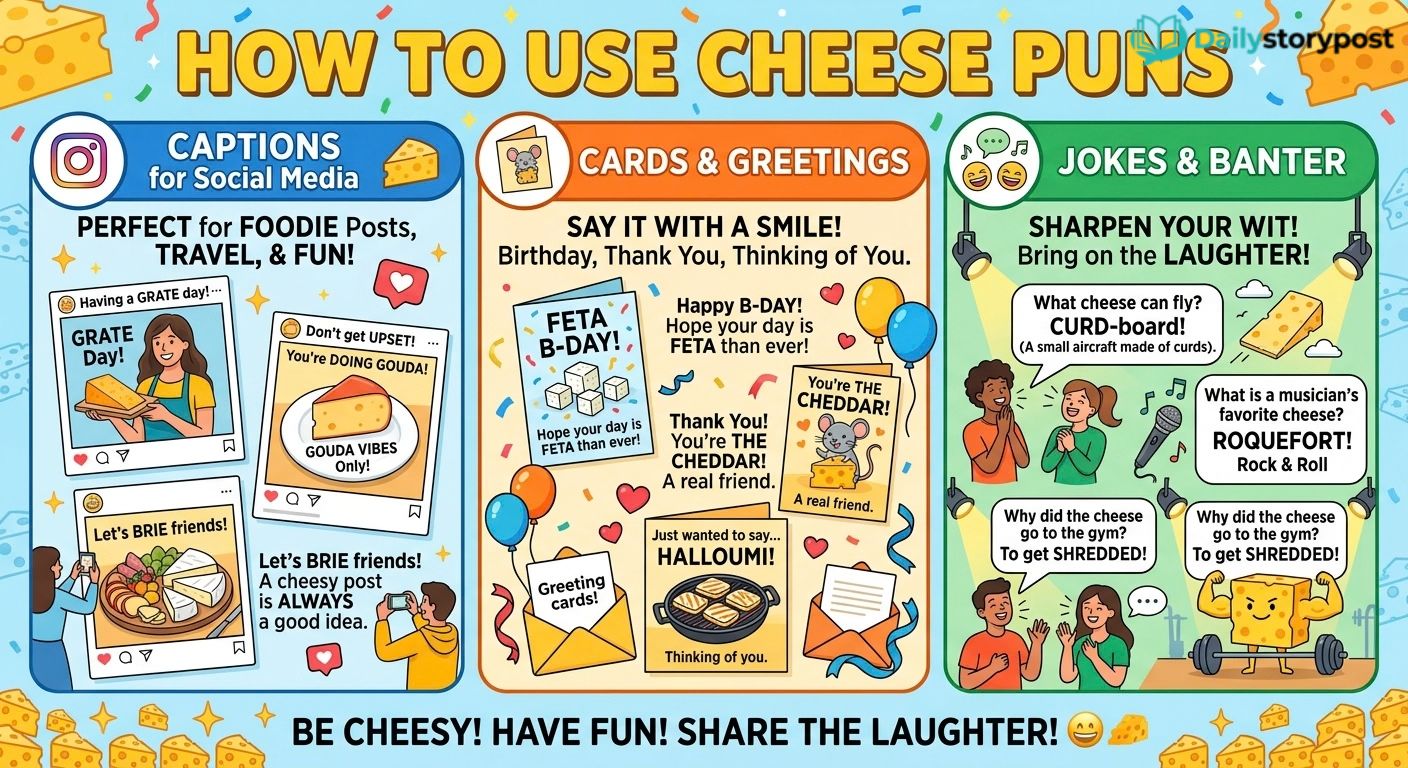
Cheese has a way of making ordinary moments feel a little more enjoyable. Put it on a sandwich, serve it at a party, add it to a food photo, or mention it in a joke, and it often brings a smile. That is one reason cheese puns have become such a popular form of lighthearted wordplay.
A good cheese pun does not need to be complicated. In many cases, the funniest line comes from taking a familiar cheese name such as brie, gouda, cheddar, feta, or Swiss and connecting it with an everyday phrase. The result can be short enough for a social media caption, warm enough for a greeting card, or playful enough to become part of a joke.
The Cambridge Dictionary describes a pun as a humorous use of a word or phrase that has several meanings or sounds like another word. That simple idea explains why cheese names work so well for wordplay: many of them can be connected naturally to familiar words and expressions.
Whether you are writing an Instagram caption, a birthday message, a text to a friend, or a quick joke for a gathering, the key is knowing how to use the pun without making it feel forced.
What Makes a Good Cheese Pun?
A good cheese pun usually starts with something the reader already understands. The cheese reference should be recognizable, while the second meaning or sound creates the humorous twist.
For example, cheese names such as gouda can be used because the word sounds similar to “good.” Likewise, “brie” can be played with because it sounds like the beginning of words such as “be” or “brief” in certain phrases.
The humor often comes from the small surprise. The reader begins a sentence expecting an ordinary expression and then notices that the wording has been changed into a cheese reference.
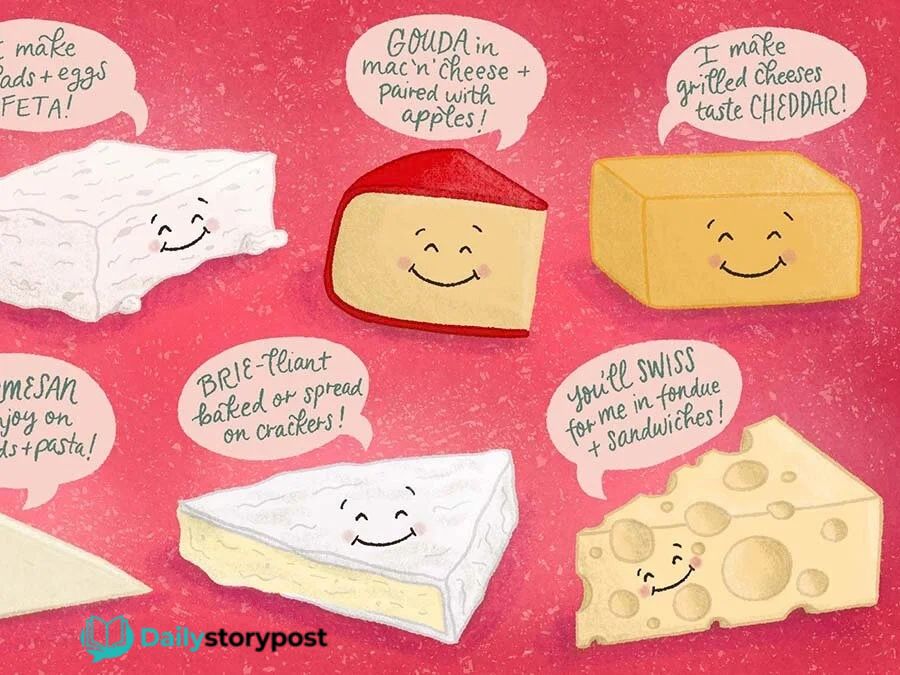
Research and commentary on humor frequently point to incongruity, or a mismatch between what people expect and what actually happens, as an important part of humor. The American Psychological Association has discussed this idea in its coverage of humor research, including how unexpected connections can contribute to amusement.
That is why a cheese pun is usually stronger when the setup feels natural. If the cheese reference is inserted only because the writer wants to mention cheese, the joke may sound awkward.
The best approach is simple: start with the message you want to communicate, then find a cheese-related word that fits it.
How to Use Cheese Puns in Social Media Captions
Social media captions are one of the easiest places to use cheese wordplay. A caption has limited space, so a short pun can add personality without requiring a long explanation.
If you are posting a photograph of a cheese board, for example, you can use a playful line that connects the food with your mood. If the photo shows friends sharing snacks, the pun can focus on friendship instead of the food itself.
This makes the caption feel more personal.
Short Cheese Puns for Instagram
Instagram captions work particularly well with short phrases. A reader may scroll quickly through a feed, so the joke should be understandable at a glance.
Instead of writing a long explanation, try building the caption around one central word. Gouda, brie, cheddar, feta, and Swiss are useful starting points because they are familiar cheese names.
A caption might have a playful tone such as:
- “Feeling gouda about today.”
- “You’re one of my favorite people to brie around.”
- “Life is cheddar with good company.”
- “This moment is worth savoring.”
- “Just here for the grate company.”
The goal is not to use every possible cheese reference. One well-placed pun is usually more effective than several crowded together.
Cheese Puns for Funny Posts
Funny posts can give you more room to develop the joke. You can create a setup, add a short cheese reference, and let the final phrase deliver the humor.
For example, imagine a photo of an enormous cheese board at a party. Instead of simply saying that the food looks delicious, you could build the caption around how difficult it is to choose one cheese.
That small change turns a basic food description into something more conversational.
You can also use cheese puns when posting about cooking, restaurant visits, picnics, family gatherings, or movie nights with snacks. The cheese does not have to be the main subject. Sometimes it works better as a small detail.
Cheese Puns for Food Lovers
Food-related captions are especially suitable for cheese wordplay because the pun and the subject naturally belong together.
A cheese enthusiast might post a photograph of a grilled cheese sandwich, pasta, pizza, cheese board, or baked dish. Rather than describing the dish in a standard way, a pun can give the post a distinctive voice.
The American Cheese Society recognizes a wide range of cheese styles and terminology, including cheddar, Gouda, Brie, mozzarella, Parmesan, feta, and Swiss-style cheeses. That variety gives writers plenty of familiar names to experiment with.
How to Use Cheese Puns in Cards
Greeting cards are another natural home for cheese humor. A card gives you more freedom than a social media caption because the message can be personal and sentimental while still having a playful ending.
The most important thing is to match the pun to the relationship.
A joke for your best friend can be more silly than a message for a colleague. A romantic card can use softer wordplay, while a birthday card can be much more playful.
Birthday Cards
Birthdays are perfect for light cheese puns because the message is already supposed to feel cheerful.
You can build the card around age, celebration, friendship, food, or simply having a good time. A cheese pun can work as the final sentence after a sincere birthday message.
For example, you might write something warm first and then finish with a playful cheese reference. That combination keeps the card from sounding like a collection of random jokes.
A little sincerity followed by a simple pun often feels more personal than a card filled entirely with wordplay.
Valentine’s Day Cards
Romantic cheese puns can be sweet without becoming overly serious.
Cheese names such as “brie” can be incorporated into affectionate sentences, while familiar expressions can be adjusted to create a food-themed joke.
The best romantic cheese puns are usually short. If the reader has to study the sentence to understand the joke, the emotional moment can disappear.
A simple line that makes your partner smile is often enough.
Thank-You Cards
A thank-you card does not have to be formal. If you are thanking a close friend, family member, host, or someone who appreciates food humor, a cheese pun can make the message more memorable.
Start with a genuine thank-you. Then use the pun as a small finishing touch.
For example, instead of replacing the entire message with jokes, you could write a sincere note about appreciating someone’s help and add a light cheese reference at the end.
The message should remain a thank-you first and a pun second.
How to Use Cheese Puns in Jokes
Cheese puns can also become the central idea of a joke. This requires slightly more structure than a caption.
A joke generally needs a setup and a payoff. The setup gives the audience enough information to understand the situation, while the final line changes their expectation or adds a surprising connection.
With a cheese pun, the final connection often comes from a cheese name or a word that sounds similar to another expression.
The important thing is timing.
If you reveal the pun too early, the audience may understand where the joke is going. If you make the setup too long, the humor can lose its energy.
A short setup followed by a clear wordplay-based ending usually works better.
Popular Cheese Words for Making Puns
Knowing the names of familiar cheeses can help you create original wordplay instead of repeating the same jokes.
Gouda is particularly useful because it resembles the sound of “good.” This makes it suitable for positive messages.
Brie is another flexible option. Its sound can be connected with several everyday expressions depending on the sentence.
Cheddar can be useful when playing with phrases involving “better” or “cheddar” itself, especially in deliberately silly jokes.
Swiss is useful for jokes involving holes, because Swiss-style cheeses are commonly associated with eye formation. The American Cheese Society specifically identifies Swiss and other Emmental types with eye formation.
Feta can be used for sound-based wordplay, particularly when creating short, casual lines.
Mozzarella is longer and less flexible, but its recognizable sound makes it useful in food-related jokes.
Parmesan can work well when the subject involves pasta, pizza, or Italian-style food.
The trick is not to force every cheese name into a pun. Some names naturally offer more wordplay opportunities than others.
Cheese Puns for Different Occasions
The same cheese pun will not work equally well in every situation. A joke that sounds funny between close friends may feel inappropriate in a professional message.
Funny Cheese Puns for Friends
Friends are usually the easiest audience because you can use sillier and more exaggerated wordplay.
A casual text can include a one-line pun, especially when you are discussing food or making plans for a meal.
The less formal the conversation, the more freedom you have to experiment.
Cute Cheese Puns for Couples
For couples, cheese puns can be affectionate rather than purely funny.
A short line about being together, missing someone, or enjoying a special meal can be combined with cheese wordplay.
Keep the emotion genuine and let the pun provide the smile.
Cheese Puns for Parties
Party invitations and signs can use cheese puns to create a relaxed atmosphere.
A cheese-and-wine evening, birthday gathering, picnic, or casual dinner can all provide opportunities for food-based wordplay.
A short phrase on an invitation or menu can be more effective than a long joke because guests can understand it immediately.
Cheese Puns for Food Posts
Food posts give you the most obvious opportunity to use cheese wordplay.
Look at the dish first. Is it pizza? Pasta? A sandwich? A cheese board? Then choose a cheese-related word that fits the photograph.
The visual and the caption should support each other.
Cheese Puns for Everyday Messages
You do not need a special occasion to use a pun.
A simple message to a friend can become more playful with one unexpected cheese reference. This works particularly well when the other person already enjoys dad jokes, food humor, or silly wordplay.
How to Create Your Own Cheese Puns
Creating your own cheese puns is easier when you use a simple process.
First, choose the message. Decide what you actually want to say. It could be congratulations, affection, thanks, excitement, or a joke about food.
Second, choose a cheese. Think about familiar names such as Gouda, Brie, Cheddar, Feta, Swiss, or Parmesan.
Third, listen for similar sounds. Say the cheese name aloud and think about ordinary words or phrases that sound similar.
Fourth, connect the meanings. Build a sentence where the cheese reference makes sense in the context.
Fifth, remove unnecessary words. A pun usually becomes stronger when the sentence is short.
Finally, read it aloud.
If you naturally smile or immediately understand the connection, the pun probably works. If you need to explain why it is funny, try simplifying it.
Common Mistakes to Avoid
One of the biggest mistakes is overloading the sentence with puns.
Using one cheese pun can be charming. Using five or six in every sentence can make the writing feel predictable.
Another mistake is choosing a cheese that the audience may not recognize. While obscure cheese names can be fun for enthusiasts, a general audience may not understand the reference.
It is also important to avoid explaining the joke immediately. If the pun needs an explanation, consider rewriting it rather than adding a paragraph that tells readers why they should laugh.
Timing and simplicity matter more than cleverness.
You should also avoid using the same cheese reference repeatedly. Variety keeps the humor fresh.
Examples of Cheese Pun Styles
There are several ways to structure cheese wordplay.
One-liners are short and easy to use in captions or texts.
Question-and-answer jokes create a small setup before revealing the pun.
Caption-style puns work best when they relate directly to a photograph.
Compliment puns can be used in cards and messages.
Romantic puns work well for couples and Valentine’s Day.
Food-related jokes are useful for restaurants, cooking posts, parties, and recipe content.
Each style serves a different purpose. A one-liner may be ideal for Instagram, while a question-and-answer format may work better when telling a joke aloud.
Tips for Making Cheese Puns More Effective
The first rule is to keep the audience in mind.
A cheese enthusiast may appreciate a reference to a specific cheese style, while someone who rarely eats cheese may prefer a familiar name and straightforward wordplay.
The second rule is to keep the language natural. Do not change an entire sentence simply to fit a pun.
The third rule is to connect the joke with the situation. A cheese pun about friendship makes sense in a message to a friend. A cheese pun about celebration fits a birthday post. A cheese pun about food belongs naturally in a restaurant or recipe caption.
The fourth rule is to use moderation.
Humor research discussed by the American Psychological Association suggests that incongruity can play an important role in humor, but context, audience, mood, and social situation also matter. A line that seems funny in one setting may not work in another.
That is useful advice for cheese puns too. The joke is not only about the words; it is also about when, where, and how you use them.
FAQs About Cheese Puns
What makes a cheese pun funny?
A cheese pun is usually funny because it connects a familiar cheese name with another word, phrase, or meaning. The humor comes from recognizing the unexpected connection.
What are good cheese puns for Instagram captions?
Short cheese puns work particularly well on Instagram. Choose a familiar cheese name and connect it directly to the photograph or mood of the post.
How can I make my own cheese puns?
Start with a sentence you want to write, choose a familiar cheese name, look for similar sounds, and then create a natural connection. Keep the final sentence short.
Are cheese puns suitable for birthday cards?
Yes. Cheese puns can add a playful touch to birthday cards, especially when the recipient enjoys food humor or simple jokes. Pairing the pun with a sincere birthday message usually makes it feel more personal.
Which cheese names are easiest to use in puns?
Gouda, Brie, Cheddar, Feta, and Swiss are useful starting points because they are familiar and offer opportunities for sound-based or association-based wordplay. The American Cheese Society lists these among established cheese styles and types discussed in its educational resources.
Conclusion
Cheese puns are simple, flexible, and easy to adapt when you know how to use them. They can turn an ordinary Instagram caption into something memorable, add personality to a birthday card, or give a simple joke an unexpected ending.
The secret is not to make every sentence a pun. Instead, start with the message, understand your audience, and look for one cheese-related word that naturally fits the situation.
Familiar names such as Gouda, Brie, Cheddar, Feta, Swiss, mozzarella, and Parmesan give you plenty of material to experiment with. Cheese itself also has a wide vocabulary and range of styles, which means there is no shortage of ideas for food lovers and writers.
So the next time you need a funny caption, a friendly card message, or a quick joke, do not overthink it. Pick a cheese, find the wordplay, keep it natural, and let the humor do the rest.
After all, when the right words come together, the result can be pretty grate
FAQs About Cheese Puns
What are cheese puns?
Cheese puns are playful jokes or phrases that use cheese names, sounds, or meanings to create humor. They work well in captions, cards, texts, and casual jokes.
Why are cheese puns popular?
Cheese puns are easy to understand and can make ordinary messages more playful. Their simple wordplay makes them suitable for many audiences and occasions.
What are some common cheese names used in puns?
Gouda, Brie, Cheddar, Feta, and Swiss are popular choices. Their familiar names make it easier to create simple wordplay.
How can I use cheese puns in captions?
Choose a cheese-related phrase that matches your photo or mood. Keep the caption short so the joke is easy to understand at a glance.
Can cheese puns be used in greeting cards?
Yes. They can add a fun touch to birthday, Valentine’s Day, thank-you, and friendship cards. Pairing a pun with a sincere message keeps the card personal.

Mariam AtefEmma.SMariam Atef and Emma A. Smith
poison tree tattoo meaning Because deep breathing exercises don’t always work, some people turn to the visually captivating Poison Tree tattoo to manage their anger.
“A Poison Tree†is a short, deceptively simple poem by English poet William Blake (1757–1827), published in his dark-toned Songs of Experience collection in 1794 (per Finding Blake).
The poem explores powerful emotions like suppressed anger and the dangers of unexpressed wrath (via BBC).
As a tattoo, the Poison Tree symbolizes the internal damage caused by long-held rage, emotional secrecy, and eventual eruption.
It also serves as a visual metaphor for the wearer’s self-healing journey, resonating with those seeking expressive, emotionally rich body art.
RELATED:
- – Face Tattoo Creates A Major Hurdle After Prison, Until A New Job Changes The Young Man’s Plans
- – Mom With 800 Tattoos Reveals Her Face Without The “Extreme†Look, But Her Family And Even Her Dog Weren’t Prepared
- – The Tattoos People Swore They’d Love Forever Have Created A Billion-Dollar Industry Of Regret
Table of Contents
1.
1) Symbolism and Meaning of “A Poison Treeâ€
2) One Poem, Various Interpretations
3) 10 Poison Tree Tattoo Ideas to Start Your Self-Healing Journey
- Bold Poison Tree Forearm Tattoo
- Minimalist Poison Tree Finger Tat
- Small Back-of-the-Neck Poison Tree
- Spooky Poison Tree Ink
- Cool Poison Tree Tattoo on the Stomach
- Simple Forearm Poison Tree Tattoo
- Upper Back Poison Tree Tattoo
- Blackwork Forearm Poison Tree Tattoo
- Minimalist Poison Tree Body Art
- Shoulder Blade Healing Tree Tattoo
4) Ideal Poison Tree Tattoo Placements
5) A Symbol of Pain and Release
See more »
Symbolism and Meaning of “A Poison Treeâ€

Primis Frame
AdvertisementAdvertisement
2.6M
225
Heartbroken Family Breaks Silence After Mom Ended Daughter’s Life In Las Vegas Hotel After Missed Competition
primisNativeSkinFrame_SekindoSPlayer6ab594cb013c5
Fiercely honest and averse to hypocrisy, William Blake crafted a poem that continues to provoke deep reflection.
At its heart, “A Poison Tree†explores powerful, potentially destructive emotions like suppressed anger, festering hatred, and the deep sorrow intensifying internal turmoil.
The poem’s potent symbolism continues to resonate with readers and poets alike. Author Clare Crossman, for example, was drawn to its deceptive simplicity.
“Blake seems to be saying that however difficult we find it, we must stand up to our real foes and express our angers, because if we don’t the consequences are terrible,†said Crossman, poet and contributor to Finding Blake.
“Courage and forgiveness are also required, which can be found for a friend, but someone you really don’t like? That’s another matter. It is easier with a friend, but maybe not impossible with a foe.â€
As Crossman noted, Blake’s message still rings true centuries later: “Good advice from 225 years ago. Oh, William Blake, you were wise. You looked directly at hatred and what it does.â€
One Poem, Various Interpretations
Though often linked to repressed anger and its destructive aftermath, Blake’s “Poison Tree†also reflects themes like personal strength and the journey toward self-healing.
Poetry, by nature, is open to varied interpretations. A study titled “Poetry as a Complex System†from the University of Vermont points out that seemingly simple poems can hold layered meanings.
Blake’s work fits that mold. Take the well-known line, “And it grew both day and night,/ Till it bore an apple bright.†This could symbolize anger maturing into something dangerous or allude to the biblical Forbidden Fruit (via BBC).
The poem also invites diverse readings through generational and subcultural lenses. Literature lovers still debate its true intent. As one user on Reddit put it: “I love Blake but the meaning of this one remains elusive to me.â€
Another replied, “He grew a poisonous apple with the hatred of his foe. His foe ate the poisoned apple, and died.â€
Poet Clare Crossman offered a more psychological take: “The poem I think is about real hatred and real dislike, where those involve dissemble and pretend to be opposite to who they are while harbouring a deep, destructive anger.â€
Subcultures also shape interpretation. The goth community, for instance, leans into the poem’s darker elements, such as bottled-up fury, emotional repression, and tragic consequences.
Meanwhile, therapy culture highlights a hopeful reading. According to the Council for Relationships, the poem can be seen as an invitation to release buried pain and begin emotional recovery rather than a warning.
10 Poison Tree Tattoo Ideas to Start Your Self-Healing Journey
If there’s a better way to channel the energy of buried anger, it’s through one of these 10 stunning Poison Tree tattoo ideas.
Bold Poison Tree Forearm Tattoo
A forearm tattoo never misses. It’s timeless, bold, and a clear display of self-assurance. Wearing your ink on this visible canvas signals pride in your story.
For fans of bold, intricate designs, a forearm Poison Tree tattoo makes a powerful statement. Sure, it’s not easy to hide, but that’s part of its strength: it’s meant to be seen.
Minimalist Poison Tree Finger Tat
While finger ink is often a metaphor for strong romantic bonds and friendships, it can also represent other personal values, like individual beliefs.
By placing your healing tree on your finger, you aren’t only expressing your individuality but also avoiding chunky tattoos you might regret later in life.
Small Back-of-the-Neck Poison Tree
The back of the neck is a powerful spot for expressive body art.
Here, a minimalist Poison Tree design paired with subtle color details offers a striking way to acknowledge vulnerability, often the first step in any real healing journey.
Plus, there’s no denying that back-of-the-neck tattoos are effortlessly cool. Think of it as wearable art that also turns heads.
Spooky Poison Tree Ink
Blake’s Poison Tree already leans into the eerie. Take it further with chilling visuals: a skull, a looming full moon, and crows scattered among the tree’s branches.
This design turns the symbolic tree into a gothic statement piece, perfect for those who want their tattoo to whisper secrets in the dark.
Cool Poison Tree Tattoo on the Stomach
 The stomach isn’t the most obvious spot for a tattoo, but it’s what makes it bold. It’s unexpected, distinctive, and perfect for anyone who wants their ink to stand out.
Inking your Poison Tree on one side of your stomach can be a decisive nod to healing, self-assurance, and body confidence. Add a few birds in flight for a whimsical touch, and it might just make for the perfect flirty reveal.
Simple Forearm Poison Tree Tattoo
Minimalist ink lovers will appreciate the elegance of a clean, simple Poison Tree tattoo. The forearm is the perfect place to keep it understated yet visible, subtle enough for daily wear, and bold enough to catch the eye.
Upper Back Poison Tree Tattoo
 Few placements say “growth†like a bold Poison Tree tattoo across your upper back. It’s strong, centered, and unmistakably personal.
There’s a reason this placement resonates: it captures transformation in a striking and symbolic way.
Blackwork Forearm Poison Tree Tattoo
For tattoo enthusiasts with sleeves in progress, this blackwork Poison Tree design adds another layer of meaning and style. The dark, detailed linework paired with soaring birds gives the piece emotional depth.
It’s a bold storytelling piece, perfect for anyone building a body art narrative one piece at a time.
Minimalist Poison Tree Body Art
Minimalism meets impact in this sleek design, where the Poison Tree’s roots stretch subtly onto the hands. This clever detail adds edge and makes your ink feel alive.
Shoulder Blade Healing Tree Tattoo
Inking one side of your back isn’t just visually striking, but strategic. This asymmetrical placement draws attention while leaving space for future additions.
Whether it’s your first step or part of a larger design vision, this particular example balances impact with potential.
Ideal Poison Tree Tattoo Placements
Choosing where to place your Poison Tree tattoo is personal, but few placements carry strong symbolism. The forearm, back, and ribs are among the most expressive options.
Placement affects how the tattoo is perceived. A back tattoo, for instance, often symbolizes strength and quiet resilience. In other words, you wear it for yourself.
In contrast, a forearm tattoo signals comfort with visibility. You’re showing the world your ink and story without hiding behind sleeves.
Ultimately, it’s about alignment with your narrative. If subtlety feels more true to you, a discreet design might reflect buried emotions without inviting direct attention. Bold or hidden, it all depends on what you want the ink to say.
A Symbol of Pain and Release
A Poison Tree tattoo isn’t just about marking past wounds but also a declaration of growth, healing, and the decision to move forward.
Like other milestone tattoos, Blake’s symbolic tree often honors emotional breakthroughs or the closure of a difficult chapter.
Blake’s timeless line offers a fitting mantra for those ready to rise from pain and begin again: “No bird soars too high if he soars with his own wings.â€
Let that resonate.
FAQs
1. What does a poison tree tattoo mean?
A poison tree tattoo can symbolize hidden anger, betrayal, toxic relationships, emotional pain, or the consequences of allowing negative feelings to grow.
2. Is a poison tree tattoo always negative?
No. It can also represent personal growth, healing, resilience, and learning from difficult experiences.
3. What does the poison tree symbolize in literature?
The image is often associated with William Blake’s poem A Poison Tree, where suppressed anger grows into a destructive force.
4. What does a poison tree tattoo mean in a relationship?
It may represent a toxic relationship, unresolved conflict, betrayal, or the decision to move away from an unhealthy emotional connection.
5. Can a poison tree tattoo have a personal meaning?
Yes. Tattoo meanings are personal, so the design can represent overcoming anger, leaving negativity behind, or remembering an important life lesson.

If you have recently come across the term brumeblog com, you may be wondering what the website is actually about, what kind of information it publishes, and how visitors can use it.
At first glance, BrumeBlog.com looks like a general-interest publishing website rather than a platform built around one specific subject. Its homepage currently features articles covering areas such as education, business, technology, law, lifestyle, finance, health, travel, and literature.
That broad approach makes the site different from a specialist blog that concentrates entirely on one topic. Instead, readers can find articles about different subjects in one place.
This guide takes a closer look at brumeblog com, explains how the website is organized, discusses the type of content available, and highlights a few practical things readers should consider when using information found online.
BIO
| Label | Information |
|---|---|
| Name | Brumeblog Com |
| Website Type | General-interest blog |
| Main Purpose | Sharing online information |
| Content Style | Informational articles |
| Main Topics | Technology, business, lifestyle |
| Other Topics | Finance, health, travel, law |
| Education | Learning and study-related content |
| Technology | AI and digital topics |
| Audience | General online readers |
| Navigation | Categories and search |
| Key Feature | Wide range of subjects |
| Best Use | General reading and research |
What Is Brumeblog Com?
Brumeblog.com is a multi-category content website that publishes informational articles across a range of subjects.
The site describes itself as a place offering a variety of magazines and content covering areas such as fashion, lifestyle, entertainment, technology, business, and sports. Its current navigation also shows categories including Business, Education, Finance, Health, Lifestyle, Technology, and Travel.
The website therefore does not appear to be designed for one narrow audience.
Someone interested in technology might find a technology article, while another visitor could arrive looking for information about education, law, business, or literature.
This type of website can be useful for people who prefer browsing different subjects instead of visiting several specialist websites.
It is important, however, to understand what a general-interest blog can and cannot provide. A website covering many topics should not automatically be treated as an expert authority in every field. For subjects involving legal, financial, medical, or other important decisions, readers should always compare information with authoritative sources.
How Does Brumeblog Com Work?

The basic idea behind brumeblog com is straightforward.
Articles are published under different categories, and visitors can browse the homepage, select a category, search for a topic, or open individual posts. The homepage includes a search function and a list of categories, making the site relatively simple to navigate.
A visitor does not appear to need a special account simply to browse the publicly available articles.
The process is similar to using many traditional blogs:
- Visit the website.
- Browse the latest articles.
- Choose a category that matches your interests.
- Open an article.
- Read the information provided.
- Use the site’s search function when looking for a specific subject.
This simple structure means that most of the work happens on the content side rather than through complicated tools or account features.
What Kind of Content Does Brumeblog Com Publish?
One of the most noticeable characteristics of brumeblog com is the variety of topics.
Recent posts visible on the homepage include an explanation of Robert Frost’s The Road Not Taken, an article comparing Google Gemini and Google Search, a guide to AI-powered business ideas, workplace-related information, and legal information about car accidents.
The category list expands this range even further.
The site currently displays sections for AI, Blog, Business, Crypto, Education, Fashion, Finance, Game, Health, Home, Law, Lifestyle, Literature, Online Game, Pets, Real Estate, Technology, Trading, Travel, and Websites.
This tells readers something important about the site’s overall purpose.
It is not primarily a specialist publication. Instead, it works more like a broad online magazine where readers can discover articles from several areas.
Exploring the Main Categories
The categories make it easier to understand how brumeblog com organizes its content.
Business and Finance
Business-related articles can be useful for readers interested in workplace issues, entrepreneurship, companies, and general business subjects.
Finance provides another area for people researching money-related topics. Because financial decisions can have serious consequences, readers should treat general blog information as a starting point and verify important claims through established financial sources.
Technology and AI
Technology is another prominent part of the website.
The homepage currently features content about Google Gemini, Google Search, and artificial intelligence business ideas.
Technology changes quickly, so readers should pay attention to publication dates when reading technology articles.
A guide that was accurate several months ago may need updating after a product, service, or platform changes.
Education and Literature
The education and literature categories provide a different type of reading experience.
For example, the site currently features an article explaining Robert Frost’s The Road Not Taken. The article focuses on the poem’s themes, including choices, decisions, uncertainty, and consequences.
Content in this category can be useful for general learning, background reading, or students who need a starting point for further research.
Health and Lifestyle
Health and lifestyle are also represented on the site.
The health category contains articles dealing with different health-related subjects.
However, health information deserves extra care. Readers should not use a general online article as a substitute for professional medical advice, especially when symptoms, medication, diagnosis, or treatment are involved.
How to Find an Article on Brumeblog Com
Finding information on brumeblog com is relatively simple.
The first option is to browse the homepage. Recent articles are displayed there, allowing visitors to see what has been published recently. The homepage also includes category navigation and a search feature.
If you already know the general subject you are interested in, selecting a category can save time.
For example, someone looking for technology-related information can choose Technology rather than scrolling through articles from every category.
The search function is another useful option when you have a specific phrase or topic in mind.
Is Brumeblog Com Easy to Use?
From its visible structure, the website follows a fairly conventional blog layout.
The main navigation appears at the top, articles are presented in a chronological-style feed, and categories are available for more targeted browsing. A search box is also provided.
That approach is familiar to most internet users.
There is no complicated process required to understand where articles are located. Readers who regularly use blogs or online magazines should be able to move around the site without much difficulty.
The usefulness of the experience, however, depends not only on navigation but also on the quality and relevance of individual articles.
What Should You Check Before Trusting an Article?
This is one of the most important questions when using any general-interest website.
A professional-looking website does not automatically mean every statement published on it is correct.
When reading an article on brumeblog com, consider the following:
Check the publication date.
Older articles may contain information that has changed.
Look at the author information.
Knowing who wrote an article can provide useful context, particularly for specialist subjects.
Compare important claims.
If an article discusses health, law, finance, or another high-stakes subject, check important details against authoritative sources.
Look for supporting evidence.
Specific claims should ideally be supported by credible documentation or references.
Separate explanation from advice.
An informational article may explain a topic without being appropriate as personal professional advice.
These habits are useful regardless of which website you are reading.
Is Brumeblog Com a News Website?
It is better to think of brumeblog com as a general content and blogging platform rather than automatically treating it as a traditional news organization.
Its visible content covers evergreen explanations, informational guides, lifestyle subjects, technology discussions, business topics, and other general-interest material.
Some articles may discuss current subjects, but that does not necessarily make the website a breaking-news publication.
This distinction matters because readers have different expectations from news reporting and general blog content.
For breaking events or rapidly developing stories, established news organizations and official sources may provide more appropriate primary information.
Who May Find Brumeblog Com Useful?
The site’s broad subject range means it can appeal to several types of readers.
Casual readers may enjoy discovering articles about topics they did not originally intend to search for.
Students may find general explanations useful when beginning research into a subject.
Technology readers can browse articles related to AI and digital tools.
Business readers can explore workplace and entrepreneurship-related topics.
General internet users may simply use the site when looking for an explanation of a particular term or subject.
The main advantage for these audiences is variety.
Instead of focusing on a single niche, brumeblog com provides a collection of different topics under one website.
What Are the Advantages?
There are several practical advantages to this type of website.
Wide topic selection: Readers can move between categories covering technology, business, education, health, lifestyle, law, travel, and more.
Simple browsing: The homepage provides categories, recent posts, and a search function.
Accessible explanations: Many blog-style articles are written for ordinary readers rather than specialists.
Different interests in one place: A visitor can explore unrelated subjects without having to leave the site.
These advantages make a multi-topic blog convenient for casual research and everyday reading.
What Are the Limitations?
There are also limitations worth keeping in mind.
The biggest is topic breadth.
When one website covers many subjects, it is difficult for every article to have the same level of specialist expertise. A general article about technology, for example, should be evaluated differently from a technical document written by a recognized specialist.
Another consideration is content freshness.
Some subjects change quickly, particularly technology, finance, law, and online services. Readers should therefore check when an article was published and whether the information remains current.
The site itself contains older posts alongside newer material, showing that its archive extends across different periods.
This is normal for an established blog archive, but it makes dates particularly important when researching changing subjects.
How to Use Brumeblog Com Responsibly
The best way to use brumeblog com is as one source within a wider research process.
Suppose you find an interesting explanation of a legal topic. Read the article to understand the basic idea, then check the relevant government or legal authority for current rules.
The same approach works for health.
Read the article to become familiar with the subject, but consult a qualified healthcare professional for personal medical questions.
For financial topics, compare general information with reliable financial institutions, regulators, or professional advisers.
This approach allows readers to benefit from easy-to-understand online content without treating every blog post as the final word.
What Makes Brumeblog Com Different?
The defining feature of brumeblog com is its broad editorial range.
A specialist website usually has a clear central theme. BrumeBlog.com takes a wider approach, bringing together topics that can range from literature and education to technology, business, health, law, and lifestyle.
That makes it more suitable for discovery and general reading than for highly specialized research.
For many readers, this can be a positive feature.
Someone may arrive looking for one topic and discover another article that answers a completely different question they had not considered.
Final Thoughts
So, what is brumeblog com and how does it work?
BrumeBlog.com is a multi-topic online content website that organizes articles into categories such as Business, Education, Finance, Health, Lifestyle, Technology, Travel, Law, Literature, and several others. Visitors can browse recent posts, choose categories, or use the site’s search function to find particular topics.
Its biggest strength is variety.
Rather than concentrating on a single niche, the website gives readers access to information across many areas. That makes it potentially useful for casual reading, initial research, and discovering new subjects.
At the same time, readers should use good judgment.
A blog can be a helpful starting point, but important claims should be checked against reliable primary or professional sources. This is especially important for health, law, finance, and other subjects where outdated or incomplete information could lead to poor decisions.
In short, brumeblog com works much like a broad digital magazine: readers arrive with a question or interest, browse relevant categories or articles, and use the available content to learn more about the subject.
The smartest approach is to enjoy the convenience of a multi-topic blog while keeping the same basic habit that applies to all online research: read carefully, check dates, consider the source, and verify important information before acting on it.
Frequently Asked Questions
1. What is Brumeblog Com?
Brumeblog Com is a general-interest website that publishes articles on topics such as technology, business, education, finance, lifestyle, health, travel, and literature.
2. How does Brumeblog Com work?
Visitors can browse recent posts, choose different categories, or use the site’s search feature to find articles related to specific topics.
3. What topics can you find on Brumeblog Com?
The website covers a wide range of subjects, including technology, AI, business, education, finance, health, law, lifestyle, travel, and literature.
4. Is Brumeblog Com useful for research?
It can be useful for general information and initial research. For important medical, legal, or financial decisions, readers should also verify information through authoritative sources.
5. Who can use Brumeblog Com?
The site can be useful for general readers, students, technology enthusiasts, business readers, and anyone looking to explore different online topics.


 Celebrity4 months ago
How Tall Is Glen Powell? Height, Facts, and More
- Celebrity4 months ago
Fielder Jewett Age: Everything We Know About Him in 2026
- Technology4 months ago
How Simpcitt Is Changing the Way People Think Today
- Celebrity4 months ago
Who Is Meredith Schwarz? Key Facts You Should Know
- Food & Drink4 months ago
Where to Find the Best Piononos de Santa Fe Near Me Today
- Home Safety3 months ago
How KDArchitects Landscape Ideas by Morph Transform Outdoor Spaces
- Business4 months ago
How to Buy Milohacherry Coin Safely and Get Started Today
- Business4 months ago
How Driving Modes in Cadillac Lyriq Impact Range and Efficiency