Technology
How Microsoft Ink Makes Note-Taking Easier Every Day

https //www.microsoft.com /ink In a world where ideas move quickly, people need tools that help them capture thoughts the moment they appear. Whether you are a student in a classroom, a professional in a meeting, or a creative sketching your next project, taking notes remains an important part of daily life.
For many years, pen and paper were the preferred choice. They are simple, familiar, and comfortable. However, modern work and study environments demand something more flexible. Notes need to be searchable, shareable, and available across devices. This is where Microsoft Ink has found its place.
Microsoft Ink combines the natural experience of writing with a pen and the convenience of digital technology. Instead of choosing between handwriting and digital organization, users can enjoy both. It allows people to write, draw, annotate, and organize information in a way that feels natural while remaining connected to the Microsoft ecosystem.
Today, Microsoft Ink is used across Windows devices, Microsoft OneNote, Microsoft Word, Whiteboard, and several other applications. It has quietly become one of Microsoft’s most practical productivity tools, helping millions of users turn handwritten thoughts into organized digital content.
BIO
| Label | Information |
|---|---|
| Name | Microsoft Ink |
| Also Known As | Windows Ink |
| Developed By | Microsoft |
| Category | Digital Inking Platform |
| Initial Release | Windows 10 Era |
| Primary Purpose | Digital note-taking and annotation |
| Supported Devices | Pen-enabled Windows PCs and tablets |
| Key Feature | Handwriting recognition |
| Text Conversion | Converts ink to editable text |
| Popular Apps | OneNote, Word, Whiteboard, Journal |
| Cloud Support | Syncs with Microsoft services |
| Best For | Students, professionals, and creators |
What Is Microsoft Ink?
Microsoft Ink, often referred to as Windows Ink, is Microsoft’s digital inking platform designed for pen-enabled devices. Introduced with Windows 10 and continuously improved through Windows 11, it provides a collection of tools and features that allow users to write directly on their screens using a stylus or compatible pen.
At its core, Microsoft Ink recreates the experience of writing on paper. The difference is that your notes become digital assets. They can be stored in the cloud, edited later, searched instantly, and shared with others.
Microsoft Ink supports:
- Handwritten notes
- Sketches and drawings
- PDF annotations
- Screen markups
- Handwriting-to-text conversion
- Collaborative whiteboarding
Unlike traditional note-taking apps, Microsoft Ink focuses on preserving the natural movement and pressure sensitivity of handwriting. This makes writing feel more personal and intuitive.
The platform works especially well with devices such as Microsoft Surface products and other Windows laptops and tablets that support pen input.
How Microsoft Ink Works

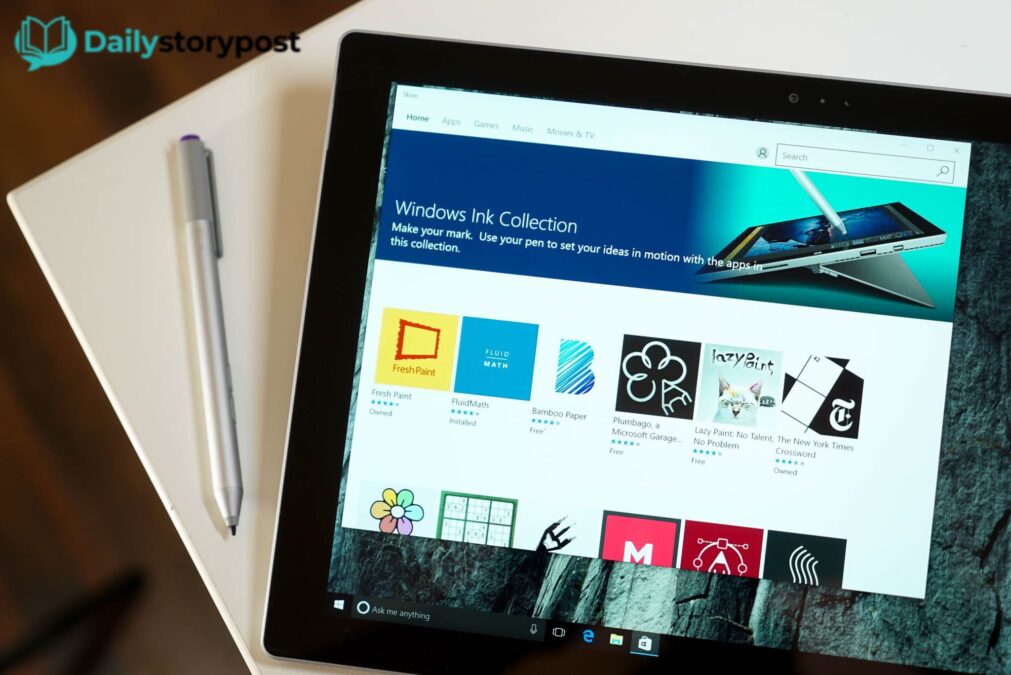
Using Microsoft Ink is surprisingly straightforward. A user simply picks up a compatible stylus and begins writing on a touchscreen device.
Behind the scenes, Microsoft Ink captures several pieces of information simultaneously:
- Pen position
- Pressure sensitivity
- Tilt angle
- Stroke movement
- Timing of pen input
This data is processed in real time, allowing handwriting to appear naturally on the screen. The technology can also recognize letters, shapes, and symbols, converting them into editable digital content when needed.
For example, if a student writes a page of lecture notes in OneNote, Microsoft Ink can transform that handwriting into typed text. Similarly, someone drawing a rough circle during a presentation may see it automatically corrected into a perfect shape.
The result is a note-taking experience that feels familiar while offering capabilities that paper simply cannot provide.
Key Features of Microsoft Ink
Microsoft Ink has earned its popularity because of its practical features rather than flashy additions.
One of its most useful capabilities is handwriting recognition. Users can write naturally without worrying about perfect penmanship. The software intelligently interprets handwritten words and makes them searchable.
Another major advantage is Ink-to-Text conversion. Instead of manually typing meeting notes later, users can convert handwritten content into editable text with a few clicks.
Annotation tools are equally helpful. Professionals regularly use Microsoft Ink to highlight reports, mark screenshots, and leave comments on documents. Students often annotate lecture slides and textbooks.
Cloud synchronization through Microsoft services means notes are accessible across multiple devices. A note created during a morning meeting on a tablet can later be reviewed on a desktop computer.
Microsoft Ink also supports gesture-based editing. Users can circle items to select them or strike through text to remove it in supported applications. These small touches make digital note-taking feel remarkably natural.
Why Microsoft Ink Makes Note-Taking Easier
The biggest strength of Microsoft Ink is that it removes barriers between ideas and action.
Traditional note-taking often creates extra work. Handwritten notes can become difficult to organize, easy to lose, and impossible to search. Typing, while efficient, sometimes interrupts the natural flow of thinking.
Microsoft Ink solves both problems.
Imagine attending a brainstorming session. Instead of switching between typing and drawing diagrams, you can write naturally, sketch concepts, and organize everything in one place.
Students benefit because they can:
- Take lecture notes quickly.
- Highlight important information.
- Draw charts and diagrams.
- Search handwritten notes later.
Professionals appreciate the ability to:
- Capture meeting discussions.
- Annotate contracts and reports.
- Share collaborative ideas instantly.
- Access notes from anywhere.
Even casual users enjoy using Microsoft Ink for shopping lists, reminders, and personal journals.
By combining flexibility with organization, Microsoft Ink reduces friction in everyday workflows. It allows people to focus less on the process of note-taking and more on the ideas themselves.
Microsoft Apps That Support Microsoft Ink
One reason Microsoft Ink continues to grow is its seamless integration with Microsoft’s software ecosystem.
Microsoft OneNote
OneNote remains one of the best applications for Microsoft Ink users. It offers a notebook-style experience where users can write, draw, organize, and search notes effortlessly.
Microsoft Word
Word now supports digital inking features that allow users to review documents, make handwritten edits, and convert notes into text.
Microsoft Whiteboard
Whiteboard is ideal for collaboration. Teams can brainstorm together regardless of location, making it particularly valuable for remote work environments.
Microsoft Journal
Microsoft Journal was designed specifically around pen interaction. It combines journaling, note-taking, and productivity features into a clean interface.
Microsoft Edge
Microsoft Edge allows users to annotate PDFs and webpages, making research and document review more efficient.
Together, these applications create a connected experience that makes Microsoft Ink feel less like a standalone feature and more like an integral part of modern productivity.
Microsoft Ink for Students
Students are among the biggest beneficiaries of Microsoft Ink.
Classroom learning often involves a mixture of text, diagrams, equations, and illustrations. Typing can handle text efficiently, but it struggles with mathematical formulas and sketches.
Microsoft Ink bridges that gap.
A student studying engineering can sketch technical diagrams. Medical students can annotate anatomy illustrations. Mathematics students can solve equations naturally.
Digital notes also offer practical advantages:
- Automatic organization.
- Easy cloud backups.
- Fast searching.
- Cross-device access.
- Reduced paper usage.
Instead of carrying multiple notebooks, students can keep years of notes on a single device.
Research has consistently shown that handwriting can improve memory retention for many learners. Microsoft Ink preserves that familiar handwritten experience while adding digital convenience.
Microsoft Ink for Professionals
Modern workplaces demand speed, collaboration, and flexibility.
Microsoft Ink supports all three.
Professionals frequently move between meetings, presentations, and project discussions. Having a digital notebook that allows handwriting can significantly improve efficiency.
Common business uses include:
- Meeting minutes.
- Project planning.
- Brainstorming sessions.
- Document reviews.
- Client presentations.
- Signature collection.
Remote teams also benefit from collaborative tools like Microsoft Whiteboard. Team members can contribute ideas in real time regardless of physical location.
For executives and managers, Microsoft Ink provides a more engaging way to interact with information. Marking up reports with a pen often feels faster and more intuitive than using a mouse.
As hybrid work continues to grow, digital note-taking solutions like Microsoft Ink are becoming increasingly valuable.
Tips for Getting the Most Out of Microsoft Ink
To maximize your Microsoft Ink experience, consider the following recommendations:
- Invest in a quality stylus for better accuracy.
- Use Microsoft OneNote as your primary notebook.
- Enable cloud synchronization with OneDrive.
- Practice handwriting-to-text conversion.
- Customize pen thickness and colors.
- Learn gesture controls.
- Regularly organize notebooks into categories.
- Keep your device updated for the latest improvements.
Many users only utilize a fraction of Microsoft Ink’s capabilities. Spending a few hours exploring its settings can dramatically improve productivity.
Small adjustments—such as choosing the right pen tip or enabling handwriting recognition—can make a significant difference over time.
Common Challenges
Like any technology, Microsoft Ink is not perfect.
Some users occasionally encounter handwriting recognition issues. Others experience compatibility concerns with older hardware.
Common challenges include:
- Stylus calibration problems.
- Sync delays.
- Limited battery life on pens.
- Learning curve for first-time users.
Fortunately, most issues have simple solutions. Updating Windows, recalibrating the stylus, or checking synchronization settings usually resolves problems quickly.
Microsoft has continued refining the platform over the years, improving both performance and reliability through regular updates.
Microsoft Ink vs Traditional Note-Taking
Traditional notebooks still have their advantages. They require no batteries, never crash, and provide a tactile experience many people enjoy.
However, Microsoft Ink introduces capabilities that paper cannot match.
| Feature | Traditional Notes | Microsoft Ink |
|---|---|---|
| Searchable | No | Yes |
| Cloud Backup | No | Yes |
| Collaboration | Limited | Excellent |
| Handwriting Support | Yes | Yes |
| Cross-Device Access | No | Yes |
| Document Annotation | Limited | Yes |
The comparison is not about replacing handwriting. Instead, Microsoft Ink enhances it.
Users still enjoy writing naturally, but they gain the additional benefits of organization, accessibility, and collaboration.
Frequently Asked Questions
Is Microsoft Ink free?
Microsoft Ink is included with supported versions of Windows. Some companion applications may require Microsoft 365 subscriptions for advanced features.
Which devices support Microsoft Ink?
Most pen-enabled Windows devices support Microsoft Ink, including Microsoft Surface products and many laptops from major manufacturers.
Can Microsoft Ink convert handwriting into text?
Yes. Microsoft Ink includes handwriting recognition capabilities that can convert handwritten notes into editable text in supported applications.
Does Microsoft Ink work with OneNote?
Yes. Microsoft OneNote is one of the most popular applications for Microsoft Ink users and offers extensive handwriting support.
Is Microsoft Ink suitable for business use?
Absolutely. Businesses regularly use Microsoft Ink for meetings, collaboration, document reviews, and project planning.
Conclusion
Microsoft Ink demonstrates that technology works best when it complements human habits rather than replacing them.
People have relied on pens for centuries because writing by hand feels natural. Microsoft recognized that reality and built a platform that preserves the familiarity of handwriting while introducing the advantages of digital organization.
Whether you are taking lecture notes, reviewing contracts, planning projects, or simply jotting down ideas, Microsoft Ink makes the process easier, faster, and more accessible.
As digital workspaces continue to evolve, tools that blend creativity with productivity will become increasingly important. Microsoft Ink has already established itself as one of those tools, helping users turn everyday notes into organized, searchable, and meaningful information.
For anyone looking to improve the way they capture ideas, Microsoft Ink remains one of the most practical note-taking solutions available today.
Frequently Asked Questions (FAQs)
- What is Microsoft Ink used for?
Microsoft Ink is used for digital handwriting, note-taking, drawing, annotating documents, and converting handwritten notes into editable text on compatible Windows devices. - Can Microsoft Ink convert handwriting into typed text?
Yes, Microsoft Ink includes handwriting recognition features that allow users to convert handwritten notes into searchable and editable text in supported applications like OneNote and Word. - Which applications work best with Microsoft Ink?
Microsoft OneNote, Word, Whiteboard, Journal, and Edge are among the most popular applications that fully support Microsoft Ink features. - Do I need a special device to use Microsoft Ink?
Yes, you need a Windows device with touchscreen and pen support, such as a Microsoft Surface or another compatible laptop or tablet with a stylus. - Is Microsoft Ink good for students and professionals?
Absolutely. Students can use it for class notes and studying, while professionals can use it for meetings, brainstorming, document reviews, and collaborative work.