Celebrity
Henry VIII: The King Who Changed England Forever

Henry VIII is one of the most recognizable kings in English history. His name is often associated with his six wives, dramatic marriages, and the famous stories surrounding his royal court. Yet his importance goes far beyond his personal life. During his nearly 38-year reign, Henry VIII changed England’s relationship with religion, strengthened the authority of the Crown, and helped reshape the political structure of the country.
Henry became king in 1509, when he was still a young man. At first, he was seen as an energetic Renaissance monarch with an interest in music, sports, scholarship, warfare, and diplomacy. Over time, however, his reign became increasingly complicated. His desire for a male heir contributed to a major dispute with the papacy, and that dispute eventually helped lead England away from papal authority.
The consequences were enormous. The Act of Supremacy of 1534 recognized Henry as the supreme head of the Church of England and formally separated English religious authority from Rome. The subsequent dissolution of the monasteries transferred large amounts of church property to the Crown and changed the economic and social landscape of England.
For these reasons, Henry VIII remains an important figure whose decisions affected England long after his death.
BIO
| Label | Information |
|---|---|
| Full Name | Henry VIII |
| Born | 28 June 1491 |
| Died | 28 January 1547 |
| Reign | 1509–1547 |
| Dynasty | Tudor |
| Father | Henry VII |
| Mother | Elizabeth of York |
| Wives | Six |
| Children | Mary I, Elizabeth I, Edward VI |
| Known For | Six marriages and religious reforms |
| Major Change | Break with papal authority |
| Church Role | Supreme Head of the Church of England |
| Historical Legacy | Major influence on England’s religious and political history |
Who Was Henry VIII?
Henry VIII was born on 28 June 1491 at Greenwich Palace. He was the second son of Henry VII and Elizabeth of York. Because his older brother Arthur was originally expected to inherit the throne, Henry’s path to kingship was not initially straightforward.
Arthur, Prince of Wales, married Catherine of Aragon, the daughter of Ferdinand II of Aragon and Isabella I of Castile. Arthur died in 1502 at only 15 years old. Henry therefore became heir to the English throne.
When Henry VII died in April 1509, the 17-year-old Henry became king. Later that same year, he married Catherine of Aragon, beginning a relationship that would eventually become one of the most important royal marriages in English history.
The young Henry was physically impressive and highly educated for a monarch of his time. He had been taught languages, music, theology, history, and other subjects expected of a Renaissance prince. He also enjoyed hunting, jousting, music, and intellectual discussion.
His early image was very different from the older king remembered by popular culture. He was described as athletic, energetic, and charismatic. The transformation of his personality and physical condition over the following decades became one of the striking features of his reign.
Henry VIII’s Early Years as King

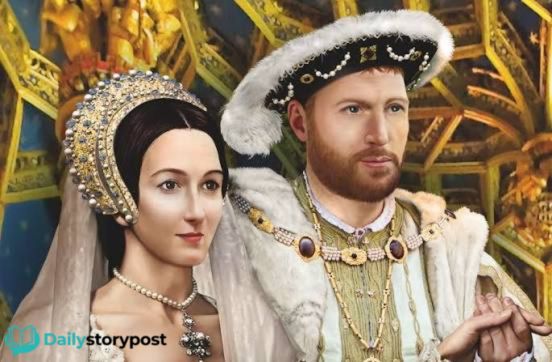
Henry’s accession brought a new generation to the English throne. Unlike his cautious father, Henry was interested in international affairs and military glory.
England was surrounded by powerful European states, particularly France and the territories controlled by the Habsburg dynasty. Henry wanted England to play a greater role in European politics. He also saw military success as an important part of royal prestige.
During his early reign, Henry became involved in campaigns against France and Scotland. Although these wars did not transform England into a dominant European power, they reflected Henry’s desire to be recognized as a strong and respected monarch.
His court also became an important center of Renaissance culture. Artists, musicians, scholars, and diplomats were drawn to the royal household. Hans Holbein the Younger became particularly famous for his portraits of Henry and members of his court.
However, behind the impressive court was a king increasingly concerned about the future of his dynasty.
Henry VIII and Catherine of Aragon

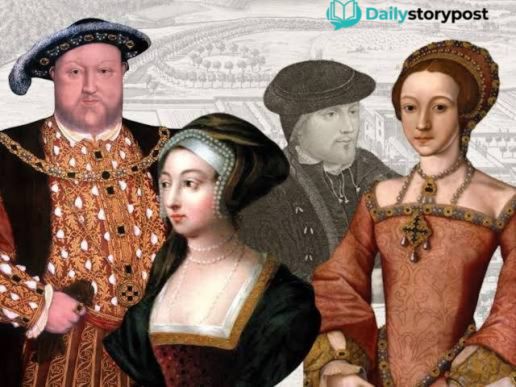
Henry’s first marriage was to Catherine of Aragon, who had previously been married to his older brother Arthur. Their marriage lasted for more than two decades and initially appeared politically valuable.
Catherine gave birth to several children, but most did not survive infancy. Their surviving daughter was Mary, who later became Queen Mary I.
For Henry, the lack of a surviving male heir became a serious concern. The Tudor dynasty was relatively young, and the memory of earlier struggles over the English succession remained important. Henry believed that a son was necessary to provide greater security for the dynasty.
This created a problem that would eventually have consequences far beyond the royal household.
Why Did Henry VIII Want an Annulment?

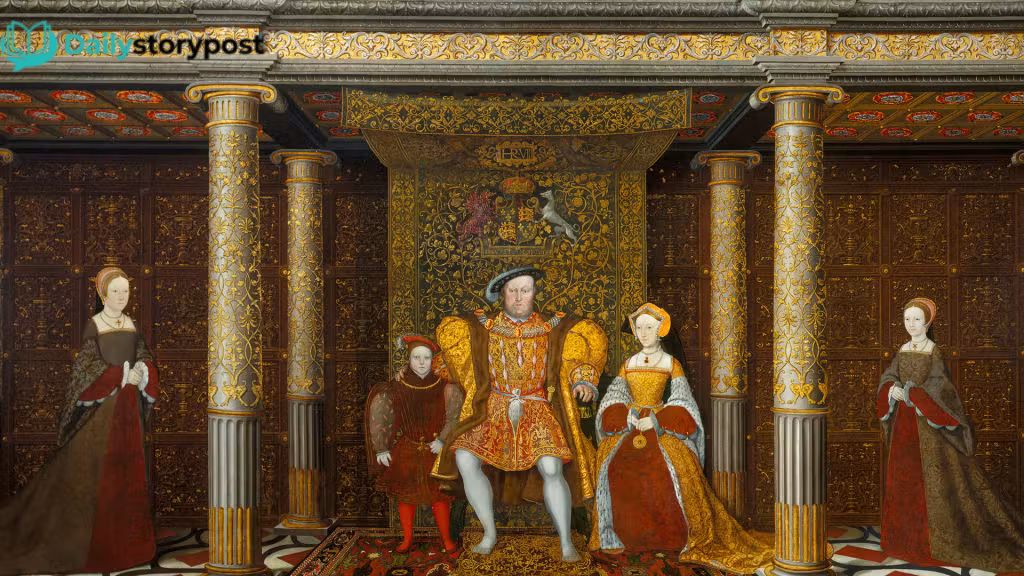
Henry argued that his marriage to Catherine should be declared invalid because she had previously been married to his brother. His argument drew upon biblical and religious interpretation, but Catherine strongly rejected the claim that her marriage to Arthur had been consummated.
Henry sought an annulment from Pope Clement VII. The matter became politically complicated because Catherine was the aunt of Emperor Charles V, one of the most powerful rulers in Europe. The Pope was therefore operating within a difficult political environment.
When Henry failed to obtain the result he wanted from Rome, the dispute gradually became a question of royal authority.
Thomas Wolsey initially played an important role in trying to resolve the crisis. When those efforts failed, Wolsey’s political position collapsed. Henry then relied increasingly on Thomas Cromwell, whose political skill helped develop a new approach to the problem.
The issue was no longer simply whether Henry could end his marriage. It became a question of whether the English Crown should remain subject to the authority of the Pope.
Henry VIII and the English Reformation
The break with Rome was one of the most important developments of Henry’s reign.
It is sometimes presented as though Henry suddenly became a Protestant because he wanted a divorce. The reality was more complicated. Henry rejected papal authority but did not simply adopt every Protestant belief. In fact, he retained several traditional Catholic doctrines during much of his reign.
The political break, however, was profound.
A series of laws passed during the 1530s reduced papal authority in England. The Act of Supremacy of 1534 formally recognized Henry as the supreme head of the Church of England. Parliament played a major role in establishing this new relationship between the Crown and the Church.
This meant that religious authority in England was now closely connected to the monarchy. The change affected laws, property, government, religious institutions, and the daily lives of many people.
The consequences were also dangerous. Those who refused to accept royal supremacy could face severe punishment. Sir Thomas More and Bishop John Fisher were among the prominent figures executed after refusing to accept Henry’s religious authority.
The Dissolution of the Monasteries
One of the most dramatic consequences of Henry’s religious policies was the dissolution of the monasteries.
Under Thomas Cromwell’s administration, England’s monasteries and other religious houses were investigated and eventually closed. Their property and income were transferred to the Crown, while much of the land was later sold or granted to other owners.
The process changed the ownership of land across England and Wales and had lasting economic consequences. Religious houses had also provided charity, education, employment, and other forms of community support, so their closure affected ordinary people as well as the wealthy.
The Crown gained substantial resources, but the money and property did not simply remain under royal control forever. Much of the land was distributed or sold, creating opportunities for nobles and other landowners.
Resistance also occurred. In northern England, opposition contributed to the Pilgrimage of Grace in 1536, one of the largest rebellions of Henry’s reign. The uprising was eventually suppressed.
The dissolution therefore represented much more than a religious reform. It was also a major redistribution of wealth and property.
Henry VIII’s Six Wives
Henry VIII’s six marriages are perhaps the most famous part of his personal story.
Catherine of Aragon
Henry married Catherine in 1509. She was his longest-serving queen and the mother of Mary I. Their marriage eventually ended when Henry sought an annulment.
Anne Boleyn
Anne Boleyn became Henry’s second wife in 1533. She was the mother of Elizabeth, who later became one of England’s most famous monarchs.
Anne failed to provide the male heir Henry wanted. Her position at court weakened, and she was executed in 1536 after being convicted of treason. Modern historians have generally regarded many of the accusations against her as highly questionable.
Jane Seymour
Henry’s third wife was Jane Seymour. She gave birth to Henry’s long-awaited son, Edward, in 1537.
Jane died only 12 days after giving birth. Henry regarded her with considerable affection, and she was the only one of his wives to provide him with a surviving legitimate son during his lifetime.
Anne of Cleves
Henry’s fourth marriage was to Anne of Cleves in 1540. The marriage was short-lived and was annulled later that year.
Thomas Cromwell had helped arrange the match, but the marriage did not develop as expected. Cromwell soon lost Henry’s favor and was executed.
Catherine Howard
Henry’s fifth wife was Catherine Howard. She was considerably younger than Henry, and their marriage ended disastrously.
Catherine was accused of sexual misconduct and treason and was executed in 1542.
Catherine Parr
Henry’s sixth and final wife was Catherine Parr. She was educated, politically capable, and played an important role in the royal family.
Unlike Henry’s previous wives, Catherine survived him. She also helped bring Henry’s children together and supported their education. She remained an important figure in the final years of Henry’s life.
The familiar rhyme about Henry’s wives — “divorced, beheaded, died; divorced, beheaded, survived” — is memorable, but it reduces complicated relationships and historical circumstances into a simple phrase.
Henry VIII and His Children
Henry’s children became extremely important to the future of England.
Mary I, his daughter by Catherine of Aragon, eventually became queen in 1553. Her reign was closely associated with an attempt to restore Catholicism in England.
Elizabeth I, daughter of Anne Boleyn, became queen in 1558. Her reign would become one of the most celebrated periods in English history.
Edward VI, son of Jane Seymour, became king when Henry died in 1547. Because Edward was still a child, government was largely conducted through powerful advisers.
The three surviving legitimate children therefore represented three very different stages in England’s religious and political history.
Henry had spent much of his reign trying to secure the Tudor succession. Ironically, his children would inherit a kingdom with deep religious divisions and an unsettled succession.
Henry VIII as a Warrior and Politician
Henry wanted to be remembered as a warrior king. He personally took an interest in military campaigns and invested heavily in England’s defenses.
He also strengthened coastal defenses and supported the development of larger warships. The Mary Rose, launched during Henry’s reign, is one of the best-known surviving examples of Tudor naval history.
But Henry’s power did not rest only on military strength. He became increasingly skilled at using government institutions and Parliament to achieve his objectives.
Thomas Wolsey and Thomas Cromwell were among the most important ministers of his reign. Both were highly capable administrators, but both ultimately fell from royal favor.
Henry’s government also became more centralized and bureaucratically organized. Documents from the period provide historians with valuable evidence about government, religion, taxation, foreign policy, and royal administration. The National Archives notes that the surviving records of Henry’s reign are especially useful for studying early modern government and religious policy.
Henry VIII’s Personality and Reputation
Henry VIII’s personality has fascinated historians for centuries.
The young Henry was athletic, educated, cultured, and interested in Renaissance ideas. He wrote music, enjoyed sports, and took pride in his physical abilities.
As he grew older, his health deteriorated. His increasing weight and physical problems changed both his appearance and his ability to participate in activities he had enjoyed when younger.
He also became increasingly suspicious and authoritarian. Decisions affecting marriages, ministers, religious policy, and political opponents could have life-or-death consequences.
Yet it would be too simple to describe Henry only as a cruel king. He was a complicated ruler operating within a political system where dynastic security, religion, international alliances, and royal authority were closely connected.
His actions were sometimes driven by personal desires, but they were also shaped by wider political circumstances.
How Did Henry VIII Change England?
Henry’s greatest historical importance lies in the changes that continued after his death.
The separation from papal authority permanently altered the relationship between the English Crown and the Church. Parliament became deeply involved in religious legislation, helping establish a precedent for major constitutional and religious changes.
The dissolution of the monasteries transformed land ownership and weakened traditional Catholic institutions.
The royal succession also became more complicated. Henry’s children would eventually take England in different religious directions. Under Edward VI, Protestant reforms advanced. Mary I attempted to restore Catholicism. Elizabeth I later established a Protestant settlement that would shape England for generations.
In this sense, Henry did not create the final form of the Church of England by himself. Rather, he began a process that subsequent monarchs continued to reshape.
Henry VIII’s Final Years and Death
The final years of Henry’s reign were marked by declining health, political tension, and continued interest in foreign affairs.
His government remained powerful, but the king’s physical condition had deteriorated significantly. He also faced financial pressures caused by warfare and the costs of maintaining his royal ambitions.
Henry died in London on 28 January 1547, at the age of 55. His nine-year-old son Edward succeeded him as Edward VI.
Henry was buried at St George’s Chapel, Windsor Castle, alongside Jane Seymour.
His death did not end the religious and political conflicts he had helped create. In many ways, it marked the beginning of another chapter in the Tudor story.
Henry VIII’s Lasting Legacy
Henry VIII left behind a complicated legacy.
He is remembered for his six marriages, but those marriages were only one part of his historical importance. His decision to challenge papal authority helped create a new relationship between the monarchy, Parliament, and the Church.
His government also changed the ownership of enormous amounts of land through the dissolution of religious houses. These changes influenced the English aristocracy and landed society for generations.
Perhaps his most important legacy came through his children. Edward VI, Mary I, and Elizabeth I each played major roles in determining England’s religious direction. Elizabeth’s long reign, in particular, ensured that the Tudor dynasty continued to dominate English history for decades after Henry’s death.
Henry’s reign also demonstrated how personal decisions made by a monarch could have consequences far beyond the royal household. His desire for a secure succession became connected to a dispute with Rome, and that dispute contributed to changes that transformed England’s religious and political landscape.
Conclusion
Henry VIII was much more than the king with six wives. He was a powerful Tudor monarch whose decisions changed the relationship between the English Crown and the Church, strengthened royal authority, and helped reshape the country’s political and social structure.
His reign included military campaigns, political struggles, dramatic marriages, religious upheaval, executions, and major changes in land ownership. Some of his decisions were driven by personal ambition, while others reflected the political pressures of his time.
The most lasting result of his reign was perhaps the break with Rome. The Act of Supremacy and the dissolution of the monasteries changed England in ways that could not easily be reversed. Later rulers would alter the country’s religious direction, but they inherited a political and religious landscape that Henry had already transformed.
For that reason, Henry VIII remains one of the most consequential monarchs in English history. His story is not simply about six wives or a famous Tudor king. It is the story of a ruler whose personal ambitions became intertwined with changes that affected an entire nation.
FAQs
Frequently Asked Questions
1. Who was Henry VIII?
Henry VIII was King of England from 1509 to 1547. He is best known for his six marriages and for separating the English Church from papal authority in Rome.
2. How many wives did Henry VIII have?
Henry VIII had six wives: Catherine of Aragon, Anne Boleyn, Jane Seymour, Anne of Cleves, Catherine Howard, and Catherine Parr.
3. Why did Henry VIII break with Rome?
Henry wanted his marriage to Catherine of Aragon annulled, but the Pope would not grant it. The dispute eventually contributed to England’s break with papal authority.
4. How did Henry VIII change England?
Henry changed England’s religious and political landscape by establishing royal supremacy over the Church and overseeing the dissolution of monasteries.
5. Who succeeded Henry VIII?
Henry VIII was succeeded by his son Edward VI in 1547. After Edward’s death, Henry’s daughters Mary I and Elizabeth I later ruled England.