Sports
Derek Jeter and Hans Vestberg: A Look at Their Careers

Derek Jeter and Hans Vestberg built their reputations in very different worlds. Jeter became one of the most recognizable figures in American baseball through a two-decade career with the New York Yankees, while Vestberg developed his career in telecommunications and eventually became the chairman and chief executive officer of Verizon.
At first glance, there may not seem to be much connecting a Hall of Fame baseball player with a global technology executive. Their industries, responsibilities, and professional environments are completely different. Yet their careers share several themes: long-term commitment, leadership, preparation, accountability, and the ability to perform under pressure.
Jeter’s career was defined by consistency on the baseball field and his position as a Yankees captain. Vestberg’s career has centered on technology, telecommunications infrastructure, corporate strategy, and organizational leadership. Looking at Derek Jeter and Hans Vestberg together provides an interesting comparison of two very different approaches to professional success.
BIO
| Label | Information |
|---|---|
| Name | Derek Jeter |
| Profession | Former Baseball Player |
| Famous For | New York Yankees career |
| Position | Shortstop |
| MLB Career | 1995–2014 |
| World Series Titles | 5 championships |
| All-Star Selections | 14 times |
| Career Hits | 3,465 |
| Hall of Fame | Inducted in 2020 |
| Name | Hans Vestberg |
| Profession | Technology Executive |
| Former Role | Verizon Chairman and CEO |
| Key Focus | Telecommunications and 5G |
Who Is Derek Jeter?
Derek Jeter was born on June 26, 1974, in Pequannock, New Jersey, and grew up in Kalamazoo, Michigan. Baseball became an important part of his life at an early age, and his talent eventually attracted the attention of major league scouts.
The New York Yankees selected Jeter with the sixth overall pick in the 1992 MLB Draft. That decision became one of the most important selections in the franchise’s modern history. Jeter eventually made his major league debut in 1995 and became the Yankees’ regular shortstop the following season.
What made Jeter especially notable was not simply his ability to play baseball. He spent his entire 20-year Major League Baseball career with the Yankees, giving him an unusual connection with one organization and its enormous fan base.
He eventually became the eighth captain in Yankees history, a position he held from 2003 until his retirement after the 2014 season. The Baseball Hall of Fame notes that he spent 12 of his 20 Yankees seasons as team captain.
Derek Jeter’s Baseball Career
Jeter’s professional career developed alongside one of the most successful periods in Yankees history. His rookie season in 1996 was particularly significant. He won the American League Rookie of the Year Award after hitting .314 and helping the Yankees win their first World Series championship in 18 years.
Over the course of his career, Jeter became a 14-time All-Star, five-time Gold Glove Award winner, and five-time World Series champion. He also earned the 2000 World Series Most Valuable Player Award.
His statistics help explain the scale of his career. Jeter finished with 3,465 hits, 1,923 runs, 544 doubles and 2,747 games played. He reached 200 hits in eight seasons and hit at least .300 in 12 seasons.
His postseason record was equally important to his reputation. Jeter appeared in 158 postseason games, a record at the time, and collected 200 postseason hits. His postseason batting average was .308.
Those numbers tell only part of the story. Jeter played during an era when the Yankees were under constant national attention. Every mistake could become a headline, while every important performance was examined closely. Remaining productive in that environment for 20 seasons required more than natural ability.
It required preparation, discipline and mental toughness.
The Yankees Captain
Jeter’s role as Yankees captain added another dimension to his career. Being captain of the Yankees is not simply a ceremonial responsibility. The position carries considerable expectations because of the team’s history, media attention and worldwide following.
Jeter became known for maintaining a relatively composed public personality. Rather than constantly explaining himself, he generally allowed his performance to speak for him.
That approach became part of his professional identity.
His leadership was also connected to longevity. Younger players entered the Yankees organization while Jeter remained a central figure. Veterans came and went, managers changed, and the game evolved, but Jeter remained a familiar presence at shortstop.
The Baseball Hall of Fame describes his 20-year Yankees tenure as a defining part of his legacy. He was elected to the Hall of Fame in 2020.
Life After Baseball

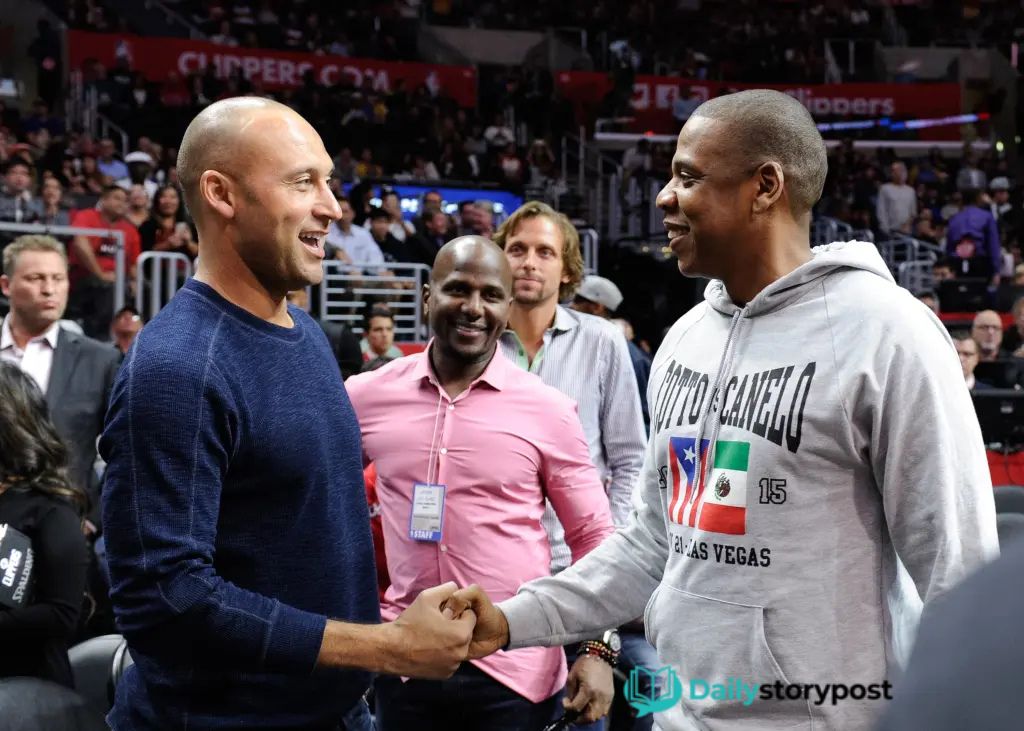
Retirement did not mark the end of Jeter’s professional career.
Just days after his final MLB game, he launched The Players’ Tribune, a media platform designed to allow athletes to communicate directly with fans through their own stories and perspectives.
The idea was different from traditional sports journalism. Instead of having an athlete’s thoughts filtered through a reporter, the platform gave athletes an opportunity to speak directly in the first person.
Jeter also became involved in professional sports ownership and management. In 2017, he became a part owner of the Miami Marlins and later served as the club’s chief executive officer from September 2017 until February 2022.
His philanthropic work has also been an important part of his post-playing career. His Turn 2 Foundation, established in 1996, focuses on encouraging young people to avoid drugs and alcohol and pursue healthy lifestyles.
This second stage of his career demonstrates that Jeter’s professional identity was never limited entirely to playing baseball. He gradually moved into media, business, leadership and philanthropy.
Who Is Hans Vestberg?
Hans Vestberg followed a very different route.
Vestberg is a Swedish business executive whose career has largely been connected to telecommunications and technology. Before joining Verizon, he spent many years at Ericsson, one of the world’s major telecommunications equipment and services companies.
His professional background gave him experience in international business and communications infrastructure. Rather than competing on a baseball field, Vestberg worked in an industry where technological change, large-scale investment and global competition were central to everyday decision-making.
That experience eventually brought him to Verizon.
Vestberg joined Verizon in 2017 as executive vice president and president of Global Networks, also serving as chief technology officer. His responsibilities included major aspects of Verizon’s network strategy and technology development.
In August 2018, he became Verizon’s CEO. He became chairman of the company’s board in March 2019.
Hans Vestberg at Verizon
Vestberg’s time at Verizon was closely associated with the company’s network strategy and the development of 5G technology.
When he became CEO, telecommunications was undergoing a major transition. Wireless networks were moving toward 5G, businesses were exploring new forms of connectivity, and customers were becoming increasingly dependent on fast and reliable digital services.
Vestberg therefore faced a different kind of pressure from Jeter. A baseball player can be judged by statistics such as batting average, hits and championships. A technology executive must balance investment, competition, customer expectations, financial performance and long-term technological development.
Under Vestberg’s leadership, Verizon placed significant emphasis on expanding its 5G capabilities. In 2019, Verizon described its strategy as extending its network leadership while developing 5G applications for both consumers and businesses.
Vestberg also discussed the potential of 5G beyond smartphones. His vision included applications involving enterprise connectivity, private networks and mobile edge computing.
That broader perspective is important because telecommunications leadership is not only about building faster networks. The real question is what customers, companies and industries can do with those networks.
A Career Built Around Technology
Vestberg’s professional experience is rooted in an industry that changes rapidly.
Telecommunications companies must make major infrastructure decisions years before the full benefits become visible. A network investment can require substantial capital, engineering expertise and long-term planning.
That creates a leadership environment where patience matters.
Vestberg’s work at Verizon reflected this approach. The company’s 5G strategy involved infrastructure, spectrum, fiber, network architecture and new services rather than simply introducing a new consumer product.
In this sense, his career demonstrates a different form of consistency from Jeter’s. Jeter’s consistency involved showing up every season and producing on the baseball field. Vestberg’s involved maintaining a long-term technology and business strategy while the industry continued to evolve.
Derek Jeter and Hans Vestberg Compared
The careers of Derek Jeter and Hans Vestberg are interesting precisely because they are so different.
Jeter worked in professional sports, where performance is measured publicly and frequently. Vestberg worked in telecommunications, where many of the most important decisions involve complex technology, business planning and long-term investments.
Still, several similarities stand out.
Leadership
Jeter’s leadership developed through years of playing for one organization and eventually becoming its captain.
Vestberg’s leadership came through executive positions at major technology companies and ultimately the top leadership position at Verizon.
Both careers show that leadership is not created overnight. It develops through experience, responsibility and the ability to handle difficult situations.
Consistency
Jeter’s 20 seasons with the Yankees are perhaps the clearest example of professional consistency.
Vestberg’s career similarly reflects long-term development. He moved through different responsibilities in telecommunications before taking on major executive roles.
Neither career was built around a single successful moment.
Pressure
Professional athletes face immediate pressure. A bad game can be analyzed within minutes, while a strong performance can become headline news.
Corporate executives experience a different form of pressure. Their decisions can affect employees, customers, investors and large technology projects.
Both environments require decision-makers to remain focused when expectations are high.
Adaptation
Jeter adapted to changes in baseball throughout a 20-year career. He also transitioned from being a player to becoming a media entrepreneur, sports executive and philanthropist.
Vestberg’s career has required adaptation to rapidly changing telecommunications technology, including the shift from earlier mobile network generations toward 5G.
Adaptability has therefore been an important part of both professional journeys.
Their Major Achievements
Jeter’s achievements are easy to identify through baseball records and awards. He won five World Series titles, made 14 All-Star teams, earned five Gold Gloves and finished his career with 3,465 hits. He was elected to the Baseball Hall of Fame in 2020.
His legacy is also connected to the Yankees organization itself. Spending an entire career with one of the most famous sports franchises gave his achievements a unique historical context.
Vestberg’s accomplishments are more closely associated with corporate and technological leadership. At Verizon, he led the company during a period of major investment in 5G and network infrastructure. His responsibilities also included helping shape how Verizon approached emerging connectivity opportunities.
His Verizon tenure ended in October 2025, when Daniel Schulman became CEO. Verizon’s current executive leadership identifies Vestberg as a Special Advisor and former chairman and CEO.
That distinction is important when discussing his career today: Vestberg should be described as Verizon’s former CEO rather than its current chief executive.
Public Image and Legacy
Derek Jeter’s public image has been strongly connected to professionalism and the Yankees.
Because he spent his entire MLB career with the same team, fans often associate his name directly with the Yankees. His Hall of Fame election reinforced his status among baseball’s most accomplished players.
His influence also expanded beyond baseball through The Players’ Tribune, philanthropy and sports management.
Vestberg’s public image is different. His reputation has been built primarily through the technology and telecommunications industries. His career has involved large organizations, network infrastructure and corporate strategy rather than entertainment and professional sports.
That difference makes the comparison particularly useful. Legacy does not always come from the same type of achievement.
For Jeter, legacy is visible in championships, records, awards and memorable performances.
For Vestberg, legacy is more closely connected to executive leadership, technology strategy and the development of telecommunications infrastructure.
What Their Careers Can Teach Us
There are several practical lessons that can be drawn from looking at these two careers together.
First, consistency matters. Jeter’s 20-year career demonstrates the value of maintaining high standards over a long period. Vestberg’s progression through telecommunications leadership shows the importance of developing expertise over time.
Second, leadership requires responsibility. Becoming a Yankees captain or the CEO of a major telecommunications company means that other people look to you when decisions become difficult.
Third, adaptation is essential. Jeter moved from baseball into media, business and sports management. Vestberg worked in an industry shaped by constant technological change.
Finally, reputation is built gradually. Neither man became successful because of one isolated achievement. Their careers were formed through years of work, decisions and professional relationships.
A Different Kind of Success
The story of Derek Jeter and Hans Vestberg is ultimately not about choosing whether sports or technology is the better career.
It is about understanding how success can take different forms.
Jeter’s career shows what can happen when an athlete combines talent with preparation, consistency and an ability to perform under enormous public pressure. His five World Series championships, 3,465 hits and Hall of Fame election provide measurable evidence of that success.
Vestberg’s career illustrates how leadership works in a completely different environment. Telecommunications executives must think about technology, infrastructure, customers, competition and long-term investment. His time at Verizon placed him at the center of the company’s transition toward 5G and other network technologies.
Their paths may look unrelated, but the underlying principles are surprisingly similar.
Both careers were built over time. Both required accountability. Both demanded adaptation. And both show that professional leadership is ultimately about what a person does consistently when expectations are high.
Conclusion
Derek Jeter and Hans Vestberg represent two very different professional journeys.
Jeter became a baseball icon through a 20-year career with the New York Yankees, five World Series championships, 14 All-Star selections and a place in the Baseball Hall of Fame. After baseball, he continued working in media, sports management and philanthropy.
Vestberg built his career in telecommunications and technology, eventually becoming chairman and CEO of Verizon. His leadership period included a major focus on network development and the expansion of 5G. He is now a former Verizon chairman and CEO and serves as a special advisor to the company.
Although their careers unfolded on completely different stages, the comparison reveals a common theme: lasting professional success is usually the result of years of preparation, steady performance and the ability to take on greater responsibility.
That is what makes the careers of Derek Jeter and Hans Vestberg worth examining side by side. One built a legacy through baseball’s biggest stage, while the other helped lead a global communications company through a period of major technological change. Their stories are different, but both offer useful examples of how careers can evolve when talent is supported by discipline, leadership and long-term commitment.
FAQs
1. Who are Derek Jeter and Hans Vestberg?
Derek Jeter is a former New York Yankees shortstop and Baseball Hall of Famer. Hans Vestberg is a Swedish technology executive who served as Verizon’s CEO and chairman.
2. What is Derek Jeter best known for?
Derek Jeter is best known for his 20-year Yankees career, five World Series championships, 14 All-Star selections and 3,465 career hits. He was elected to the Baseball Hall of Fame in 2020.
3. What did Hans Vestberg do at Verizon?
Hans Vestberg led Verizon as CEO beginning in 2018 and later served as chairman. His tenure included major investments in 5G and network technology.
4. What do Derek Jeter and Hans Vestberg have in common?
Although they worked in different industries, both built long careers around leadership, consistency, preparation and adapting to changing professional demands.
5. Is Hans Vestberg still Verizon’s CEO?
No. Dan Schulman became Verizon’s CEO in October 2025. Vestberg was appointed to serve as a special advisor through October 4, 2026, while also remaining on the board until Verizon’s 2026 annual meeting.