Politics
Barron Trump Height Disease: Separating Facts From Rumors


The search term “barron trump height disease” has become increasingly popular as people try to understand whether there is any connection between Barron Trump’s exceptional height and claims circulating online. Search engines often display trending phrases that combine a person’s name with rumors, leading many readers to wonder whether those claims are based on verified information or simply internet speculation.
When it comes to Barron Trump, there is a clear distinction between public facts and unverified rumors. While his height has attracted significant public attention over the years, there is no credible public evidence or official confirmation that Barron Trump has any disease or medical condition. Unfortunately, social media discussions and misleading articles have caused many people to assume there is more to the story than the available evidence actually supports.
This article examines what is publicly known, where the rumors originated, why they continue to spread, and why it is important to rely on verified information rather than speculation.
BIO
| Label | Information |
|---|---|
| Search Topic | Barron Trump Height Disease |
| Person | Barron William Trump |
| Known For | Youngest son of Donald and Melania Trump |
| Public Interest | His exceptional height and limited public appearances |
| Estimated Height | Around 6 ft 7 in to 6 ft 9 in (public estimates) |
| Disease Confirmed? | No verified public evidence or official confirmation |
| Main Rumor | Claims linking his height to a disease |
| Verified Facts | Public reports focus on his height, not any illness |
| Primary Cause of Rumors | Online speculation and social media discussions |
| Key Takeaway | Height alone does not indicate a medical condition |
| Information Sources | Official statements, reputable news outlets, and medical experts |
| Article Purpose | Separate verified facts from online rumors with accurate information |
Who Is Barron Trump?
Barron William Trump is the youngest son of Donald Trump, the 45th and 47th President of the United States, and Melania Trump, former First Lady of the United States. Born on March 20, 2006, Barron spent much of his childhood away from the public spotlight compared with many children of political figures.
Unlike other members of the Trump family, Barron has maintained a relatively private life. His parents have generally sought to protect his privacy, particularly during his teenage years. As a result, verified public information about his personal life remains limited.
Despite his limited public appearances, Barron often attracts media attention because of his remarkable height and noticeable growth over the years.
Why People Search for “Barron Trump Height Disease”
Search behavior does not necessarily reflect verified facts. Instead, it often reflects public curiosity.
Many users encounter photographs of Barron standing beside his parents or other public figures and notice that he appears significantly taller than most people around him. This naturally leads some individuals to search for explanations about his height.
Unfortunately, internet searches sometimes combine legitimate questions with unsupported assumptions. As a result, phrases such as “barron trump height disease“ have become common search queries even though no verified medical evidence supports such claims.
This phenomenon is not unique to Barron Trump. Many celebrities, athletes, politicians, and public figures experience similar speculation whenever they possess unusual physical characteristics or maintain private personal lives.
How Tall Is Barron Trump?
Barron Trump is widely recognized as being exceptionally tall. Although neither Barron nor his family has publicly confirmed his exact height, numerous reputable news organizations have estimated him to be around 6 feet 7 inches to 6 feet 9 inches based on public appearances and comparisons with other individuals.
His height frequently becomes a topic of discussion whenever he appears at public events because he is noticeably taller than both of his parents.
It is worth remembering that publicly reported heights are often estimates rather than officially verified measurements.
Exceptional height alone is not unusual. Genetics play a major role in determining adult height, along with nutrition, overall health, and natural growth patterns during adolescence.
Is There Any Verified Evidence of a Disease?
The simple answer is no.

As of today, there is no verified public evidence that Barron Trump has any disease or medical disorder.
No official statement from his family has suggested this.
No reputable medical organization has published such information.
No credible news outlet has confirmed these claims.
The rumors circulating online are based largely on speculation rather than documented facts.
Because Barron Trump is a private individual despite belonging to a well-known family, there is very little publicly available information about his personal medical history. Respecting that privacy is important.
Without verified medical records or official confirmation, it would be inaccurate and unfair to claim that he has any illness.
Where Did These Rumors Come From?
Many internet rumors begin through repetition rather than evidence.
Several factors contributed to speculation surrounding Barron Trump’s height.
First, his rapid growth during adolescence became highly noticeable whenever he appeared in public.
Second, photographs shared on social media often encouraged users to speculate about why he was much taller than those around him.
Third, online forums and discussion websites sometimes published unsupported theories without providing credible sources.
Over time, search engines began displaying related searches because many users entered similar queries.
This does not mean those searches represent verified information. Search trends simply reflect what people are curious about—not what is true.
Can Exceptional Height Be a Sign of a Medical Condition?
This is an important question, but it requires careful explanation.
Height alone cannot diagnose any medical condition.
Medical professionals evaluate many different factors before diagnosing disorders that affect growth.
In general, a person’s height may be influenced by:
- Genetics
- Family history
- Nutrition
- Hormonal development
- Overall childhood health
- Natural biological variation
Some rare medical conditions can influence growth, including certain hormonal disorders or genetic syndromes. However, diagnosing these conditions requires extensive medical evaluation, laboratory testing, imaging, physical examination, and consultation with healthcare specialists.
Simply appearing very tall in photographs is not enough to conclude that someone has a disease.
Many perfectly healthy individuals are significantly taller than average.
The Role of Genetics in Height
Scientists agree that genetics account for a large percentage of adult height.
Children often inherit growth characteristics from multiple generations within their families.
Environmental influences such as proper nutrition, adequate sleep, regular physical activity, and general health during childhood also contribute to reaching one’s full growth potential.
Because height is influenced by numerous factors, medical experts caution against making assumptions based solely on appearance.
Every individual grows at a different pace.
Some teenagers experience rapid growth over only a few years before reaching their adult height.
Others develop more gradually.
These differences are considered normal.
Why Online Health Rumors Spread So Quickly
The internet allows information to travel faster than ever before.
Unfortunately, misinformation often spreads even faster than verified facts.
Several reasons explain why rumors about public figures gain traction.
One reason is curiosity.
People naturally want explanations for unusual characteristics.
Another reason is social media algorithms.
Content that generates reactions, comments, or debate tends to be promoted more frequently, regardless of whether it is accurate.
Some websites also publish sensational headlines designed to attract clicks rather than inform readers.
These articles often provide little or no supporting evidence while presenting speculation as though it were fact.
Over time, repeated speculation can begin to appear credible simply because many people have seen it.
Why Credible Sources Matter
Whenever health-related claims involve any individual, especially someone who has not publicly discussed their medical history, credible sources become essential.
Reliable information generally comes from:
- Official public statements
- Reputable news organizations
- Medical institutions
- Peer-reviewed scientific research
- Qualified healthcare professionals
Anonymous social media accounts, discussion forums, edited videos, and unverified blogs should not be considered reliable sources for medical information.
Good journalism requires evidence before making factual claims.
The same principle applies to readers evaluating information online.
Respecting Personal Privacy
Although Barron Trump belongs to a well-known political family, he has spent much of his life outside the public spotlight.
Medical information is deeply personal.
Unless an individual or their authorized representatives choose to disclose medical details publicly, those matters remain private.
Speculating about someone’s health without evidence can contribute to misinformation and unfair public narratives.
Responsible reporting focuses on verified facts rather than assumptions.
What Do Credible Reports Actually Say?
Major news organizations have consistently focused on Barron Trump’s public appearances, education, family events, and notable height.
However, they have not reported any confirmed disease affecting him.
Likewise, no official government statements or verified family announcements have supported the claims found across various corners of the internet.
The absence of credible reporting is significant.
Professional news organizations follow editorial standards that require evidence before publishing sensitive health information.
How Readers Can Spot Misinformation
The internet contains valuable information, but it also contains countless rumors.
Before accepting health-related claims, readers should ask several questions.
Who published the information?
Does the article cite reliable evidence?
Are official statements available?
Do multiple reputable news organizations report the same facts?
Is the headline attempting to provoke emotion instead of providing information?
These simple questions help distinguish trustworthy reporting from speculation.
Critical thinking is one of the most effective tools for navigating today’s digital environment.
Frequently Asked Questions
Is Barron Trump unusually tall?
Yes. Barron Trump is widely recognized as being much taller than the average American male. Public estimates generally place his height between approximately 6 feet 7 inches and 6 feet 9 inches, although no official measurement has been confirmed publicly.
Has Barron Trump ever confirmed having a disease?
No. There has been no public confirmation from Barron Trump or his family indicating that he has any disease or medical condition.
Why do people search for “barron trump height disease”?
The phrase has become popular because search engines reflect public curiosity and online speculation. It does not indicate that the underlying claim is true.
Can height alone indicate illness?
No. Medical professionals do not diagnose diseases based solely on a person’s height. Many healthy individuals are naturally much taller than average.
Are there credible medical reports about Barron Trump?
No publicly available, credible medical reports have confirmed any disease involving Barron Trump.
Final Thoughts
The popularity of the search phrase “barron trump height disease” demonstrates how internet curiosity can sometimes blur the line between verified information and speculation. While Barron Trump’s exceptional height has generated widespread public interest, there is no credible evidence that he has any disease or medical condition.
Height varies greatly among individuals and is influenced primarily by genetics, development, and overall health. Without verified medical information or official statements, it is neither accurate nor responsible to draw conclusions about someone’s health based solely on appearance.
In an era where misinformation can spread rapidly, relying on trustworthy reporting, respected medical expertise, and evidence-based information remains the best way to separate facts from rumors. By approaching viral claims with critical thinking and respect for personal privacy, readers can make better-informed decisions about what to believe and what to question.
Sources consulted for factual accuracy: Public reporting from Reuters, the Associated Press, major U.S. news organizations, and guidance from medical authorities such as the Mayo Clinic and the Cleveland Clinic regarding human growth and factors affecting height.
Frequently Asked Questions (FAQs)
1. Is there any confirmed disease related to Barron Trump’s height?
No. There is no verified public evidence or official statement confirming that Barron Trump has any disease. Claims circulating online are based on speculation rather than credible sources.
2. How tall is Barron Trump?
Although his exact height has not been officially confirmed, reputable news reports estimate Barron Trump to be around 6 feet 7 inches to 6 feet 9 inches tall, making him noticeably taller than most people in public appearances.
3. Why do people search for “Barron Trump height disease”?
The search term has gained popularity because of online curiosity and social media discussions. However, trending searches do not prove that the underlying claims are true or supported by evidence.
4. Can being very tall indicate a medical condition?
Not necessarily. Many people are naturally tall due to genetics and normal growth patterns. Height alone cannot determine whether someone has a medical condition, and only qualified healthcare professionals can make such diagnoses.
5. What should readers believe about Barron Trump’s health?
Readers should rely only on information from official statements and reputable news organizations. As of now, there is no credible evidence linking Barron Trump’s height to any disease, so online rumors should be treated with caution.

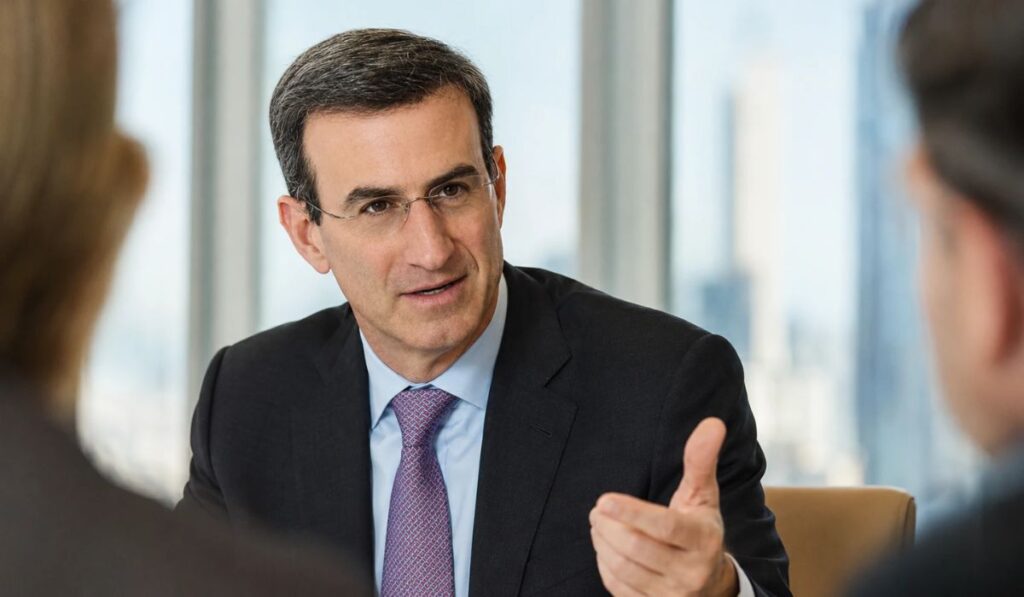
peter orszag hair Few modern economists have generated as much public fascination with their physical appearance as Peter Orszag. His remarkably neat hairline and polished television presence have spawned a persistent wave of cosmetic rumors.
Is his hair real? Does he wear a wig, a toupee, or a modern hair system?
Despite rampant internet theorizing, a rigorous visual analysis yields a clear conclusion. There is no empirical public evidence confirming that Peter Orszag wears a hairpiece. However, by applying trichological principles and examining his styling, media lighting, and the barbering anatomy of his cut, the exact triggers for these rumors become easy to understand.
Who Is Peter Orszag?
Peter R. Orszag is an American economist and current CEO and Chairman of Lazard. During the Obama administration, he served as the director of the Office of Management and Budget (OMB). He also previously led the Congressional Budget Office (CBO).
For nearly two decades, his career has placed him in front of high-definition television cameras. This sustained visibility is the catalyst for public scrutiny. When an individual appears regularly on national television, every haircut and lighting change becomes subject to intense digital dissection.
The Origin of the Toupee Rumor
The phrase “Peter Orszag toupee” began circulating widely online during his tenure in the Obama administration.
In early 2010, mainstream publications noted that “toupee” prominently appeared among Google’s suggested searches for his surname. Around the same time, The Washington Post and The Observer published features examining the public’s curiosity. The Observer notably asked a professional hairpiece specialist to comment on Orszag’s appearance based on public photographs.
While the specialist offered a strong personal opinion, the article lacked firsthand knowledge of Orszag’s grooming arrangements. A specialist offering a visual opinion without physically examining the scalp is merely sharing an opinion. It does not establish a clinical or factual truth.
Wig vs. Toupee vs. Hair System: Defining the Terms
Online searches often conflate several distinct cosmetic terms. To be precise:
- Wig: A cranial prosthesis covering most or all of the scalp. It is typically constructed on a lace or polyurethane base.
- Toupee: A smaller, partial hairpiece designed to cover the crown or vertex. This term is historically associated with older, easily detectable clip-in units.
- Hair System: A contemporary, nonsurgical replacement unit. It is custom-bonded or taped directly to the epidermis using medical-grade adhesives.
Search engines process all these variations. However, altering the terminology does not manufacture evidence. There is no reliable public confirmation that he utilizes any of these devices.
Visual Analysis: Why Does His Hairline Look Artificial?
To understand the speculation, close analysis of the visual triggers is required. Evaluating Orszag’s television appearances reveals that his hair combines several physiological and styling factors that trick the eye on camera:
- High Hair Shaft Density and Coarse Texture: Hair with a larger diameter naturally reflects more light and creates a denser visual silhouette. This can mimic the uniform, artificially knotted base of a hairpiece.
- Geometric Precision and the Frontal Hairline: Natural human hairlines feature micro-irregularity. This means they have a wispy transition zone of vellus and terminal hairs. Orszag’s hairline is cut with a blunt horizontal front. This often triggers subconscious wig alarms for viewers. However, high-resolution imagery reveals no visible demarcation line. A demarcation line is the abrupt transition between a prosthetic base and the skin. Instead, the blunt look is a hallmark of a precise scissor-over-comb technique. This method removes fine transition hairs to create a sharper executive look.
- Television Makeup and Sebum Control: HD television powder and setting sprays matify the hair and scalp by absorbing natural oils. This eliminates natural shine. It makes the hair look stationary or helmet-like rather than dynamically reflecting light.
- Controlled Silhouette: His hairstyle rarely moves during formal appearances. This is the result of high-hold, low-shine styling polymers like pomades or creams. These products anchor the hair shaft naturally rather than relying on artificial adhesion to the scalp.
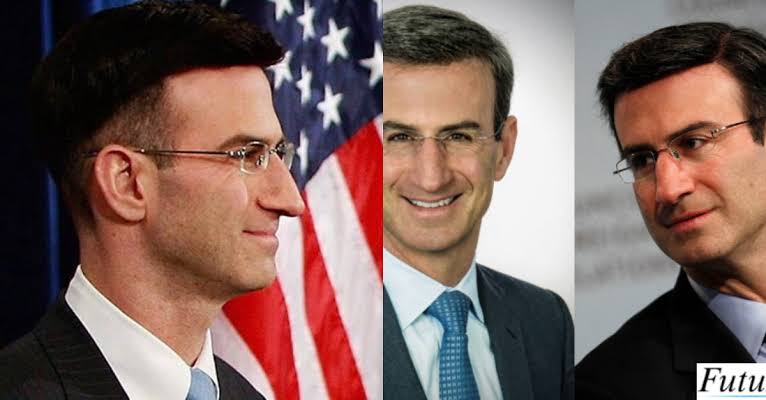
Peter Orszag Hair: Before and After
A side-by-side chronological review of Peter Orszag hair before and after photos does not reveal a dramatic transformation. Instead, it shows a natural, age-related evolution.
During his Washington years from 2009 to 2010, Orszag was photographed with dark brown hair, a heavy top shape, and a defined front. In recent years, his hair has transitioned to a predominantly gray, salt-and-pepper shade. It is now styled in a softer side sweep.
Biologically, as hair loses pigment and turns gray, the structural composition of the hair shaft changes. It often becomes coarser and wirier. This shift in texture naturally alters how the hair holds a style. The structural integrity of his haircut has remained consistent. However, the color and texture evolution is perfectly aligned with natural aging. It does not indicate a sudden swap of a hair system.
The Problem with Photographic Evidence
Evaluating broadcast stills requires understanding how studio lighting interacts with hair. Photographs are fundamentally flawed evidence in cosmetic speculation. The same hairstyle can appear vastly different based on optical variables.
- Bright Overhead Lighting: Common in press briefings, this emphasizes the scalp via specular reflection. It reduces the visual appearance of hair density and makes hair look thin.
- Soft Frontal Lighting: Diffused lighting creates the illusion of thicker, fuller hair by minimizing shadow gaps between hair shafts.
- Digital Distortion: Flash photography, digital sharpening, and image compression further distort the cuticle’s true light reflection.
Consequently, image-to-image inconsistency is standard optical behavior. It is not evidence of a changing hair system.
Has He Had a Hair Transplant?
In assessing the visual likelihood of a hair transplant, the absence of specific clinical markers is notable. There is no publicly verified evidence that Peter Orszag has received a hair transplant.
Modern follicular unit extraction (FUE) or follicular unit transplantation (FUT) can yield remarkably natural results. The public often suspects a transplant when a figure exhibits increased density or coverage in previously thin areas. However, apparent changes in a public figure’s hair over a decade can easily result from changes in hair length, gray blending, or styling products. Furthermore, transplant theories remain entirely unsupported by visual evidence because there is no visible scarring in the donor area. There is also no distinct pluggy distribution of grafts.
Deconstructing the Haircut: What Is It Called?
From a technical barbering perspective, evaluating Orszag’s haircut reveals a classic short executive haircut with a side-swept top.
Stylistically, it can be categorized as a traditional businessman’s cut or a conservative Ivy League-inspired cut. Key characteristics include:
- The Sides: Neatly tapered using a scissor-over-comb technique. They graduate smoothly down to the natural hairline without an aggressive skin fade.
- The Top: Retains approximately two to three inches of length. It is often point-cut to remove excess weight and directed gently to one side via a natural part.
- The Overall Look: A mature, authoritative style exceptionally suited for coarse, gray hair.
The Final Verdict on Peter Orszag’s Hair
Peter Orszag’s polished gray hairstyle is undeniably distinctive. It perfectly complements his executive demeanor and creates a memorable visual signature.
But distinctive does not equate to artificial. To date, the public record contains no clinical or factual confirmation that Peter Orszag wears a wig, toupee, or hair system.
The rumors persist not because of evidence, but because of an algorithmic feedback loop. Once “Peter Orszag toupee” became an established search query, auto-suggestions prompted new users to investigate. This created a false illusion of credibility.
The definitive conclusion: His hair may be entirely natural, professionally enhanced, or a combination thereof known only to him. The wig and toupee labels are the result of camera lighting, coarse hair biology, and precise scissor work. They are not documented facts.
Frequently Asked Questions
Does Peter Orszag wear a wig?
No. There is no empirical evidence that he wears a wig. The claim is based on visual speculation regarding his dense, blunt hairline. This appearance is actually a result of coarse hair texture and precise cutting.
Does Peter Orszag wear a toupee?
The toupee theory began in 2010 after an article featured a specialist’s visual opinion. It has never been verified by Orszag or any documented firsthand source.
Is Peter Orszag’s hair real?
His public appearances show a full, short hairstyle. Photographs alone cannot definitively determine biological origin versus cosmetic enhancement without examining the scalp.
Is Peter Orszag bald underneath?
There is no credible public evidence establishing that he is bald. This is an internet theory unsupported by photographic documentation of the scalp.
Has Peter Orszag had a hair transplant?
No publicly verified information confirms that he has undergone an FUE or FUT hair transplant procedure.
Why does Peter Orszag’s hair look so uniform?
A precision scissor-over-comb haircut, coarse hair shaft diameter, high-hold styling products, and diffused television studio lighting easily create a highly uniform, stationary appearance.
What color is Peter Orszag’s hair?
His hair was dark brown during his earlier government career. Over the last decade, it has naturally transitioned to gray and salt-and-pepper. This biological graying process is known as canities.
What hairstyle does Peter Orszag have?
He wears a classic short executive haircut. It features naturally tapered sides without a skin fade and a subtly side-swept, point-cut layered top.
Frequently Asked Questions
Does Peter Orszag wear a wig?
There is no publicly verified evidence confirming that Peter Orszag wears a wig. The speculation mainly comes from the appearance of his dense and sharply styled hairline.
Does Peter Orszag wear a toupee?
The toupee rumor became widely discussed around 2010, but it has never been confirmed by reliable firsthand evidence or by Orszag himself.
Is Peter Orszag’s hair real?
Public photographs show a consistently styled head of hair, but photographs alone cannot definitively establish whether someone uses cosmetic hair enhancement.
Has Peter Orszag had a hair transplant?
There is no publicly verified information confirming that Peter Orszag has undergone a hair transplant such as FUE or FUT.
Why does Peter Orszag’s hair look so uniform?
His precise haircut, coarse hair texture, styling products, and television lighting can make his hair appear unusually dense and uniform on camera.


 Celebrity4 months ago
How Tall Is Glen Powell? Height, Facts, and More
- Celebrity4 months ago
Fielder Jewett Age: Everything We Know About Him in 2026
- Technology4 months ago
How Simpcitt Is Changing the Way People Think Today
- Celebrity4 months ago
Who Is Meredith Schwarz? Key Facts You Should Know
- Home Safety4 months ago
How KDArchitects Landscape Ideas by Morph Transform Outdoor Spaces
- Business4 months ago
How Driving Modes in Cadillac Lyriq Impact Range and Efficiency
- Food & Drink4 months ago
Where to Find the Best Piononos de Santa Fe Near Me Today
- Business4 months ago
How to Buy Milohacherry Coin Safely and Get Started Today