
Technology
How to Measure 1 Inch Without a Ruler: Simple Methods

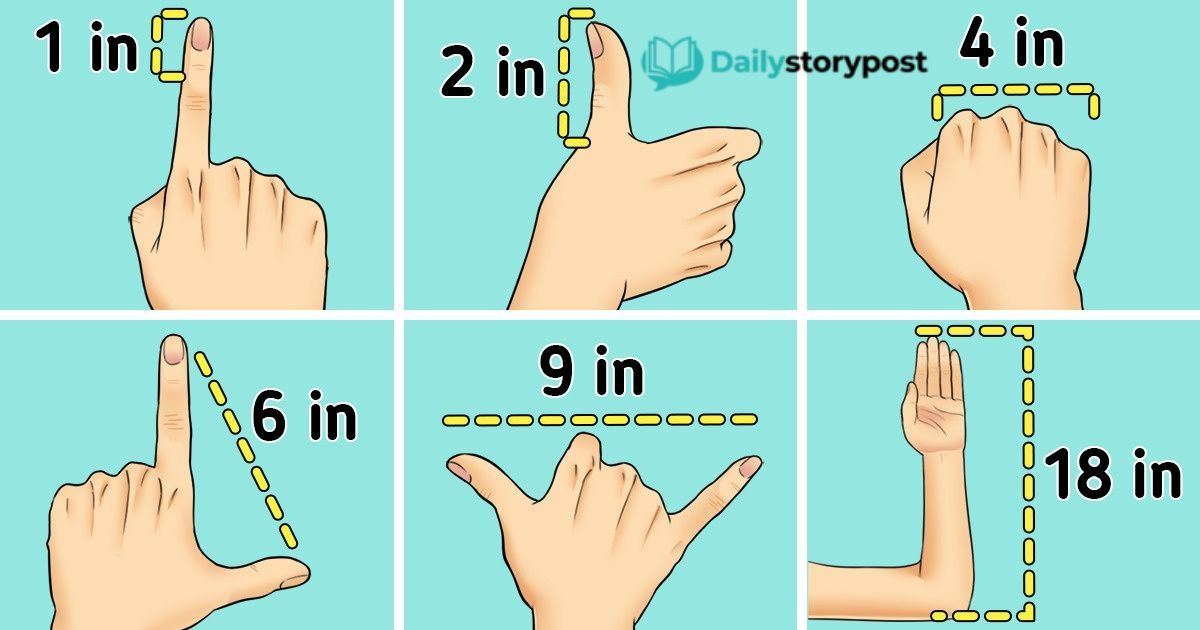
Sometimes you need to measure something quickly, but a ruler or measuring tape is nowhere nearby. Whether you are checking the size of a small object, working on a craft project, comparing dimensions, or simply trying to understand how large something is, knowing how to estimate 1 inch can be surprisingly useful.
The good news is that you do not always need a measuring tool to get a reasonable estimate. Everyday objects such as a standard payment card, your thumb, a sheet of paper, or familiar household items can provide useful visual references. However, these methods are generally suitable for approximate measurements, not situations where exact dimensions are required.
The international standard makes the basic reference very clear: 1 inch is exactly 25.4 millimeters, or 2.54 centimeters. The modern standard inch has been defined as exactly 25.4 mm since 1959.
This guide explains several practical ways to estimate 1 inch without a ruler, how accurate each method can be, and when you should use a proper measuring instrument instead.
BIO
| Label | Information |
|---|---|
| Topic | 1 inch |
| Exact Length | 25.4 millimeters |
| Metric Length | 2.54 centimeters |
| Measurement Type | Unit of length |
| Main Purpose | Measuring small distances |
| Quick Method | Use your thumb |
| Finger Method | Compare finger width |
| Card Method | Use a standard payment card |
| Paper Method | Mark an estimated inch |
| Coin Method | Compare with a known coin size |
| Phone Method | Use known phone dimensions |
| Accuracy | Best for rough estimates |
| Best Tool | Use a ruler for precision |
How Long Is 1 Inch?
Before trying to estimate 1 inch, it helps to understand its exact size.
1 inch = 25.4 millimeters = 2.54 centimeters = 0.0254 meters. The conversion is exact rather than a rounded approximation.
An inch is a relatively small unit of length. It is commonly used for measurements involving objects such as screens, screws, small tools, clothing dimensions, craft materials, and household items.
One useful way to remember the measurement is to think of 2.54 centimeters. If you are familiar with the metric system, imagining a length of roughly two and a half centimeters can help you develop a visual sense of an inch.
It is important to remember that a visual estimate will not necessarily equal exactly 25.4 mm. Your fingers, coins, and other objects have their own dimensions, and even professional measurement instruments have a degree of uncertainty. NIST explains that measurement is fundamentally a comparison with a reference and that measurement results can involve uncertainty.
Use Your Thumb
One of the easiest ways to estimate 1 inch is by using the width of your thumb.
For many people, the width of the thumb near the tip can be somewhere around the general size of an inch. However, this is only a rough reference because people’s hands are different.
To use this method, hold your thumb upright and look at the width of the thumbnail or the fleshy portion near its tip. Compare that width with the distance you want to estimate.
If you frequently need to estimate small measurements, you can make your own personal reference. Once you have access to a ruler, measure the width of your thumb at a particular point. If it happens to be close to 1 inch, you can remember that point as your personal quick reference.
This method becomes more useful with practice, but it should not be treated as an exact measurement.
For example, if you are wondering whether a small gap is approximately 1 inch, comparing it with your thumb may give you a quick answer. If the gap is clearly wider or narrower than your thumb, you can immediately get a rough idea of its size.
Try Your Finger
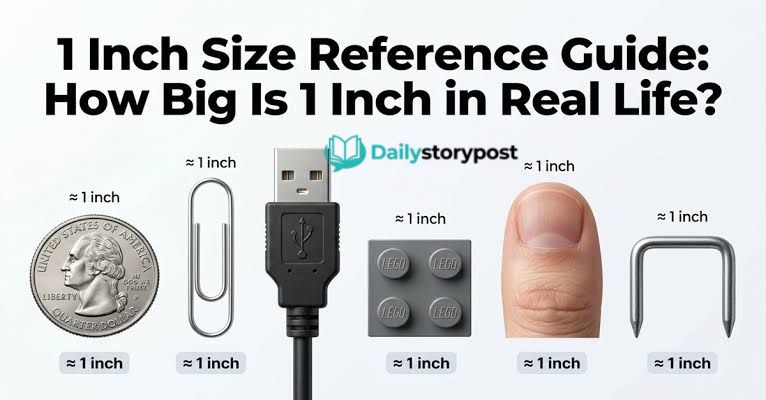
Your fingers can also act as convenient measurement references.
Unlike a ruler, however, there is no universal finger width that equals exactly 1 inch. The size of fingers varies considerably between individuals, so this method is best used for estimation.
Choose one finger that you can easily use as a reference. Compare its width with the object you are measuring. If the object appears roughly the same width, it may be close to an inch.
A useful improvement is to create your own reference. When you have access to a proper ruler, measure the width of your index finger, middle finger, or another convenient part of your hand. You may discover that one particular measurement is close to 1 inch.
The advantage is convenience. Your hand is always available, and once you know your approximate finger measurement, you can use it when a ruler is not nearby.
The limitation is accuracy. A finger should be considered a personal reference, not a standardized measuring instrument.
Use a Payment Card
A standard bank or payment card can provide a more consistent reference than your hand.
Cards following the common ISO/IEC 7810 ID-1 format have nominal dimensions of 85.60 mm by 53.98 mm. That is approximately 3.37 inches by 2.13 inches.
Because the card has a standardized size, you can use it to estimate shorter distances. For example, its shorter dimension is a little more than 2 inches, so you can visually divide that edge into roughly two equal sections to estimate 1 inch.
You can also think of the card as a reference rectangle. If you know that its shorter side is approximately 2.13 inches, half of that distance is slightly more than 1 inch.
This method can be more useful than comparing an object with your thumb because a standardized card has a defined nominal size. Still, visual division introduces its own error.
If you need a reasonably close estimate, place the card directly beside the object rather than trying to compare the two from a distance.
Use a Sheet of Paper
Ordinary paper can also help if you know its dimensions.
A standard sheet has a known size depending on the paper standard being used. For example, common office paper formats have standardized dimensions, although different countries and regions use different paper sizes.
The key idea is not to assume that every piece of paper is the same. Instead, use a sheet whose dimensions you already know.
You can estimate 1 inch by dividing a known edge into equal sections. For instance, if you have a paper edge measuring several inches, you can mentally divide it into smaller portions.
Folding can make this technique easier. If you know the total length of an edge, carefully fold it to create approximate fractions of that length.
However, folding is still an estimation technique. Small errors can accumulate when you repeatedly divide a piece of paper.
Use a Smartphone Carefully
A smartphone can provide another useful reference, particularly when you know the physical dimensions of the device.
Many smartphones have published specifications for their height, width, and thickness. If you know one of these measurements, you can compare the object you are measuring with the phone.
For example, suppose you know that a phone is several inches wide. You could use a portion of its width as a rough reference for 1 inch.
Some smartphones also support measurement applications that use cameras and sensors to estimate distances. These can be convenient, but their accuracy depends on the device, software, lighting, camera angle, and the object being measured.
A phone should therefore be treated differently from a calibrated measuring instrument. If an exact measurement matters, use a ruler, tape measure, caliper, or another suitable instrument.
Use Familiar Household Objects
Another practical solution is to use an object whose dimensions you already know.
Look around your home for something with a standardized or documented size. Depending on what is available, this could include a payment card, a manufactured component, packaging, or another object with known dimensions.
The important point is to know the reference object’s measurement first. Simply assuming that a bottle cap, coin, button, or other object is 1 inch can produce a surprisingly large error.
Objects that look similar in size can have different dimensions. Even products that appear identical may vary slightly because of manufacturing tolerances.
For quick estimation, though, a familiar object can still be useful. Once you have compared it with an actual ruler, you can remember its approximate size and use it as a reference later.
Use a Coin With a Known Diameter
Coins can sometimes provide a convenient circular reference.
The difficulty is that coin dimensions vary from country to country and between denominations. Therefore, you should not assume that a particular coin is exactly 1 inch across.
Instead, check the official or reliable specifications for the coin you are using. Once you know its diameter, you can compare it with the length you want to estimate.
For example, if a coin is slightly smaller than 1 inch in diameter, you can use it as a near-inch reference. If it is larger, you can understand how much larger by comparing it with a known measurement.
This method is especially useful if you regularly use the same coins and have already learned their approximate dimensions.
The important rule is simple: a coin is a reference only when its actual size is known.
Make a Paper Reference
If you have paper and a pen, you can create a temporary measurement reference.
The easiest approach is to use a known measurement. If you have any object with a verified 1-inch dimension, place it against the paper and make two small marks at the beginning and end of the distance.
You now have a simple 1-inch reference line.
If you do not have any known reference at all, you can still estimate 1 inch based on the methods described above, mark the approximate distance, and keep the paper as a temporary guide.
This technique is useful for crafts and simple household tasks where extreme precision is not necessary.
For more demanding projects, however, the paper reference should not replace an actual measuring instrument.
Compare Multiple Methods
One of the best ways to improve an estimate is to avoid relying on only one reference.
Suppose you want to determine whether a gap is approximately 1 inch. You might compare it with your thumb first. Then compare the same gap with a payment card or another known object.
If several independent references suggest approximately the same length, your estimate is likely to be more useful.
This approach is especially helpful because every informal measurement method has limitations. Your thumb may be slightly larger than an inch, your visual division may not be perfect, and the object you are using as a reference may have its own tolerances.
Combining methods can reduce the chance of making a large mistake.
Still, this does not turn an informal estimate into a precision measurement.
Keep the Objects Aligned
The way you compare objects can make a significant difference.
When estimating 1 inch, place the reference object and the item being measured on the same flat surface whenever possible. Keep their edges aligned.
Avoid comparing objects while one is closer to your eyes than the other. Perspective can make one object appear larger or smaller.
For a straight distance, try to compare edge to edge rather than relying only on visual judgment. If you are measuring a gap, place your reference alongside the gap instead of holding it several inches away.
Good alignment does not make an informal method exact, but it can make your estimate more consistent.
Avoid Curved or Angled Comparisons
Curved surfaces can make an inch difficult to estimate.
For example, measuring around the edge of a curved container is different from measuring a straight distance across it. Similarly, an object viewed at an angle can appear shorter or longer than it really is.
Whenever possible, identify exactly what distance you are trying to measure.
Are you measuring straight across, along a surface, or around a curve?
For a quick estimate, a straight-line comparison is generally easier. If the measurement involves a curved surface or irregular shape, a flexible measuring tape or another appropriate instrument is a better choice.
Understand the Difference Between Estimate and Measurement
This distinction is important.
When you use your thumb, finger, card, paper, or another household object, you are generally estimating the length. You are not obtaining a professionally controlled measurement.
A proper measurement uses a defined reference and a measuring instrument. NIST describes measurement as a process involving comparison with a standard, while precision measurement systems can involve calibration and quantified uncertainty.
This is why informal methods are perfectly reasonable for everyday questions such as:
“Is this approximately 1 inch?”
They become unsuitable when the question is:
“Is this exactly 25.4 mm?”
That second question requires a much more reliable method.
When Accuracy Matters
For many casual tasks, being off by a few millimeters may not matter.
For example, if you are estimating the size of a small decoration, checking whether an object is roughly an inch wide, or explaining the approximate size of something, a thumb or household reference may be sufficient.
The situation changes when the measurement affects a finished product, safety, manufacturing, construction, engineering, or another precision-dependent task.
NIST notes that accurate length measurement is important in applications ranging from making clothing to construction and surveying.
In these situations, use a suitable measuring instrument rather than relying on an informal comparison.
A ruler is often enough for simple straight measurements. A tape measure is useful for longer or flexible objects, while calipers can be more appropriate for small dimensions requiring greater precision.
Common Mistakes
One common mistake is assuming that everyone’s thumb is approximately the same size. It is not.
Another mistake is treating a coin or bottle cap as exactly 1 inch without knowing its actual dimensions.
Visual distance can also be misleading. Looking at an object from an angle may make it difficult to judge its true length.
Another problem is using an unverified smartphone measurement without considering the limitations of the app or camera.
Finally, people sometimes confuse approximate size with exact size. If a project requires a component to fit within a specific tolerance, an estimate is not enough.
Recognizing these limitations is just as important as knowing the measuring tricks themselves.
Best Method for Everyday Use
If you simply need a quick estimate, your thumb or finger is probably the fastest method.
If you want a more standardized reference, a payment card can be useful because the common ID-1 card format has defined nominal dimensions.
If you have a phone with known dimensions, that can provide another convenient reference.
For a temporary guide, a piece of paper with a marked reference can work well.
For the best results without a ruler, use more than one method and compare the results. If your thumb suggests about an inch and a standardized object gives a similar result, you can have greater confidence in your estimate.
1 Inch in Everyday Measurements
Understanding 1 inch is useful because many everyday measurements are expressed in inches.
Screen sizes, hardware, craft materials, clothing measurements, furniture dimensions, and many other products may use inches. Knowing that 1 inch equals exactly 25.4 mm gives you a reliable starting point for converting between measurement systems.
For example:
- 1 inch = 25.4 mm
- 1 inch = 2.54 cm
- 2 inches = 50.8 mm
- 3 inches = 76.2 mm
- 4 inches = 101.6 mm
- 5 inches = 127 mm
These conversions can help you develop a better visual understanding of the unit.
If you are more comfortable with centimeters, remembering that an inch is 2.54 cm can make conversions much easier.
Why 1 Inch Is a Standard Measurement
The inch has a long history, but its modern relationship with the metric system is precisely defined.
NIST explains that the standard inch was established as exactly 25.4 mm through the international standardization of the yard and pound system in 1959.
This exact relationship is important because manufacturers, engineers, scientists, and other professionals need measurement systems that can be compared consistently.
Without standardized definitions, the same measurement could mean slightly different things in different places or applications.
Today, the standard inch provides a clear relationship between customary and metric measurements.
Final Thoughts
Learning how to estimate 1 inch without a ruler can be surprisingly practical. Your thumb, finger, payment card, smartphone, paper, coins, and other familiar objects can all provide useful visual references when a measuring tool is unavailable.
The most important thing is to understand what these methods can and cannot do. They are excellent for quick estimates, but they should not be treated as substitutes for calibrated measurement equipment when precision matters.
For an exact reference, remember the key conversion: 1 inch is exactly 25.4 millimeters, or 2.54 centimeters.
If you need a fast everyday estimate, start with your thumb or another familiar reference. If you need greater confidence, compare the measurement using multiple methods. And whenever the result needs to be exact, reach for a proper ruler, tape measure, or other suitable measuring instrument.
In short, knowing the approximate size of 1 inch is a useful everyday skill, but knowing when an estimate is good enough and when precision is necessary is even more valuable.
FAQs
1. How long is 1 inch?
1 inch equals exactly 2.54 centimeters or 25.4 millimeters.
2. Can I measure 1 inch without a ruler?
Yes. You can use your thumb, finger, payment card, coin, paper, or another object with a known size for a quick estimate.
3. Is a thumb exactly 1 inch wide?
Not necessarily. Thumb sizes vary, so using your thumb is only an approximate method unless you have measured it previously.
4. What household item can help measure 1 inch?
A standard payment card can be a useful reference because its dimensions are standardized. You can also use other objects whose exact dimensions are known.
5. What is the most accurate way to measure 1 inch?
A properly calibrated ruler, measuring tape, or suitable precision measuring tool is more accurate than using everyday objects or body parts.

When people search for thestripesblog Frank Fisher, they are usually trying to understand who Frank Fisher is, what he does for The Stripes Blog, and why his name appears across so many articles on the website.
Frank Fisher is publicly presented as a member of The Stripes Blog team and an author whose work appears on the site. The website’s team information describes him as a passionate gamer with a strong interest in cryptocurrency. His published work, however, covers a much wider range of subjects, including technology, business, travel, gaming, sports, and practical digital topics.
That broader writing history is important because it gives a better picture of Fisher’s role than a short biography alone. Rather than being associated with just one subject, his name appears alongside articles covering different areas of interest. His work reflects the broad editorial direction of The Stripes Blog and its effort to publish material for readers with different interests.
BIO
| Label | Information |
|---|---|
| Name | Frank Fisher |
| Known For | Writing and online publishing |
| Associated With | The Stripes Blog |
| Role | Writer and team member |
| Main Interest | Gaming |
| Other Interest | Cryptocurrency |
| Gaming Topics | Reviews, guides, and industry updates |
| Writing Areas | Technology, business, and travel |
| Content Type | Informative articles and guides |
| Online Presence | Published work on The Stripes Blog |
| Personal Details | Limited public information |
| Writing Focus | Practical and general-interest topics |
Who Is Frank Fisher?
Frank Fisher is a writer and team member associated with The Stripes Blog, an online publication that covers a variety of subjects. The site’s own team page identifies Fisher and describes his interests in gaming and cryptocurrency. It also connects him with gaming reviews, guides, and industry-related content.
His author archive provides another useful look at his work. Articles under his name include subjects such as travel, digital tools, gaming, business, technology, and practical guides. This suggests that his role on the website extends beyond a single specialist category.
For readers searching thestripesblog Frank Fisher, this distinction matters. There is a difference between information that comes directly from a publication’s own author and team pages and claims repeated by unrelated websites. The most reliable starting point is therefore the information published by The Stripes Blog itself.
Publicly available information about Fisher’s private life is limited. There is not a detailed personal biography on the site’s team page covering every aspect of his childhood, education, family life, or personal history. For that reason, those details should not be presented as established facts without stronger sources.
Frank Fisher and The Stripes Blog
The Stripes Blog describes itself as a publication that brings together different areas of online content. Its website has featured material related to sports, entertainment, gaming, technology, travel, business, and other subjects. The site’s team page describes the publication as combining sports, gaming, and travel while also highlighting its wider editorial range.
Frank Fisher appears to be one of the recurring names behind this content. His author page contains numerous articles published under his name, showing that he has contributed regularly rather than appearing only on a single article.
One of the clearest areas associated with Fisher is gaming. The Stripes Blog’s team description specifically highlights his enthusiasm for video games and his interest in developments within the gaming industry. According to the site, this interest is reflected in gaming reviews, guides, and industry updates.
His published material also shows that his interests are not limited to gaming. Articles attributed to him have covered topics ranging from cryptocurrency and business to travel and technology. This variety is consistent with the broad subject range found across The Stripes Blog.

His Writing and Professional Interests
A look through Fisher’s published work gives readers a more practical understanding of his role.
Gaming is one of the most visible areas. An article published under his name discusses changes in the gaming industry and examines developments such as cloud gaming and technological changes affecting the way people play.
His work also includes cryptocurrency-related subjects. The Stripes Blog has published articles under Fisher’s name discussing crypto portfolios, trading, wallets, and related financial technology topics. These articles show an interest in explaining digital financial concepts to a general audience rather than limiting the discussion to specialist readers.
Technology is another recurring subject. His author archive includes articles involving digital tools, online services, telephony integration, and other technology-related topics.
Travel is also represented in his work. The author archive includes pieces about destinations and travel experiences, including an article about Serra da Estrela in Portugal and other travel-related guides.
This mixture of subjects suggests that Fisher’s contribution is best understood as broad digital publishing rather than a narrowly defined specialist career.
Why His Name Appears on So Many Topics
A common question behind the search thestripesblog Frank Fisher is why the same author name appears across such different subjects.
The answer can be seen in The Stripes Blog’s publishing structure. The site operates across several categories, and its author archive contains articles addressing different interests. A contributor working within such a publication may write about multiple categories rather than focusing on only one professional field.
For example, Fisher’s name appears on content related to gaming, crypto, business, travel, and technology. His archive therefore provides a broader picture of his contribution than any individual article can provide.
This also explains why someone may first discover Fisher through a gaming article and later encounter his name on a technology or travel piece. His published work crosses several sections of the site.
His Interest in Gaming
Gaming appears to be one of the strongest identifiable interests connected with Frank Fisher.
The Stripes Blog’s team page specifically describes him as a passionate gamer and says that his enthusiasm for video games informs his contributions to the site’s gaming coverage. The site associates him with reviews, gaming guides, and industry updates.
That description is supported to some extent by the site’s published archive. Fisher’s name appears on gaming-related articles, including material discussing industry trends and troubleshooting issues in games.
Gaming writing can take several forms. A review may focus on a player’s experience, while a guide generally aims to solve a particular problem. Industry articles, meanwhile, examine broader developments such as new technologies, changing player habits, or evolving business models.
Fisher’s published work includes elements of these different approaches, giving readers practical information as well as general discussion about the gaming industry.
His Interest in Cryptocurrency
Cryptocurrency is another area specifically mentioned in the site’s description of Frank Fisher.
The Stripes Blog says Fisher has an interest in cryptocurrency and connects this interest with his wider work. His published articles have included subjects such as crypto portfolios, trading tools, and cryptocurrency wallets.
This is significant because cryptocurrency can be difficult for new readers to understand. Terms involving wallets, trading, decentralized exchanges, and digital assets can quickly become technical.
Articles written for a general audience can make these subjects easier to approach by explaining concepts in practical language. Fisher’s crypto-related contributions fit into this broader educational style of online publishing.
Readers should still distinguish between an informational article and professional financial advice. Cryptocurrency remains a complex and volatile area, so individual articles should be read as general information rather than a substitute for independent financial research.
A Broader Range of Topics
Although gaming and cryptocurrency stand out in the site’s description of Fisher, his published work demonstrates a much broader range.
His author archive includes articles about travel, technology, business services, digital tools, automobiles, and online entertainment.
One article focuses on traveling through Serra da Estrela in Portugal, while another discusses considerations for buying a boat in New York. Other pieces examine casual online games, digital travel tools, telephony integration, and luxury car rentals.
This variety is useful when considering Fisher’s position as a digital writer. His work is not confined to one narrow subject. Instead, he contributes content designed for readers searching for answers, explanations, guides, and general-interest information.
What Is Known About His Background?
There is an important limitation when researching Frank Fisher’s personal background: the publicly available information is much stronger on his professional connection to The Stripes Blog than on his private biography.
The site’s current team information provides details about his interests and contribution to the publication, but it does not offer an extensive account of his childhood, family, education, or personal life.
That means readers should be cautious with detailed biographies published elsewhere unless those claims can be independently verified.
Several third-party websites make additional claims about Fisher’s education, previous employers, social-media following, and personal history. However, those claims are not established by the primary team and author information reviewed for this article. For a factual biography, it is better to separate confirmed information from repeated internet claims.
This approach also makes the story more useful for readers. Instead of filling gaps with speculation, it focuses on what can actually be established from published material.
His Role as an Online Writer
Frank Fisher’s work illustrates how modern online publishing can involve a wide range of subjects.
A writer for a general-interest website may need to move between different topics while maintaining a clear and accessible style. One day the subject may be a gaming problem; another article may focus on cryptocurrency, travel, technology, or business.
Fisher’s author archive reflects this type of publishing model. His name appears on articles written for readers looking for practical information and straightforward explanations.
The approach also explains why his name can become associated with different search terms. Readers may encounter his work through completely different categories and then search his name to learn more about the person behind the articles.
Why Readers Search for Frank Fisher
The phrase thestripesblog Frank Fisher appears to be driven primarily by curiosity about the person connected with the website.
Someone may have read an article bearing his name and want to know whether he is a journalist, editor, blogger, specialist, or member of the site’s wider team. Others may simply want to understand the background of an author whose name appears repeatedly across The Stripes Blog.
The site’s own information provides the clearest answer: Frank Fisher is presented as a member of the team, with particular interests in gaming and cryptocurrency, while his author archive demonstrates a broader publishing role.
That combination makes him more than an isolated byline. His name is connected to a substantial collection of articles across multiple categories.
What Readers Can Learn From His Work
One useful feature of Fisher’s published work is its range.
Readers interested in gaming can find guides and industry-related discussions. People interested in cryptocurrency can find articles covering different aspects of the digital-asset world. Other readers may encounter his work through travel, business, technology, or lifestyle-related subjects.
This range can make an author’s archive useful even when a reader arrives looking for only one particular topic.
It also shows how online writers increasingly work across subject boundaries. Digital audiences often want information that is quick to understand but still useful enough to answer a specific question. General-interest writers frequently adapt their research and writing to meet those different needs.
Important Facts About Frank Fisher
The most reliable facts that can currently be drawn from The Stripes Blog’s own published information include:
- Name: Frank Fisher
- Association: The Stripes Blog
- Role: Listed member and author
- Major stated interest: Gaming
- Other stated interest: Cryptocurrency
- Gaming work: Reviews, guides, and industry updates
- Published subjects: Gaming, technology, business, travel, crypto, and other topics
- Writing presence: Multiple articles appear under his author name
- Public biography: Limited compared with his published professional work
These points provide a useful overview without adding unsupported personal details.
What Is Not Clearly Confirmed?
A good article about a relatively private online writer should also explain what remains uncertain.
There is no strong basis in the primary material reviewed here for confidently stating detailed information about Frank Fisher’s exact age, birthplace, family, marital status, formal education, or previous employment history.
Likewise, claims about very large social-media audiences or prestigious previous positions should not automatically be accepted simply because they appear on several websites. Repetition does not necessarily make a claim independently verified.
For readers, this is an important distinction. A responsible profile should identify the difference between published facts and internet speculation.
In Fisher’s case, his connection with The Stripes Blog and his published work can be established much more clearly than many details about his private life.
Frank Fisher’s Online Presence
The most visible professional presence associated with Fisher is his work on The Stripes Blog.
His author archive contains multiple articles, making it possible to understand his interests through his published work rather than relying entirely on a short biography.
The site also has a team page that provides additional context about his interests and role. Together, these two sources offer a clearer picture than many third-party summaries.
For readers researching thestripesblog Frank Fisher, checking the author’s actual published material is particularly useful. It shows what topics he has covered and how his role fits into the wider publication.
Final Thoughts
Frank Fisher is best understood as a writer and team member associated with The Stripes Blog, with a particular connection to gaming and cryptocurrency and a much broader body of published work.
The Stripes Blog itself describes Fisher as a passionate gamer and cryptocurrency enthusiast, while his author archive demonstrates contributions across technology, business, travel, gaming, and other areas.
What makes the thestripesblog Frank Fisher search interesting is that there is more information about his work than there is about his private life. His published articles provide a practical record of his interests and contributions, while the available team information gives readers some context about his role.
At the same time, readers should be careful with detailed biographical claims that are not supported by primary sources. When information about a writer is limited, sticking to verified professional details is a better approach than filling gaps with assumptions.
Ultimately, Frank Fisher’s online identity is closely connected with the content he has published for The Stripes Blog. His work across gaming, cryptocurrency, technology, travel, and other subjects shows the broad nature of modern digital writing and explains why his name appears in searches across several different topics.
Frequently Asked Questions
Who is Frank Fisher?
Frank Fisher is a writer and team member associated with The Stripes Blog. The site’s team page highlights his interest in gaming and cryptocurrency, while his author archive shows contributions across several subjects.
What is Frank Fisher known for on The Stripes Blog?
He is particularly associated with gaming-related content and cryptocurrency, although his published work covers many additional subjects, including technology, travel, business, and digital services.
Does Frank Fisher write about gaming?
Yes. The Stripes Blog specifically describes him as a passionate gamer and connects his work with gaming reviews, guides, and industry updates.
Does Frank Fisher cover cryptocurrency?
Yes. Cryptocurrency is specifically mentioned among his interests, and articles under his name have covered crypto-related subjects and tools.
Is detailed personal information about Frank Fisher publicly available?
Only limited personal information is clearly established by the primary sources reviewed. His professional connection to The Stripes Blog and his published work are much easier to verify than details about his private life.
What subjects does Frank Fisher write about?
His published work includes gaming, cryptocurrency, technology, business, travel, digital tools, and other general-interest subjects. His author archive demonstrates a considerably wider range than gaming alone.
Who is Frank Fisher?
Frank Fisher is a writer and team member associated with The Stripes Blog. His work covers several topics, with gaming and cryptocurrency among his stated interests.
What does Frank Fisher write about?
His published work covers gaming, cryptocurrency, technology, travel, business, and other digital topics, showing a broad range of interests.
Is Frank Fisher connected to The Stripes Blog?
Yes. The Stripes Blog lists Frank Fisher as part of its team and publishes articles under his name.
What is Frank Fisher interested in?
According to The Stripes Blog, Fisher has a particular interest in gaming and cryptocurrency. These interests are also reflected in some of his published work.
Is Frank Fisher’s personal life publicly known?
Only limited personal information is clearly available from primary sources. Most publicly documented information concerns his writing and connection with The Stripes Blog.

Exploring the London, a city renowned for its rich history, culture, and economic prowess, has also become a significant hub for technological advancements and IT services. As the digital age continues to evolve, the demand for IT services in London has surged, making it an essential sector that supports businesses of all sizes and industries. In this blog, we will delve into the various aspects of IT services in London, highlighting their importance, types, and the key players driving the industry forward.
BIO
| Label | Information |
|---|---|
| Topic | IT Services in London |
| Location | London, UK |
| Main Services | Managed IT, cybersecurity, cloud computing |
| IT Support | Remote and on-site support |
| Managed Services | Network, backup, recovery, and support |
| Cybersecurity | Threat protection and security measures |
| Cloud Services | Remote data and application access |
| IT Consulting | Technology planning and strategy |
| Technical Support | Hardware and software troubleshooting |
| Key Providers | AGN IT Services, Capgemini, Cognizant |
| Emerging Technology | AI, blockchain, and IoT |
| Business Benefits | Productivity, security, and continuity |
| Future Outlook | Growing demand for digital IT solutions |
The Importance of IT Services in London
IT services in London play a crucial role in the daily operations of businesses. From ensuring smooth network functionality to providing cybersecurity solutions, these services are indispensable. In a city where competition is fierce, having reliable IT support can be the difference between success and failure. Companies rely on IT services to maintain their digital infrastructure, which includes hardware, software, and networking components. This reliance ensures business continuity, enhances productivity, and provides a competitive edge in the market.
Types of IT Services in London
The landscape of IT services in London is diverse, catering to various needs and requirements of businesses. Here are some of the key services offered:
1. Managed IT Services
Managed IT services are comprehensive solutions that cover all aspects of a company’s IT needs. These services include network management, data backup, disaster recovery, and IT support. By outsourcing these functions to a managed service provider, businesses can focus on their core activities while ensuring their IT infrastructure is in expert hands.
2. Cybersecurity Services
In today’s digital world, cybersecurity is paramount. IT services in London offer robust cybersecurity solutions to protect businesses from cyber threats such as hacking, phishing, and malware attacks. These services include risk assessments, security audits, and the implementation of advanced security measures to safeguard sensitive information.
3. Cloud Computing Services
Cloud computing has revolutionized the way businesses operate. IT services in London provide cloud solutions that enable companies to store, manage, and access data remotely. This flexibility not only reduces costs associated with physical storage but also enhances collaboration and scalability.
4. IT Consulting Services
IT consulting services help businesses develop and implement IT strategies that align with their goals. Consultants provide expert advice on technology investments, infrastructure improvements, and digital transformation initiatives, ensuring businesses stay ahead of technological trends.
5. Technical Support Services
Technical support is a vital aspect of managed IT services in London. Whether it’s troubleshooting software issues or resolving hardware problems, technical support teams ensure that businesses experience minimal downtime. This support can be provided on-site or remotely, depending on the needs of the business.
Key Players in IT Services in London
The market for IT services in London is populated by numerous providers, each offering unique solutions. Some of the key players include:
1. AGN IT Services

AGN IT Services is a global leader in IT services, providing a wide range of solutions, including digital transformation, cybersecurity, and cloud services. With a strong presence in London, AGN IT Services helps businesses leverage technology to achieve their objectives.
2. Capgemini
Capgemini is another major player in the IT services industry. They offer services such as consulting, technology, and outsourcing. Their expertise in digital transformation and innovation makes them a preferred choice for many businesses in London.
3. Cognizant
Cognizant specializes in IT services that drive digital business transformations. Their offerings include application development, IT infrastructure services, and data analytics. Cognizant’s focus on customer-centric solutions has earned them a strong reputation in London.
The Future of IT Services in London
As technology continues to advance, the future of IT services in London looks promising. Emerging technologies such as artificial intelligence, blockchain, and the Internet of Things (IoT) are set to transform the IT landscape. Businesses will increasingly rely on IT services to integrate these technologies into their operations, driving innovation and efficiency.
Furthermore, the ongoing shift towards remote work and digital collaboration is expected to boost the demand for IT services in London. Companies will need robust IT infrastructures and support systems to facilitate seamless remote operations and ensure data security.
Conclusion
In conclusion, IT services in London are a cornerstone of the city’s business ecosystem. From managed services to cybersecurity and cloud computing, these services are vital for the smooth operation and growth of businesses. The presence of leading IT service providers further enhances the quality and reliability of these services. As technology evolves, the role of IT services in London will only become more significant, driving innovation and efficiency across industries.
Whether you are a small business looking to streamline your IT operations or a large corporation seeking to enhance your digital capabilities, the diverse and dynamic landscape of IT services in London has something to offer. Embrace the technological advancements and partner with a reputable IT service provider to stay ahead in this competitive market.

In the world of donations, finding the perfect image for your slides can be frustrating. Most people waste hours searching through stock libraries or struggle to edit illustrations to match their themes. That’s where AiPPT Nano Banana steps in — an innovative, free AI image creator from AiPPT designed to fully change the way you produce illustrations for your PowerPoint presentations.
BIO
| Label | Information |
|---|---|
| Tool Name | Nano Banana |
| Platform | AiPPT |
| Tool Type | AI Image Generator |
| Main Purpose | Create PPT visuals |
| Image Creation | AI-powered |
| Image Editing | Supported |
| Presentation Use | PowerPoint slides |
| Customization | Colors, sizes, styles |
| Design Skills | Not required |
| Key Benefit | Saves time |
| Creative Value | Boosts visual creativity |
| Best For | Presenters, marketers, educators |
What Is Nano Banana?
Nano Banana is AiPPT’s advanced AI-powered image tool that helps users instantly generate and edit custom presentation illustrations. Instead of browsing endless image libraries, you can now produce unique, high-quality images directly within the AiPPT ecosystem. This tool turns your ideas into stunning, presentation-ready illustrations — saving time and boosting creativity.
With Nano Banana, you’re not just editing slides; you’re enhancing stories, boosting engagement, and building visual impact effortlessly.
The Problem: Finding the Right Illustrations for Slides
Creating professional presentations frequently hits one major obstacle — illustrations. Whether it’s a product image, infographic, or creative background, most presenters rely on repetitive stock photos or complex editing tools. This approach not only eats up time but also results in dull, uninspired slides that fail to impress audiences.
That’s the gap Nano Banana fills.
The Solution: AiPPT’s Nano Banana Image Generator

Nano Banana is more than just another PPT image editor. It’s a smart AI tool built specifically for presentation creators. Using advanced AI technology, it generates images that align perfectly with your content and design style.
Here’s how it transforms your workflow:
- Generate Custom Illustrations Instantly
Describe what you need, and Nano Banana creates it in seconds. - Edit and Customize
Adjust colors, sizes, and styles to fit your presentation theme using AiPPT’s intuitive image editor. - Free to Use
Unlike other tools, Nano Banana is fully free within AiPPT, making high-quality image creation accessible to everyone.
You can try the Nano Banana tool for free today and see how quickly it upgrades your slide illustrations.
Why Nano Banana Is a Game-Changer for Presentations
When you use Nano Banana, you’re not just saving time; you’re transforming how your audience perceives your work. With its AI-driven precision, every slide becomes more captivating, polished, and memorable.
Key Benefits:
Professional Look
Achieve design consistency with custom illustrations generated by AI.
Enhanced Creativity
Turn abstract ideas into visual images effortlessly.
No Design Skills Required
Perfect for presenters, marketers, educators, and teams who need results quickly.
In short, Nano Banana helps you create presentations that look like they were designed by professionals — without the hassle or cost.
Final Thoughts: Power Your Slides with Nano Banana
In today’s fast-paced digital world, presentations must stand out visually to make an impact. Nano Banana gives you that edge — a free AI image creator built into AiPPT that lets you craft and customize illustrations that truly elevate your communication.
Start creating smarter and faster and try the Nano Banana tool for free to experience how AiPPT is redefining presentation design.
FAQs
1. What is Nano Banana?
Nano Banana is an AI-powered image creation and editing tool designed to help users create custom visuals for PowerPoint presentations.
2. How can Nano Banana improve PowerPoint presentations?
It can help create customized, presentation-ready images that match your content, theme, colors, and overall slide design.
3. Is Nano Banana easy to use?
Yes. Users can describe the type of image they need and use AI-generated visuals without requiring advanced design skills.
4. Can Nano Banana create custom presentation images?
Yes. The tool is designed to generate custom illustrations and visuals based on the user’s ideas and presentation requirements.
5. Who can benefit from Nano Banana?
Presenters, marketers, educators, students, and teams can use it to create engaging visuals and improve the appearance of their presentations.


 Celebrity4 months ago
How Tall Is Glen Powell? Height, Facts, and More
- Celebrity4 months ago
Fielder Jewett Age: Everything We Know About Him in 2026
- Technology4 months ago
How Simpcitt Is Changing the Way People Think Today
- Home Safety4 months ago
How KDArchitects Landscape Ideas by Morph Transform Outdoor Spaces
- Celebrity4 months ago
Who Is Meredith Schwarz? Key Facts You Should Know
- Business4 months ago
How Driving Modes in Cadillac Lyriq Impact Range and Efficiency
- Food & Drink4 months ago
Where to Find the Best Piononos de Santa Fe Near Me Today
- Business4 months ago
How to Buy Milohacherry Coin Safely and Get Started Today