games
How to Use Guia Silent Hill Geekzilla for Better Gameplay

Silent Hill has earned its place as one of the most influential survival horror franchises in gaming history. Known for its unsettling atmosphere, psychological storytelling, challenging puzzles, and memorable monsters, the series continues to attract both longtime fans and new players. However, many players quickly discover that Silent Hill is not a game that simply guides them from one objective to another. Exploration, observation, and problem-solving are essential parts of the experience.
This is where guia silent hill geekzilla becomes valuable. Designed to help players understand game mechanics, solve difficult puzzles, locate important items, and uncover hidden secrets, the guide serves as a practical companion throughout the journey. Rather than replacing the gameplay experience, it helps players overcome obstacles while still appreciating the mystery and tension that make Silent Hill unique.
In this article, we will explore how to use guia silent hill geekzilla effectively to improve gameplay, understand the story more deeply, and enjoy every aspect of the Silent Hill experience.
BIO
| Label | Information |
|---|---|
| Topic | Guia Silent Hill Geekzilla |
| Type | Gaming Guide |
| Main Purpose | Improve Silent Hill gameplay |
| Focus Area | Walkthroughs and tips |
| Suitable For | New and experienced players |
| Key Feature | Puzzle solutions |
| Navigation Help | Maps and location guidance |
| Combat Support | Enemy and survival tips |
| Story Coverage | Lore and character insights |
| Hidden Content | Secrets and collectibles |
| Main Benefit | Easier game progression |
| Best Use | When stuck or exploring content |
What Is Guia Silent Hill Geekzilla?
Guia silent hill geekzilla is a detailed gaming guide focused on helping players navigate the Silent Hill series more efficiently. It combines walkthrough information, puzzle solutions, exploration advice, combat strategies, and story explanations into a single resource.
Silent Hill games are famous for their complex design. Many objectives are not clearly marked, and puzzles often require players to pay close attention to environmental clues. Some puzzles even change difficulty depending on selected game settings. For this reason, guides have become an important tool for many players.
The purpose of guia silent hill geekzilla is not simply to provide answers. Instead, it helps players better understand the game’s systems while reducing frustration during difficult moments.
Whether someone is playing Silent Hill for the first time or revisiting the series years later, the guide can make progression smoother and more enjoyable.
Why Players Use the Guide
One of the biggest reasons players seek out guidance is the challenging nature of Silent Hill itself. Unlike many modern games that offer extensive tutorials and objective markers, Silent Hill often expects players to investigate their surroundings carefully.
A player may spend considerable time searching for a key item, solving a cryptic riddle, or figuring out where to go next. While some enjoy the challenge, others may feel stuck after hours of unsuccessful exploration.
Using guia silent hill geekzilla helps eliminate unnecessary confusion without removing the sense of achievement that comes from solving the game’s mysteries.
Another reason players appreciate the guide is its ability to highlight content that might otherwise be missed. Hidden rooms, optional items, secret endings, and important story details often remain undiscovered during a casual playthrough.
By providing helpful direction, the guide ensures players experience more of what the game has to offer.
Getting Started the Right Way
The best approach when using guia silent hill geekzilla is to treat it as a companion rather than a complete walkthrough.
Before consulting the guide, spend time exploring independently. Read notes, examine objects, and investigate every area thoroughly. Silent Hill rewards curiosity, and many memorable moments come from discovering clues on your own.
When progress comes to a halt, the guide can help point you in the right direction without revealing every detail immediately.
It is also important to ensure you are using information relevant to the specific Silent Hill game you are playing. Different entries in the series feature unique maps, characters, puzzles, and mechanics.
Following the correct guidance prevents confusion and helps maintain a smooth gameplay experience.
Solving Puzzles More Efficiently
Puzzles are one of the defining features of Silent Hill. Unlike traditional action games, success often depends on interpreting clues hidden within poems, notes, paintings, symbols, and environmental details.
Many puzzles are intentionally designed to challenge logical thinking. Some require mathematical reasoning, while others depend on understanding literary references or symbolic meanings.
Guia silent hill geekzilla helps players approach these challenges methodically. Instead of merely presenting answers, it often explains the reasoning behind puzzle solutions.
This approach provides several benefits.
First, players gain a deeper understanding of the puzzle design itself. Second, they improve their ability to solve future puzzles independently. Finally, they remain engaged with the game’s narrative rather than simply skipping obstacles.
When using the guide, try reading hints before looking directly at complete solutions. This method preserves the satisfaction of solving puzzles while reducing unnecessary frustration.
Navigating Silent Hill’s World
Exploration plays a central role in every Silent Hill game. Fog-covered streets, abandoned buildings, hospitals, schools, apartments, and underground areas create environments filled with secrets and danger.
Unfortunately, these locations can also be confusing.
Players often become lost due to similar-looking corridors, locked doors, or changing environments. Silent Hill intentionally creates uncertainty to increase tension.
Using guia silent hill geekzilla helps players understand map layouts and progression routes. The guide can identify critical locations, explain access requirements, and clarify objective sequences.
This becomes especially useful during sections where the environment transforms between reality and the terrifying Otherworld.
Rather than wandering aimlessly, players can maintain momentum while still experiencing the atmosphere and suspense that define the series.
Finding Hidden Items
One of the most useful aspects of guia silent hill geekzilla is its coverage of hidden items and collectibles.
Throughout the series, valuable resources are often concealed in unexpected locations. Ammunition may be tucked away inside cabinets. Health items might appear behind furniture. Important keys can be hidden within obscure corners of the environment.
Because resources are limited, finding these items can significantly improve survival chances.
The guide helps players identify important item locations without requiring endless searching. This is particularly valuable during harder difficulty settings where resource management becomes increasingly important.
Collectibles and special items also contribute to a richer gameplay experience. Some unlock secret content, while others reveal additional story details.
By locating these hidden discoveries, players gain a more complete understanding of the game world.
Improving Combat Performance
Although Silent Hill focuses heavily on atmosphere and psychological horror, combat remains an important part of survival.
Enemies vary widely throughout the series. Some attack aggressively, while others rely on unpredictable movement patterns. Learning how each enemy behaves can make encounters much easier.
Guia silent hill geekzilla often provides detailed combat advice, including enemy weaknesses, effective weapons, and avoidance strategies.
One of the most important lessons players learn through the guide is resource conservation.
Ammunition is rarely unlimited in Silent Hill. Firing recklessly can leave players vulnerable during critical moments later in the game.
The guide teaches players when to fight, when to retreat, and how to maximize efficiency during encounters.
These strategies not only improve survival rates but also enhance immersion by reinforcing the survival horror experience.
Understanding the Story
Silent Hill is famous for storytelling that goes far beyond simple horror narratives.
The series explores themes such as guilt, trauma, grief, punishment, memory, and personal redemption. Many events are intentionally ambiguous, encouraging players to interpret the story themselves.
Because of this complexity, some players finish a game without fully understanding what happened.
Guia silent hill geekzilla helps bridge this gap by explaining character motivations, symbolic imagery, and major story developments.
Understanding these elements can dramatically change the way players view the experience.
A seemingly minor scene may carry deeper meaning. An enemy design may reflect a character’s psychological state. A location may symbolize hidden emotions or unresolved trauma.
By exploring these interpretations, players gain a greater appreciation for the artistry behind the Silent Hill franchise.
Exploring Silent Hill Symbolism
Symbolism is one of the strongest aspects of Silent Hill’s storytelling.
Many monsters represent internal fears, guilt, or emotional struggles. Environmental details often reflect a character’s subconscious mind.
Without guidance, these symbolic elements can be easy to overlook.
Guia silent hill geekzilla often examines recurring themes and visual motifs throughout the series. Understanding these symbols enriches the overall experience and reveals layers of meaning hidden beneath the surface.
For example, seemingly random objects, architectural designs, and enemy appearances often serve narrative purposes connected to character development.
Recognizing these connections transforms Silent Hill from a traditional horror game into a deeply psychological experience.
Achieving Better Endings
Many Silent Hill games feature multiple endings based on player actions throughout the story.
These endings can range from tragic and emotional to mysterious and thought-provoking. Some require specific choices, while others depend on gameplay behavior that players may not even realize is being tracked.
Using guia silent hill geekzilla helps players understand the requirements for different endings without excessive trial and error.
Players interested in achieving the best possible ending can follow recommendations while still enjoying the story naturally.
The guide also helps completionists unlock alternate endings and secret content that might otherwise remain inaccessible.
Discovering Secrets and Easter Eggs
Silent Hill games contain numerous hidden references, bonus items, and Easter eggs.
Developers frequently included subtle nods to previous games, popular culture, and internal jokes. These hidden details reward observant players and encourage multiple playthroughs.
Guia silent hill geekzilla highlights many of these discoveries, allowing players to experience content they may never encounter during a standard run.
For dedicated fans, uncovering these secrets adds another layer of enjoyment and encourages deeper exploration of the series.
Common Mistakes to Avoid
While guides are incredibly useful, there are ways to use them incorrectly.
One common mistake is relying on the guide for every objective. Doing so can reduce immersion and remove much of the mystery that makes Silent Hill special.
Another mistake is skipping environmental storytelling. Some players focus only on objectives and miss subtle details that contribute to the atmosphere and narrative.
Players should also avoid rushing through locations simply because they know where to go next. Exploration remains one of the most rewarding aspects of the experience.
The best strategy is to use guia silent hill geekzilla when needed while still allowing room for personal discovery.
The Benefits of Using Guia Silent Hill Geekzilla
The value of guia silent hill geekzilla extends beyond simple problem-solving.
It helps players understand game mechanics more effectively, navigate difficult areas with confidence, discover hidden content, and appreciate the deeper themes within the story.
For newcomers, the guide reduces the intimidation factor often associated with classic survival horror games.
For veteran players, it provides opportunities to uncover details they may have missed during previous playthroughs.
Most importantly, it allows players to spend less time feeling stuck and more time enjoying the carefully crafted atmosphere that has made Silent Hill a legendary franchise.
Frequently Asked Questions
Is guia silent hill geekzilla useful for beginners?
Yes. Beginners can benefit from walkthrough guidance, puzzle assistance, navigation tips, and combat strategies that make the learning curve less overwhelming.
Does the guide contain spoilers?
Some sections may include story details. Players who wish to avoid spoilers should focus on gameplay-related information and consult story explanations after completing the game.
Can experienced players benefit from the guide?
Absolutely. Veteran players often use the guide to discover hidden content, unlock alternate endings, and gain deeper insight into story symbolism.
Does the guide help with puzzle difficulty settings?
Yes. Silent Hill puzzles can vary depending on selected difficulty options, and the guide often explains how solutions differ between settings.
Is it useful for multiple playthroughs?
Yes. Many players revisit the guide during later playthroughs to find collectibles, secret endings, and Easter eggs they missed previously.
Conclusion
Silent Hill remains one of gaming’s most respected horror franchises because it challenges players intellectually, emotionally, and psychologically. Its combination of atmospheric exploration, memorable storytelling, and intricate puzzles creates an experience unlike any other.
Using guia silent hill geekzilla can significantly improve that experience when used thoughtfully. The guide helps players solve complex puzzles, navigate confusing locations, manage resources effectively, uncover hidden secrets, and better understand the deeper themes woven throughout the story.
Rather than replacing the challenge, it enhances appreciation for the craftsmanship behind the series. By using the guide as a supportive tool rather than a shortcut, players can enjoy the fear, mystery, and emotional depth that continue to make Silent Hill unforgettable decades after its debut.
Frequently Asked Questions
What is Guia Silent Hill Geekzilla?
Guia Silent Hill Geekzilla is a fan-focused gaming guide that helps players navigate Silent Hill games. It includes walkthroughs, puzzle solutions, exploration tips, and story explanations.
Is Guia Silent Hill Geekzilla suitable for beginners?
Yes. The guide is helpful for new players because it explains difficult mechanics, puzzle systems, and important objectives without making the game feel overwhelming.
Can Guia Silent Hill Geekzilla help with hidden secrets?
Absolutely. The guide often highlights secret items, optional areas, collectibles, and alternate endings that many players might miss during a normal playthrough.
Does using the guide reduce the horror experience?
Not necessarily. Many players use the guide only when they become stuck. This allows them to continue enjoying the atmosphere, story, and suspense while avoiding unnecessary frustration.
Why do Silent Hill fans recommend Guia Silent Hill Geekzilla?
Fans appreciate the guide because it combines gameplay advice, puzzle assistance, combat tips, and lore explanations in one place, making the overall experience more enjoyable and easier to understand.


If you enjoy word games, the Connections puzzle can be a fun way to test how quickly you spot patterns, meanings, and unexpected relationships between words. It looks simple at first, but the challenge comes from finding the four correct groups without getting distracted by misleading connections.
For players who get stuck, a connections hint Forbes guide can provide a useful middle ground between solving everything alone and immediately looking at the complete answers. A good hint should help you see the direction of a group while still allowing you to finish the puzzle yourself.
This guide explains how the Connections puzzle works, how hints can be used effectively, and which strategies can make difficult puzzles easier to understand.
BIO
| Label | Information |
|---|---|
| Topic | Connections Hint Forbes |
| Puzzle Type | Daily word puzzle |
| Main Goal | Find four groups of four words |
| Total Words | 16 words |
| Number of Groups | 4 groups |
| Group Size | 4 words each |
| Main Challenge | Finding hidden connections |
| Hint Purpose | Helps when you get stuck |
| Solving Method | Spot patterns and test categories |
| Common Trap | Words may fit more than one group |
| Best Approach | Start with the clearest connection |
| Useful Resource | Forbes Connections hint guides |
What Is the Connections Puzzle?
Connections is a daily word puzzle built around a grid of 16 words. The objective is to divide those words into four groups of four, with each group sharing a particular connection. The relationship might be based on meaning, word usage, names, phrases, objects, pop culture, or another clever relationship.
The difficult part is that several words may appear to belong together even when they do not. Puzzle designers deliberately use these overlaps to make players question their first assumptions.
For example, a word might fit naturally into two possible categories. The real challenge is determining which four-word combination forms a complete and intended group.
There is also a limited number of mistakes a player can make. That means guessing randomly is not a particularly useful strategy. It is better to examine the words carefully and test whether a possible category works for all four words.
What Does “Connections Hint Forbes” Mean?
The phrase connections hint Forbes generally refers to Forbes coverage that provides clues, explanations, and sometimes complete solutions for the daily Connections puzzle.
Forbes has published recurring Connections guides that explain the game’s structure and then provide hints for individual groups. Some guides give a broad clue first, followed by a more specific clue and eventually the complete answers.
This format is useful because players can decide how much help they actually want.
Someone who is nearly finished may only need one small clue. Another player who has completely run out of ideas may want the category names or full solutions.
The important point is that a hint does not have to spoil the entire puzzle.
How to Use Connections Hints Effectively
The best way to use a hint is to treat it as guidance rather than an answer sheet.
If you immediately read every solution, you may finish the puzzle, but you lose the opportunity to work through the reasoning yourself. Instead, start with the puzzle and only look for assistance when you genuinely need it.
Start With the Obvious Connections
Read all 16 words before making a selection.
Look for words that clearly appear related. Sometimes the easiest group is based on a familiar subject, phrase, object, or name.
If four words seem connected, ask yourself whether the relationship is precise enough to describe all four.
A strong category should explain every word naturally. If one word requires a complicated explanation, there may be another group hiding elsewhere.
Find the Strongest Group First

You do not necessarily need to solve the groups in a particular order.
The easiest category can provide a useful starting point because removing four words reduces the number of possibilities among the remaining words.
For this reason, many players benefit from looking for the most obvious relationship before trying to crack the more unusual categories.
Forbes Connections guides commonly present the four groups using the familiar yellow, green, blue, and purple structure, with yellow generally representing the easiest category and purple usually being the most challenging.
Watch for Multiple Meanings
One of the biggest traps in Connections is a word that can belong to more than one apparent group.
A word may have a literal meaning, a slang meaning, a name association, or a relationship with a phrase.
This is where players can easily become convinced that they have discovered the correct group.
Before submitting four words, ask a simple question:
Does this category describe all four words in exactly the same way?
If the answer is no, keep looking.
Use Hints Without Spoiling the Puzzle
If you are stuck, start with the smallest hint available.
A useful progression is:
Try the puzzle → look for a general clue → reconsider the words → use a stronger clue → check the full answer only if necessary.
This approach keeps the puzzle enjoyable while still giving you a way forward.
Forbes guides often follow a similar structure by providing extra hints before revealing the group names and complete answers.
Why Connections Puzzles Can Be Tricky
The difficulty of Connections does not usually come from obscure vocabulary alone. Much of the challenge comes from misdirection.
A group can look correct because three words fit perfectly. The fourth word may then appear to fit another category just as well.
This forces you to think beyond simple associations.
Some categories are straightforward, such as four things belonging to the same general subject. Others may involve words that can follow or precede the same term, names associated with a particular topic, or less obvious word relationships. Forbes’ explanations of recent puzzles show examples involving television terminology, objects worn around the neck, strings tied in knots, and words associated with particular phrases.
The puzzle can therefore test more than vocabulary. It can also test cultural knowledge, flexible thinking, and your ability to recognize patterns.
A Simple Strategy for Solving Connections
A consistent process can make the puzzle much less frustrating.
1. Read Every Word
Do not immediately select the first group you notice.
Take a moment to read the complete board. Your first impression may change after you see all 16 words together.
2. Look for Obvious Pairs
Start by noticing words that appear naturally related.
Pairs are not enough to solve a group, but they can help you discover a possible category.
3. Search for Four
Once you find a possible relationship, try to identify four words that fit it.
Do not stop at three.
Connections requires a complete group of four, so the fourth word is often the key to determining whether your idea is correct.
4. Test the Category
Before submitting, explain the relationship in your own words.
If you cannot clearly explain why all four words belong together, continue searching.
5. Remove Confirmed Groups
Once you correctly identify a group, the remaining words become easier to analyze.
There are fewer possibilities, and previously confusing words may suddenly make sense.
6. Reconsider the Remaining Words
Do not assume that the same type of relationship will appear in every group.
One group may be based on objects, another on names, another on phrases, and another on wordplay.
7. Use a Hint When Needed
If you have spent several minutes going around in circles, a hint can help you see the puzzle from another angle.
The goal is not necessarily to avoid every hint. The goal is to use assistance in a way that still lets you understand the puzzle.
Common Mistakes to Avoid
Assuming the First Four Related Words Are Correct
Finding four related words can feel like a breakthrough, but Connections often uses overlapping relationships deliberately.
Always check whether another interpretation is stronger.
Ignoring the Fourth Word
Players sometimes identify three words that belong together and then force a fourth word into the group.
That is risky.
If the fourth word does not fit naturally, reconsider the category instead of trying to justify it.
Taking Words Too Literally
A word may not be connected to another word through its most obvious definition.
Think about phrases, names, cultural references, alternate meanings, and word combinations.
Guessing Too Quickly
Because the puzzle limits mistakes, random guesses can make an already difficult board harder.
Take a moment to test your theory before submitting it.
Looking at the Full Answer Too Early
If your objective is to improve at Connections, seeing the complete answer immediately does not give you much practice.
A single clue may be enough to help your brain make the missing connection.
How to Use a Forbes Connections Guide
A Forbes Connections guide can be approached in stages.
First, try solving the day’s puzzle without outside assistance.
If you become stuck, look for the one-word clues or general group hints rather than jumping directly to the solutions. Forbes guides have used this approach by giving a clue for each color group before presenting the group categories and complete answers.
After reading a hint, return to the puzzle.
Look at the 16 words again and ask whether the clue changes how you interpret any of them.
For example, a broad clue such as a reference to television, household items, or a particular activity can help narrow the possibilities without immediately revealing all four answers.
Only move to the complete solution when you are satisfied that you have tried enough on your own.
This makes the guide more of a learning tool than a shortcut.
Connections Hint Forbes vs. Solving Without Hints
Solving without hints gives you the opportunity to work entirely from your own vocabulary and reasoning.
It can be especially satisfying when you eventually discover a difficult purple group without assistance.
However, hints have their own value.
A carefully chosen clue can show you the type of relationship the puzzle is looking for. Once you understand that relationship, you may be able to identify the four words yourself.
For players who are still learning the game, this can be more useful than simply seeing the answer.
There is no requirement to use the same approach every day. Some puzzles may be solved quickly, while others may contain several misleading combinations that make a hint worthwhile.
Tips for Getting Better at Connections
Improvement usually comes from paying attention to how the puzzle is constructed, not simply from memorizing answers.
Expand Your Vocabulary
A broader vocabulary gives you more ways to interpret unfamiliar words.
Pay attention to synonyms, phrases, names, abbreviations, and words with multiple meanings.
Learn to Think in Categories
When you see four potentially related words, try to name the category before selecting them.
Instead of thinking, “These words look similar,” ask, “What exact relationship connects these four?”
That small change can make your reasoning more precise.
Consider Phrases
Some Connections groups are not based on words having the same meaning.
Instead, the words may work with another word before or after them.
If an obvious category is not appearing, consider whether the words form familiar expressions or compound phrases.
Look for Wordplay
Connections can reward players who notice unusual spelling patterns, repeated letters, names, or other structural details.
A group does not always have to be about what the words represent.
Sometimes the way a word is written or used is the important clue.
Learn From Wrong Guesses
An incorrect selection can still teach you something.
If three words appeared connected but the fourth did not work, ask why.
Understanding the misleading connection can make you less likely to fall for a similar trick in a future puzzle.
Why Hints Can Improve Your Solving Skills
It may seem that using hints makes a player weaker, but the effect depends on how the hints are used.
If you simply read the answers every day, you have less opportunity to practice.
If you use a hint to understand the intended direction and then finish the group yourself, you can learn from the process.
For example, suppose you recognize three words but cannot identify the fourth. A category clue may help you realize that the connection is based on a specific phrase rather than a shared meaning.
That realization can stay with you and influence how you approach future puzzles.
In this way, a hint can become a small lesson in puzzle construction.
What Makes a Good Connections Hint?
A good hint should provide direction without immediately removing the challenge.
The most useful clues are often specific enough to narrow the possibilities but general enough that the player still needs to think.
A very broad clue may not help at all.
A complete answer, on the other hand, removes most of the challenge.
The ideal middle ground is a clue that makes you think, “I understand what to look for now.”
That is also why layered guides can be helpful. Forbes’ Connections coverage has included additional clues, followed by group descriptions and then full answers, allowing readers to decide how far they want to go.
How to Approach the Hardest Purple Group
Many Connections players find the purple category the most difficult.
That is partly because it can involve more unusual or less immediately obvious relationships. Forbes’ explanations of recent puzzles regularly identify purple as the more difficult group in the traditional color structure.
When you reach the final four or eight words, avoid assuming that the remaining words must share an obvious subject.
Instead, consider:
- Common phrases
- Word combinations
- Names
- Cultural references
- Spelling patterns
- Alternative meanings
- Less common definitions
The final group often becomes clearer when you stop looking only at what the words mean individually.
When Should You Check a Hint?
There is no fixed rule for when to use a hint.
If you have just started, give yourself some time to explore the board.
If you have tested several reasonable combinations and still cannot find a group, a hint can save time without spoiling the entire experience.
A good personal rule is to use the least revealing assistance first.
For example, if you only need a general direction, do not immediately look at the four answers.
This keeps the solving process active.
Final Thoughts
The connections hint Forbes approach can be useful for players who enjoy the challenge of Connections but occasionally need a little help getting unstuck.
The key is to use hints thoughtfully.
Start by studying all 16 words. Look for the clearest category, test each possible group carefully, and pay attention to words that seem capable of fitting more than one category.
When the puzzle becomes difficult, use a general clue before moving to a stronger hint or the complete solution.
Most importantly, remember that Connections is designed around unexpected relationships and deliberate misdirection. A word that appears to belong somewhere obvious may be there precisely to distract you.
With regular practice, you can become better at recognizing categories, spotting wordplay, and questioning your first assumptions. A good hint should not take that experience away. Instead, it can give you just enough direction to see the connection for yourself.
Frequently Asked Questions
What is the Connections puzzle?
Connections is a word puzzle where players arrange 16 words into four groups of four based on a shared connection.
What does Connections Hint Forbes provide?
It typically provides clues and explanations that can help players work through the daily Connections puzzle without immediately revealing every answer.
How should I use a Connections hint?
Start with the smallest clue available. Think about how it relates to the words, then return to the puzzle and try solving the group yourself.
Why is the Connections puzzle difficult?
The puzzle often includes words that appear to fit multiple categories. This creates misleading combinations and makes careful reasoning important.
Can hints help improve Connections skills?
Yes. When used thoughtfully, hints can help you understand how categories and word relationships are constructed, making similar puzzles easier to approach.
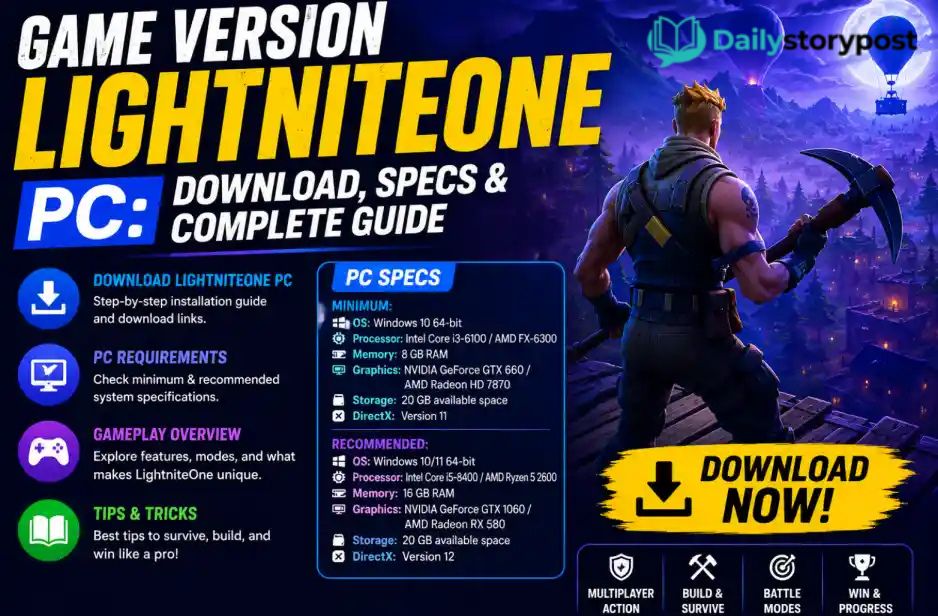
If you have been searching for game version lightniteone pc, you are probably looking for a simple way to get the Lightnite experience running on your computer. Installation should not be complicated, but there is one important thing to understand first: the name LightniteOne is sometimes used online when referring to LIGHT⚡NITE, the multiplayer game associated with Satoshi’s Games.
LIGHT⚡NITE is known as a multiplayer third-person shooter with a low-poly, cartoon-inspired visual style. The game has included battle royale and team-based modes, along with features connected to Bitcoin-based in-game rewards. Historical information from the game’s developers describes both Bitcoin-integrated and non-Bitcoin-integrated gameplay.
However, finding a trustworthy installation source matters more than simply clicking the first download button that appears in a search result. The game’s availability has changed over time, and its Steam listing is currently shown as retired. That means players should verify the current official distribution method before downloading any installer.
This guide explains what to check, how to approach the installation process safely, and what to do if the game does not start correctly.
What Is Game Version Lightniteone PC?
The phrase game version lightniteone pc is commonly used by websites discussing the PC version of LIGHT⚡NITE. The actual game has been described as a multiplayer third-person shooter with battle royale and team-based gameplay.
Its visual design is deliberately different from many large modern shooters. LIGHT⚡NITE uses a relatively simple low-poly and cartoon-style presentation, while its gameplay focuses on multiplayer combat and competition.
One of the game’s unusual features has historically been its connection with Bitcoin and digital rewards. According to information published by the game’s developers, players could use a Bitcoin-integrated mode or play a non-Bitcoin mode using in-game points instead.
That distinction is useful for new players. You do not necessarily need to treat the game as a cryptocurrency application simply because Bitcoin-related features exist. The gameplay itself and the financial features are separate concepts.
Before installing anything, though, make sure you know which version you are actually downloading.
BIO
| Label | Information |
|---|---|
| Game Name | LIGHT⚡NITE |
| Search Keyword | game version lightniteone pc |
| Game Type | Multiplayer third-person shooter |
| Platform | PC |
| Supported Systems | Windows, macOS, and Linux |
| Developer | Satoshi’s Games |
| Main Purpose | Multiplayer combat and competition |
| Gameplay Style | Battle royale and team-based modes |
| Visual Style | Low-poly, cartoon-inspired graphics |
| Key Feature | Bitcoin-related gameplay features |
| Installation | Use a legitimate distribution source |
| Best For | Players interested in online PC gaming |
Check Availability First
The first step is not downloading. It is checking whether the version you want is currently available through an official or recognized distribution channel.
This is especially important with older or developing games. A game may have previously been available through one store and later move to another platform or become temporarily unavailable.
Current Steam tracking information lists LIGHT⚡NITE as a PC game associated with SATOSHIS GAMES INC., with Windows, macOS and Linux support recorded. However, the Steam application is also marked as retired and no longer available through the Steam store.
Because of this, you should not assume that every website offering a file called something like LightniteOneSetup.exe is legitimate.
If an official distribution option is available, use that option first. If the game is not currently distributed through a major store, check the developer’s current channels rather than relying on an unrelated download website.
Check Your PC
Before installing game version lightniteone pc, make sure your computer is ready.
There is no benefit in downloading a large game installer only to discover that the computer cannot run it properly. Your basic checks should include the operating system, available storage, processor, memory and graphics hardware.
Check Windows Information
On Windows, you can quickly view basic computer information by opening the Start menu and searching for System Information.
You can also press Windows + R, type msinfo32, and press Enter.
Look at the following information:
- Windows version
- System type
- Processor
- Installed RAM
- Available storage
- Graphics hardware
For graphics information, search Windows for Device Manager and open the Display adapters section.
The exact requirements can change depending on the current build and distribution method, so do not rely blindly on system requirements copied from random websites.
Use a Trusted Source
This is probably the most important part of the entire installation process.
Search engines can return many pages for the phrase game version lightniteone pc. Some may provide useful information, but that does not automatically make their download files safe.
A trustworthy source should clearly identify the game, developer or publisher, version information and distribution method.
Be particularly careful with pages that use several large download buttons, aggressive pop-ups, automatic redirects or claims that you need to install additional software before the game will work.
A genuine game installer should not require you to install unrelated programs just to begin the setup.
Avoid Modified Installers
Do not download a file simply because its name contains words such as:
- Latest Version
- Full Version
- Cracked Version
- Modded Version
- Free Premium Version
- Unlimited Version
These labels can be used to attract users to unofficial downloads.
A modified installer can also introduce unwanted software, malware or files that are difficult to remove later.
For a multiplayer game, using an unofficial or modified client can create additional problems because the game may require specific files, authentication systems or anti-cheat components.
Download the Correct Version
Once you have confirmed a legitimate distribution source, look for the version intended for your operating system.
For a Windows PC, the download may be provided through a launcher, installer or another official distribution system.
Do not assume that an installer found under a page titled “LightniteOne PC” is automatically the official PC version.
Before opening the file, check:
File name: Does it match the expected installer?
File type: Is it an executable or installer supplied by the trusted source?
File size: Does it appear reasonable compared with the information supplied by the distributor?
Source: Did the file come directly from the legitimate distribution channel?
If anything looks unusual, stop before opening it.
Start the Installation
After obtaining the legitimate installer, locate it in your Downloads folder.
Usually, a Windows installer can be started by double-clicking the setup file.
Windows may display a security confirmation before allowing the installer to run. Read the publisher information carefully before continuing.
If the publisher is unknown and you cannot confirm that the installer came from a legitimate source, do not bypass the warning just to continue.
Once you have confirmed that the file is legitimate, follow the installation instructions shown on screen.
The setup process may ask you to select an installation location. If you have enough free space on your main drive, the default location is normally the simplest option.
If your computer has an SSD, installing the game there can be helpful for faster loading compared with a slower mechanical hard drive.
Choose the Installation Folder
If the installer gives you a choice of location, consider how much free space you have.
Avoid placing the game inside random system folders.
A dedicated game directory can make future maintenance easier. For example, you might use a general games folder on your preferred drive.
The important point is not the exact folder name. What matters is having enough storage and keeping the installation organized.
Also remember that a game may require additional temporary space while installing or updating. Having only the bare minimum free space can cause installation failures.
Complete the Setup
Continue through the installer until it reports that the installation has finished.
Depending on the version and launcher, you may need to create an account or sign in before playing.
Do not enter your account information into a random website simply because it claims to provide a Lightnite download.
Use the authentication method associated with the legitimate game service.
After installation, you may see a desktop shortcut or launcher entry. If not, you can locate the installed application through the Start menu or the installation folder.
Launch the Game
The first launch can take longer than later launches.
The game may need to create configuration files, check its installation, download additional content or connect to its online services.
Give the process a little time before assuming that something is broken.
If a launcher appears, allow it to complete any required updates before starting the game.
This is particularly important for online multiplayer games because the client and server versions need to be compatible.
If the game asks you to update, use the update process supplied by the legitimate launcher or distribution platform.
Configure Basic Settings
Once the game opens, avoid immediately selecting the highest graphics settings.
Start with moderate settings and see how your computer performs.
The most useful settings to adjust include:
- Display resolution
- Fullscreen or windowed mode
- Texture quality
- Shadow quality
- Effects
- View distance
- Frame-rate limit
- Audio volume
- Mouse sensitivity
If gameplay feels smooth, you can gradually increase visual quality.
If you experience stuttering, reduce demanding graphics settings one at a time.
This approach is better than changing everything at once because you can identify which setting is actually affecting performance.
Update Your Graphics Driver
Graphics drivers can have a significant effect on PC games.
Before troubleshooting performance problems, check whether your graphics hardware has a newer driver available.
Depending on your GPU, this could mean checking the software supplied by NVIDIA, AMD or Intel.
A driver update can sometimes improve compatibility, fix graphical problems or provide better performance in supported games.
However, do not download drivers from random websites. Use the manufacturer’s legitimate software or support channel.
Keep Windows Updated
Windows updates can also affect game compatibility.
You do not necessarily need to install every optional component immediately, but keeping the operating system reasonably current is a good practice for modern PC gaming.
If the game refuses to launch after installation, check Windows Update before attempting complicated fixes.
A restart after major system or driver updates can also resolve temporary problems.
Common Installation Problems
Even when the installation process is straightforward, problems can occur.
One common issue is a corrupted or incomplete download. If the installer fails unexpectedly, delete the incomplete file and obtain a fresh copy from the legitimate source.
Another possibility is insufficient storage. Check the available space on the drive where you are installing the game.
Security software can also block unfamiliar applications. However, do not simply disable antivirus protection because an unknown installer is being blocked. First verify that the file itself is legitimate.
Game Does Not Launch
If the game installs but does not open, try these basic steps:
- Restart the computer.
- Check for game updates.
- Check for Windows updates.
- Update your graphics driver.
- Confirm that your PC meets the current requirements.
- Run the legitimate launcher again.
- Check whether the game’s online services are currently available.
If the problem started immediately after an update, there may be a compatibility issue with the latest build.
Game Crashes
Crashes can have many causes.
Overheating, outdated drivers, damaged game files, insufficient memory and incompatible software can all contribute to instability.
Start with the simplest checks.
Close unnecessary programs, restart the computer and make sure the game is updated.
If the problem continues, look for an official support page or community announcement describing the specific error.
Avoid downloading unofficial “fix” files from unknown websites.
Poor Performance
If the game launches but runs poorly, lower the graphics settings first.
Reducing resolution, shadows and visual effects can often reduce the workload on your graphics hardware.
You should also close programs that are consuming significant CPU or memory resources.
A web browser with many tabs, video-editing software and other demanding applications can affect game performance.
If you are using a laptop, make sure it is connected to power during gaming and check that Windows is not using an aggressive battery-saving mode.
Be Careful With Cryptocurrency Features
Because LIGHT⚡NITE has historically included Bitcoin-related gameplay features, new players should take extra care when dealing with financial or wallet-related functions.
Do not share a wallet recovery phrase, private key or password with another person.
A game administrator, website operator or support representative should not need your private wallet recovery phrase.
Also remember that cryptocurrency transactions can involve real financial value. Do not send money simply because an unofficial website promises better rewards, special access or a faster installation.
If you are only interested in playing the game, understand which features are optional before connecting any financial account or wallet.
Keep the Installation Clean
Once game version lightniteone pc is installed, avoid filling the game folder with random files downloaded from forums.
Do not replace game DLL files because someone online claims they will increase FPS.
Do not install unofficial “boosters” unless you completely understand what they do and trust their source.
A clean installation is usually easier to maintain and troubleshoot.
If an update breaks the game, having an original installation makes it much easier to determine whether the problem comes from the game itself or from a third-party modification.
Is Game Version Lightniteone PC Easy to Install?
For a legitimate and currently supported release, the basic PC installation process should be fairly straightforward: verify the game, check your computer, obtain the software from a trusted source, install it, update it and configure the settings.
The more difficult part is sometimes not the installation itself. It is determining which download is genuine.
That is especially relevant for the search phrase game version lightniteone pc, because numerous third-party pages currently use similar wording. Some pages publish detailed installation instructions and system requirements, but those claims should not automatically be treated as official information.
The safest approach is to verify the game’s current distribution method before opening any installer.
Final Thoughts
Installing game version lightniteone pc does not have to be a complicated process, but it is worth taking a few extra minutes to verify what you are downloading.
Start by confirming that you are dealing with the genuine LIGHT⚡NITE game rather than an unrelated program using a similar name. Check the current availability, review your PC specifications and use a legitimate distribution channel whenever one is available.
After installation, keep your operating system and graphics drivers updated, begin with sensible graphics settings and avoid unofficial patches or modified installers.
Most importantly, do not let the search for a quick download push you toward a suspicious website. A few minutes spent checking the source can save much more time later.
For anyone interested in the game, the basic rule is simple: verify first, install second, and optimize only after the original installation is working correctly.
If you have searched when was the game Innerlifthunt released, you may have noticed something unusual. Instead of finding one clear launch date, different websites give different answers. Some pages mention December 15, 2023, while others point to March 15, 2024. Additional articles mention September or November 2024, while several sources say there is no confirmed release date at all.
That makes Innerlifthunt different from most established video games.
For a recognized commercial game, the release date is normally easy to verify. A developer or publisher announces the launch, a major game store lists the title, and gaming publications report the same date. With Innerlifthunt, that chain of evidence is not currently clear.
After comparing the available information, the safest conclusion is that Innerlifthunt does not currently have an independently verified official release date. A number of dates are circulating online, but they should be treated as claims rather than confirmed facts.
BIO
| Reported Date | Claim | Evidence Status |
|---|---|---|
| December 15, 2023 | Public or full release | Reported, not independently verified |
| March 15, 2024 | Global launch | Claimed by Innerlifthunt.com |
| September 14, 2024 | Full release after early access | Reported by secondary sources |
| November 14, 2024 | Worldwide launch | Reported by another secondary source |
| Q1 2025 | Delayed release period | Also reported online |
| 2026 | Release status still disputed | No definitive official confirmation found |
When Was the Game Innerlifthunt Released?
The short answer is: there is no independently verified official release date for Innerlifthunt at this time.
This does not necessarily prove that the name is completely fictional or that nobody has ever worked on a project using it. It means that the available public evidence is not strong enough to establish a confirmed commercial launch.
One website dedicated to Innerlifthunt claims that the game launched globally on March 15, 2024, at midnight UTC. It also gives regional launch times and describes an alleged early-access period for certain buyers. However, this information comes from that website itself and has not been independently confirmed through a recognizable developer, publisher, or authoritative storefront listing.
Other websites give different dates. A recent timeline article identifies December 15, 2023 as one commonly repeated release claim, while also noting that other sources report March, September, or November 2024.
Because these dates conflict, it would be misleading to state one of them as a proven official release date.
Why Is the Release Date Confusing?
The main problem is not simply that different websites disagree. The larger issue is that the dates are difficult to connect to a reliable primary source.
When a game is officially released, there is usually a recognizable trail of evidence. Players can normally find a store page, developer announcement, publisher information, launch trailer, or an established gaming database entry.
For Innerlifthunt, that trail is incomplete.
Some online articles write about the title as though it is an established game. They discuss its supposed release history, platforms, gameplay, updates, and development. Other articles have examined the same claims and concluded that they cannot find enough evidence to verify an actual commercial release.
This is why readers should be careful when they see a headline containing words such as “confirmed release date.”
A date appearing in an article proves that the article reported the date. It does not automatically prove that the game actually launched on that day.
The December 15, 2023 Claim
One of the dates that appears repeatedly in current search results is December 15, 2023.
Several articles describe this as a public or full release date. One February 2026 article presents December 15, 2023 as the date when Innerlifthunt supposedly became publicly available.
The date is therefore an important part of the online discussion surrounding Innerlifthunt.
However, frequency should not be confused with independent confirmation.
If one website publishes a date and several later websites repeat the same information, those articles may appear to provide multiple confirmations even though they all ultimately rely on the same original claim.
For that reason, December 15, 2023 should currently be described as a widely circulated release-date claim, not an independently verified official release date.
The March 15, 2024 Claim
Another prominent date is March 15, 2024.
The Innerlifthunt.com release article states that the game launched globally at 12:00 AM UTC on that date. The same page provides several regional times, including March 14 in parts of North America because of time-zone differences.
The article also claims that some edition owners received early access before the general launch.
On the surface, this level of detail can make the information look highly reliable. But detailed information is not necessarily independently verified information.
The March 15 date is still based on a webpage making the claim rather than a clearly identified game developer, publisher, or major digital storefront independently confirming the release.
Therefore, if someone asks when was the game Innerlifthunt released, March 15, 2024 can be mentioned as a reported date, but it should not be presented as established fact.
The September 14, 2024 Claim
A separate timeline has also appeared online suggesting that Innerlifthunt entered an early-access stage before receiving a full 1.0 release on September 14, 2024.
This version of the story is substantially different from the March 2024 launch claim.
According to the reported timeline, the game supposedly went through earlier testing, entered early access around June 2024, and then reached a full release in September.
The problem is obvious: if the game had already received a global launch in March, it is difficult to explain why another source would describe September as the full release.
There could theoretically be different versions, platforms, regional launches, or relaunches involved. However, there is currently not enough authoritative evidence to establish such an explanation.
That leaves September 14, 2024 as another unverified release claim.
The November 14, 2024 Claim
Another website reports November 14, 2024 as a worldwide launch date.
That article goes even further by describing a supposed multi-platform release. However, its claims conflict with information found elsewhere, including differences over platform availability and the game’s overall release history.
This creates another reason to avoid choosing November 14 as the definitive answer.
A trustworthy release date should ideally be supported by evidence that can be checked independently. When one website says March, another says September, and another says November, the right response is not to choose the date that sounds most convincing.
The better approach is to acknowledge the conflicting evidence.
Is Innerlifthunt a Real Game?
This is another question that naturally follows the release-date search.
There are many pages online that describe Innerlifthunt as a game. Some discuss gameplay, strategies, updates, platforms, and supposed release information.
At the same time, other research into the title has failed to locate a reliable record of a commercially released game under that exact name. One 2026 article specifically states that it could not find a verified developer, publisher, major storefront listing, or other conventional evidence of an official release.
Another recent source reaches a similar conclusion, saying that the title’s release date remains unverified because the conflicting claims are not supported by a clear developer announcement or major store listing.
That does not prove beyond doubt that no project called Innerlifthunt has ever existed.
It simply means that the publicly available evidence is not sufficient to confirm a commercial release with confidence.
That distinction is important.
What About the Innerlifthunt Website?
The existence of a website using the Innerlifthunt name can also create confusion.
A page on Innerlifthunt.com describes itself as a gaming information resource and publishes articles about the supposed game. Its release-date article makes the March 15, 2024 claim.
However, the existence of a website does not automatically establish that the website belongs to the developer of a game.
For a source to provide strong evidence of a release, readers should ideally be able to establish a direct connection between the website, the development studio, the publisher, and the game itself.
That connection is not clearly established in the available evidence.
This is one reason why the March 15, 2024 claim should be treated cautiously.
Why Online Release Dates Can Be Misleading
Release-date information can spread quickly on the internet.
Imagine that one article publishes a date without a primary source. Another writer finds that article and repeats the date. A third website then cites the second article. Soon, several pages appear to agree.
A reader searching Google might assume that five websites independently confirmed the same release.
In reality, they may all be repeating one original claim.
This is why source quality matters more than the number of websites mentioning a date.
For Innerlifthunt, the current search results demonstrate exactly this problem. Different websites publish confident claims, but there is no consistent primary-source trail supporting one official date.
What Can Actually Be Confirmed?
There are several things that can be stated with reasonable confidence about the current online record.
First, Innerlifthunt is a search term that appears across multiple websites.
Second, different websites report different release dates.
Third, March 15, 2024 is specifically claimed by Innerlifthunt.com.
Fourth, December 15, 2023 is another frequently reported date.
Fifth, other sources have reported September 14 and November 14, 2024 as possible launch dates.
Finally, multiple recent articles conclude that none of these dates can currently be independently verified through a clear official developer, publisher, or major storefront record.
These facts provide a much more accurate picture than simply choosing one date.
How Should You Verify a Game Release Date?
If you encounter a new release date for Innerlifthunt in the future, there are several simple ways to check it.
Start with the developer.
A legitimate developer should normally have some identifiable presence connected to the project. Look for an official announcement that names the game and provides a specific launch date.
Next, check the publisher.
If a publisher is involved, its announcement can provide valuable confirmation. Publisher information is particularly useful when a game launches on several platforms.
Then check major storefronts.
A genuine commercial release will normally leave evidence on one or more recognized game stores. The listing should identify the game, developer or publisher, supported platform, and release information.
Finally, compare independent reporting.
Established gaming publications can provide useful secondary confirmation, especially when their reports cite official announcements.
This approach is much safer than trusting a single blog post.
What Does the Current Timeline Look Like?
The available online claims can be summarized like this:
This timeline demonstrates why a simple answer can be misleading.
If a reader asks when was the game Innerlifthunt released, the most responsible response is not to pick one of these dates without qualification.
Was Innerlifthunt Delayed?
There are also pages discussing a supposed postponement.
One Innerlifthunt.com article is specifically titled around the game’s postponement and discusses uncertainty surrounding its future release.
At first glance, this creates another contradiction.
If the game had already launched in March 2024, why would another article describe it as postponed?
There could be several explanations in theory. A later platform release, revised version, relaunch, or separate development milestone could produce different dates.
However, there is not enough reliable evidence to determine which explanation applies here.
Therefore, the postponement story should also be treated as reported but unverified.
Why the Exact Date Matters
A release date is more than just a calendar entry.
It tells players when a game became publicly available. It also establishes the beginning of reviews, updates, patches, community discussions, and sales.
For journalists and researchers, the release date is part of a game’s documented history.
That is why getting the date wrong can create a chain of other errors.
If December 15, 2023 is incorrectly accepted as the official launch, later articles may copy that date. If March 15, 2024 is used instead, another group of articles may repeat that version.
Eventually, conflicting information becomes harder to correct.
The Innerlifthunt case shows why it is better to separate reported information from verified information.
Final Answer
So, when was the game Innerlifthunt released?
As of September 2026, the most accurate answer is that there is no independently verified official release date for Innerlifthunt.
December 15, 2023 is one of the dates frequently reported online. March 15, 2024 is specifically claimed by Innerlifthunt.com, while other websites report September 14 or November 14, 2024. However, the available evidence does not establish one of these dates as an official launch confirmed by a clearly identifiable developer, publisher, or major game storefront.
That means readers should be careful with articles that present any particular date as unquestionably confirmed.
For now, the best-supported conclusion is simple: Innerlifthunt’s release history remains unverified, and the exact official release date cannot be confirmed from reliable primary evidence currently available online.
If an official developer or publisher announcement appears in the future, that would provide the strongest basis for updating the answer.
Frequently Asked Questions
1. When was the game Innerlifthunt released?
There is currently no independently verified official release date for Innerlifthunt. Several dates appear online, but they have not been confirmed by a clearly identified developer or major game storefront.
2. Is December 15, 2023 the Innerlifthunt release date?
December 15, 2023 is one of the dates reported by multiple websites. However, there is not enough reliable primary evidence to confirm it as the game’s official release date.
3. Did Innerlifthunt release on March 15, 2024?
Innerlifthunt.com claims that March 15, 2024 was the game’s global launch date. However, this claim has not been independently verified through an official developer, publisher, or authoritative storefront.
4. Why are there different Innerlifthunt release dates?
Different websites report different dates, including December 2023 and several dates in 2024. The conflicting information may involve different claimed launch stages, but no reliable source currently establishes which timeline is correct.
5. Is Innerlifthunt available to play?
There is no consistently verified major-store listing or official release record for Innerlifthunt under that exact title. Therefore, its current availability remains uncertain.


 Celebrity4 months ago
How Tall Is Glen Powell? Height, Facts, and More
- Celebrity4 months ago
Fielder Jewett Age: Everything We Know About Him in 2026
- Technology4 months ago
How Simpcitt Is Changing the Way People Think Today
- Celebrity4 months ago
Who Is Meredith Schwarz? Key Facts You Should Know
- Home Safety4 months ago
How KDArchitects Landscape Ideas by Morph Transform Outdoor Spaces
- Business4 months ago
How Driving Modes in Cadillac Lyriq Impact Range and Efficiency
- Food & Drink4 months ago
Where to Find the Best Piononos de Santa Fe Near Me Today
- Business4 months ago
How to Buy Milohacherry Coin Safely and Get Started Today