Food & Drink
Is Heavy Cream the Same as Heavy Whipping Cream? Full Guide

s heavy cream the same as heavy whipping cream If you’ve ever stood in the dairy aisle wondering whether heavy cream and heavy whipping cream are the same thing, you’re not alone. Many recipes use these terms interchangeably, which often leaves home cooks and bakers confused. At first glance, the two products look identical, taste very similar, and can often be used in the same dishes. However, there are subtle differences that can affect the outcome of certain recipes.
BIO
| Label | Information |
|---|---|
| Topic | Heavy Cream vs. Heavy Whipping Cream |
| Category | Dairy Products |
| Main Question | Are they the same? |
| Short Answer | Nearly identical with slight fat differences |
| Heavy Cream Fat Content | At least 36% milk fat |
| Heavy Whipping Cream Fat Content | About 30%–36% milk fat |
| Best for Whipping | Heavy cream |
| Best for Cooking | Both work well |
| Best for Baking | Both are suitable |
| Flavor | Rich, creamy, and mildly sweet |
| Substitution | Usually interchangeable |
| Common Uses | Sauces, soups, desserts, and frosting |
| Key Takeaway | Difference is small for most recipes |
Understanding these differences can help you choose the right ingredient for cooking, baking, whipping, and creating rich desserts. In this guide, we’ll explore what heavy cream and heavy whipping cream are, how they compare, when they can be substituted for one another, and which option works best for specific recipes.
Quick Answer
Yes, heavy cream and heavy whipping cream are almost the same product. The primary difference lies in their milk fat content. Heavy cream typically contains at least 36% milk fat, while heavy whipping cream generally contains between 30% and 36% milk fat.
Because the difference is relatively small, most recipes allow you to substitute one for the other without noticeable changes. However, heavy cream’s slightly higher fat content makes it richer and more stable when whipped, while heavy whipping cream tends to be a bit lighter in texture.
For everyday cooking and baking, most people can use either product successfully.
What Is Heavy Cream?
Heavy cream is a dairy product made from the high-fat layer that rises to the top of fresh milk before homogenization. This rich layer is separated and processed to create a cream with a high percentage of milk fat.
The defining characteristic of heavy cream is its fat content. In many regions, heavy cream must contain at least 36% milk fat. This higher fat percentage gives it a thick consistency and luxurious texture.
Because of its richness, heavy cream is widely used in recipes that require body, smoothness, and stability. It adds depth to soups, sauces, casseroles, desserts, and baked goods.
One of the biggest advantages of heavy cream is its ability to whip into stiff peaks that hold their shape for longer periods. This makes it a favorite choice for frosting, cake decorations, and whipped toppings.
What Is Heavy Whipping Cream?

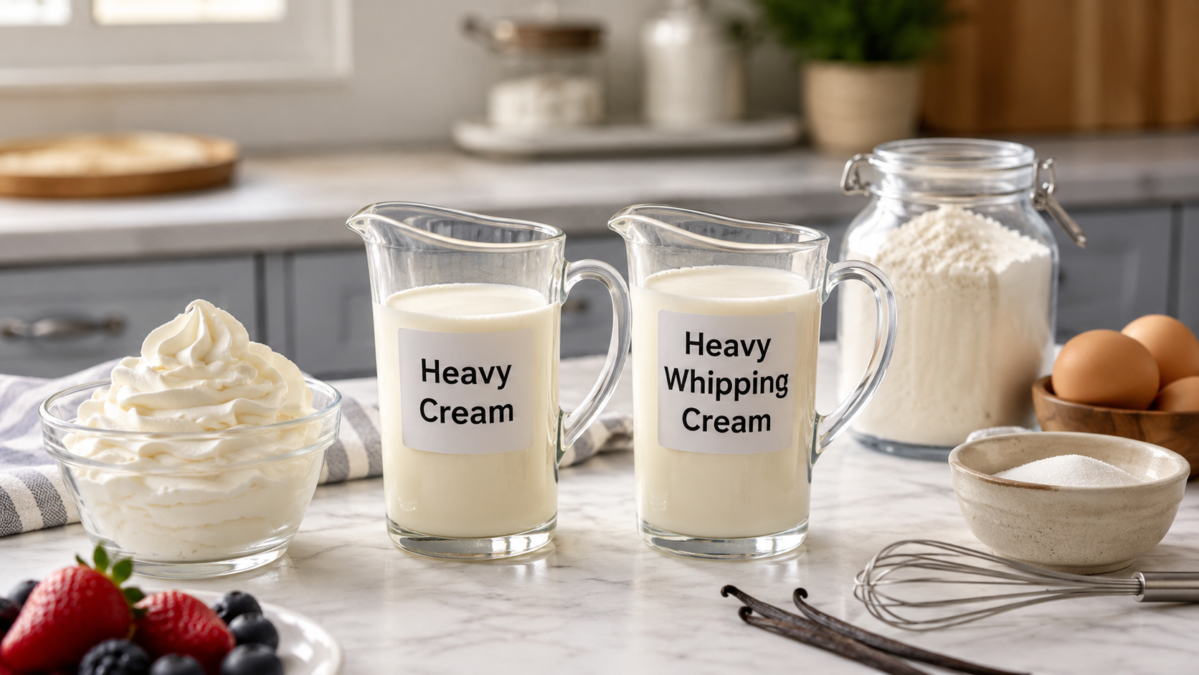
Heavy whipping cream is another high-fat dairy product made from milk cream. It closely resembles heavy cream in appearance, taste, and culinary applications.
The main distinction is that heavy whipping cream usually contains slightly less milk fat. While regulations vary by country and manufacturer, heavy whipping cream often contains between 30% and 36% milk fat.
This small difference affects texture and whipping performance. Heavy whipping cream still whips beautifully, but it may produce a slightly softer result than heavy cream.
Many grocery stores stock only one of these products, while others carry both. In practical cooking situations, the distinction is often minor enough that consumers don’t notice a difference.
Heavy Cream vs. Heavy Whipping Cream
Although these dairy products are remarkably similar, understanding their differences can help you achieve better results in the kitchen.
Fat Content
The most important difference is milk fat percentage.
Heavy cream generally contains at least 36% milk fat. Heavy whipping cream often falls slightly below that level, though exact percentages vary by brand.
Higher fat content contributes to a richer texture and greater stability during whipping.
Texture
Heavy cream has a thicker consistency because of its higher fat concentration. It feels denser and creamier when poured into sauces, soups, and desserts.
Heavy whipping cream is still rich but may feel slightly lighter.
Whipping Performance
When whipped, heavy cream tends to create firmer peaks that last longer. This is particularly useful for decorative toppings, layered cakes, and pastries that need to hold their structure.
Heavy whipping cream can also be whipped successfully, but it may produce softer peaks and require more attention to prevent collapse.
Flavor
The flavor difference is subtle. Heavy cream often tastes a bit richer and more buttery due to its higher fat content.
Most people would struggle to identify the difference in a finished recipe unless comparing the products side by side.
Similarities Between Heavy Cream and Heavy Whipping Cream
Despite the discussion surrounding their differences, the similarities far outweigh the distinctions.
Both products:
- Are made from milk cream.
- Contain high levels of milk fat.
- Can be whipped into cream toppings.
- Work well in cooking and baking.
- Add richness and smoothness to recipes.
- Have similar nutritional profiles.
- Can usually be substituted for one another.
For many home cooks, the products perform nearly identically in everyday recipes.
Can You Substitute Heavy Cream for Heavy Whipping Cream?
In most cases, yes.
If a recipe calls for heavy cream and you only have heavy whipping cream available, you can typically make the substitution without problems. The reverse is also true.
The small difference in fat content rarely affects cooking results significantly. Soups, pasta sauces, mashed potatoes, custards, and baked goods generally turn out well regardless of which product you use.
The only situations where you may notice a difference involve recipes that rely heavily on whipped cream stability. Professional pastry chefs often prefer heavy cream because it creates a firmer structure.
For casual home baking, however, either option is usually sufficient.
Best Uses in Cooking
Heavy cream and heavy whipping cream both perform exceptionally well in savory dishes.
Cream-based soups benefit from their richness and silky texture. Popular examples include cream of mushroom soup, potato soup, and tomato bisque.
Pasta sauces also rely on cream to create smooth and luxurious consistency. Alfredo sauce, creamy garlic sauce, and various cheese sauces all benefit from the addition of cream.
The higher fat content helps prevent curdling when exposed to heat, making these products valuable ingredients in hot dishes.
When cooking, the difference between heavy cream and heavy whipping cream is generally minimal.
Best Uses in Baking
Bakers frequently use cream to improve moisture, texture, and flavor.
Heavy cream can enrich cakes, scones, biscuits, muffins, and pastries. It contributes tenderness while adding a subtle dairy flavor.
Heavy whipping cream performs similarly and can often replace heavy cream in baking recipes.
Because baking relies on precise ingredient interactions, some professionals prefer heavy cream for recipes where maximum richness is desired. However, most home bakers achieve excellent results with either option.
Which One Is Better for Whipped Cream?
This is where the distinction becomes more noticeable.
Heavy cream’s higher fat content allows it to whip into firmer peaks that remain stable for longer periods. The whipped cream tends to hold its shape well, even when used for cake decorating or piping.
Heavy whipping cream still creates delicious whipped cream, but the texture may be slightly softer.
For toppings served immediately, the difference is often negligible. For decorative work or recipes requiring long-lasting stability, heavy cream usually has a slight advantage.
Tips for Better Whipped Cream
- Chill the cream before whipping.
- Use a cold mixing bowl.
- Avoid overwhipping.
- Add sweeteners gradually.
- Store whipped cream in the refrigerator until needed.
These simple steps improve results regardless of which cream you choose.
Nutritional Comparison
Nutritionally, heavy cream and heavy whipping cream are very similar.
Both products contain:
- Significant amounts of fat.
- Moderate calories.
- Small amounts of protein.
- Minimal carbohydrates.
Because heavy cream contains slightly more fat, it may also contain slightly more calories per serving.
However, the nutritional differences are generally small enough that they are unlikely to influence recipe decisions for most people.
Individuals following specific dietary plans should always check nutrition labels, as values vary between manufacturers.
How to Choose the Right Cream
Choosing between heavy cream and heavy whipping cream depends largely on your intended use.
If you’re making whipped toppings, cake decorations, or frostings that need stability, heavy cream is often the better option.
If you’re preparing soups, sauces, casseroles, or baked goods, either product will usually work well.
For home cooks seeking convenience, availability may matter more than the small differences in fat content.
Many professional chefs simply use whichever product is available because both perform effectively in a wide range of recipes.
Common Myths
Several misconceptions continue to circulate regarding these dairy products.
Myth: They Are Completely Different Products
This is false. Heavy cream and heavy whipping cream are extremely similar and share many characteristics.
Myth: One Cannot Replace the Other
Most recipes allow substitution without any major issues.
Myth: Heavy Cream Is Always Better
While heavy cream may offer slightly greater richness and stability, heavy whipping cream remains an excellent choice for many applications.
Myth: The Flavor Difference Is Huge
In reality, most people cannot detect a significant flavor difference in finished dishes.
Understanding these facts helps eliminate confusion and improves confidence in the kitchen.
Storage Tips
Proper storage helps maintain freshness and quality.
Always keep cream refrigerated and store it at the recommended temperature. Unopened containers typically last until the printed expiration date.
Once opened, cream should be used within several days for optimal quality.
Signs of spoilage include:
- Sour odor
- Lumpy texture
- Discoloration
- Mold growth
If any of these signs appear, discard the product immediately.
Can You Freeze It?
Yes, cream can be frozen.
However, freezing may alter texture and cause separation after thawing. Frozen cream often works best in cooked dishes rather than whipped preparations.
For best results, thaw frozen cream in the refrigerator before use.
Frequently Asked Questions
Is heavy cream the same as heavy whipping cream?
Almost. The main difference is that heavy cream typically contains slightly more milk fat, making it richer and more stable when whipped.
Can I use heavy whipping cream instead of heavy cream?
Yes. In most recipes, heavy whipping cream can replace heavy cream without noticeable changes.
Which is better for whipped cream?
Heavy cream generally produces firmer, longer-lasting peaks because of its higher fat content.
Which is better for cooking?
Both products work exceptionally well in soups, sauces, and savory dishes.
Are heavy cream and whipping cream the same?
Not always. Regular whipping cream often contains less fat than heavy cream or heavy whipping cream, so it’s important to read product labels carefully.
Final Verdict
Heavy cream and heavy whipping cream are so similar that most home cooks can use them interchangeably. The primary difference is fat content, with heavy cream typically containing slightly more milk fat than heavy whipping cream.
This extra fat gives heavy cream a richer texture and better whipping stability, making it a preferred choice for decorative whipped toppings and certain desserts. However, for soups, sauces, baked goods, and most everyday recipes, either product will perform beautifully.
If you’re standing in the grocery store trying to decide between the two, the good news is that you probably can’t go wrong. For most kitchens, the difference is minor, and both products deliver the creamy richness that makes so many recipes delicious.
Frequently Asked Questions
Is heavy cream the same as heavy whipping cream?
Almost. Both products are very similar and can be used interchangeably in most recipes. The main difference is that heavy cream usually contains slightly more milk fat, which makes it richer and more stable when whipped.
Can I substitute heavy whipping cream for heavy cream?
Yes, in most cases you can. Heavy whipping cream works well in soups, sauces, desserts, and baked goods. Most people will not notice a significant difference in the final dish.
Which is better for making whipped cream?
Heavy cream is generally the better option because its higher fat content helps create firmer peaks that hold their shape longer. However, heavy whipping cream also produces excellent whipped cream for everyday use.
Is there a taste difference between heavy cream and heavy whipping cream?
The taste difference is very small. Heavy cream may have a slightly richer and creamier flavor, but most people cannot tell the difference once it is mixed into a recipe.
Can I use heavy cream and heavy whipping cream in baking?
Yes. Both products work well in cakes, pastries, muffins, biscuits, and other baked treats. They add moisture, richness, and a tender texture to baked goods.